Why Does My Bedroom Get Dusty So Quickly? 12 Causes and Easy Fixes
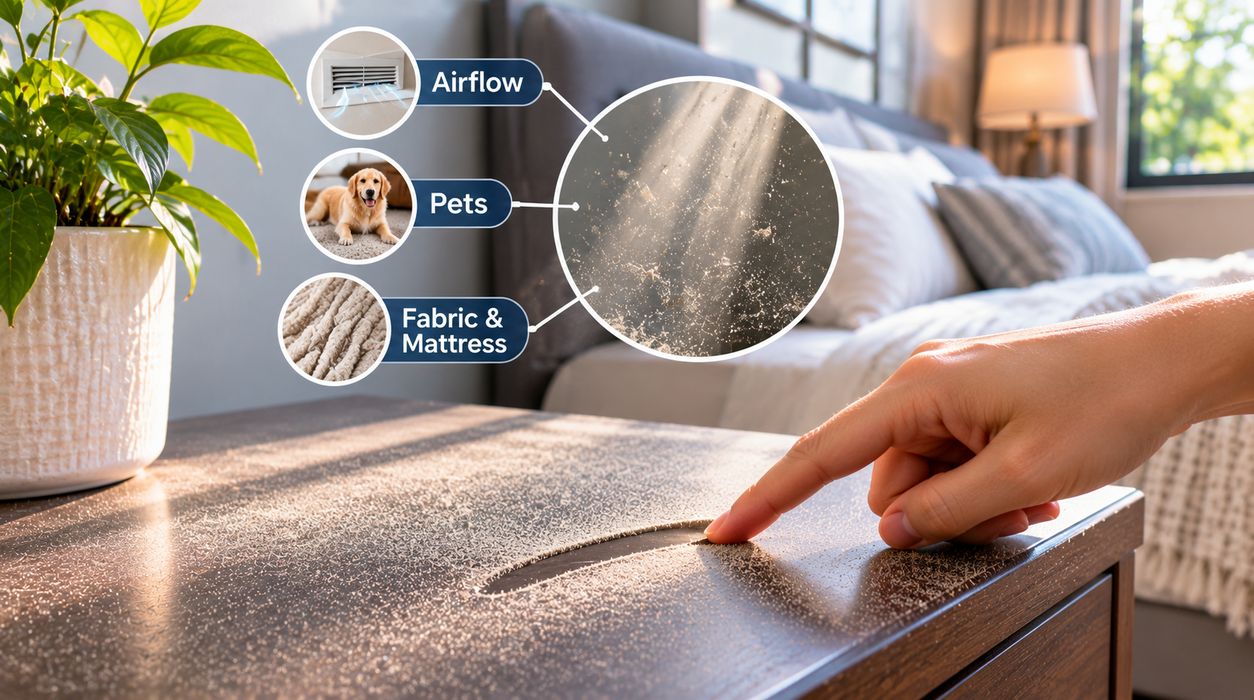
You wipe down your nightstand, vacuum the floor, and clean every visible surface in your bedroom. Everything looks fresh and tidy.
But just a day or two later, a thin layer of dust appears on your furniture again.
You might notice it on your dresser, around your bed frame, or along the edges of your windows. Sometimes, dust seems to return almost immediately after cleaning.
If you’ve been asking, “Why does my bedroom get dusty so quickly?”, you’re not alone.
Bedrooms naturally collect dust because they contain bedding, clothing, fabrics, and other materials that release or trap tiny particles. Poor ventilation, outdoor pollution, pets, and ineffective cleaning methods can make the problem worse.
Fortunately, you don’t need to clean your bedroom constantly to reduce dust buildup.
This guide explains 12 common reasons bedrooms become dusty and provides practical ways to keep your sleeping space cleaner for longer.
Quick Answer: Why Does My Bedroom Get Dusty So Fast?
Your bedroom may accumulate dust quickly because of several overlapping factors:
- Skin flakes and textile fibers
- Bedding and pillows
- Carpets and upholstered furniture
- Dirty HVAC filters
- Outdoor dust entering through windows
- Pet hair and dander
- Clutter and decorative objects
- Ineffective vacuuming
- Dry dusting methods
- Air movement from fans and vents
- Clothing and laundry
- Poor indoor air filtration
The best starting point: Wash bedding regularly, clean surfaces with a damp microfiber cloth, vacuum using a suitable filter, and check your home’s ventilation and filtration systems.
The goal is to remove dust effectively and reduce the amount entering or accumulating in the room.
1. Your Bedding Releases Fibers and Collects Dust
Your bed is one of the largest fabric-covered surfaces in your bedroom.
Sheets, pillowcases, blankets, comforters, and mattress covers can collect dust and release textile fibers.
Every time you move in bed, adjust your blankets, or change your sheets, some settled particles may become airborne.
What Makes Bedding Dusty?
Common contributors include:
- Fabric fibers
- Skin flakes
- Hair
- Outdoor particles carried indoors
- Dust settling from the air
- Pet dander
Bedding can also collect dust mite allergens, particularly in environments with favorable humidity and temperature conditions.
How to Reduce Dust From Bedding
Try these habits:
- Wash sheets and pillowcases regularly.
- Follow the care instructions for blankets and comforters.
- Use washable mattress and pillow protectors.
- Avoid shaking dusty bedding indoors.
- Vacuum around and beneath the bed.
- Keep the sleeping area free of unnecessary fabric items.
If you have dust mite allergies, your healthcare professional may recommend additional measures.
The American Lung Association’s guidance on dust mites explains how dust mites and their allergens can accumulate in bedding and other household fabrics.
2. Carpets and Rugs Trap Dust
Carpets and rugs can hold dust, dirt, pollen, and other particles.
Walking across a carpet may disturb some of these materials and release particles into the surrounding air.
A bedroom with wall-to-wall carpeting may require more thorough cleaning than one with smooth flooring.
Why Carpets Collect So Much Dust
Carpet fibers provide many surfaces where particles can settle.
Dust may also become trapped below the visible surface.
This means a carpet can look clean while still containing accumulated particles.
How to Reduce Carpet Dust
- Vacuum regularly.
- Use a vacuum with effective particle filtration.
- Clean along baseboards and furniture edges.
- Follow the carpet manufacturer’s maintenance instructions.
- Consider washable rugs where practical.
- Address moisture problems promptly.
Are Hardwood Floors Better for Dust?
Smooth floors are generally easier to damp-clean because particles remain accessible on the surface.
However, hardwood or tile flooring does not eliminate dust production.
Dust can still enter the room and settle on furniture.
3. Your HVAC Filter May Be Dirty or Ineffective
Heating, ventilation, and air-conditioning systems influence how particles move through a home.
When an HVAC system uses a compatible air filter, it can capture some airborne particles as air circulates.
A dirty, damaged, improperly fitted, or unsuitable filter may reduce effective filtration.
What Happens When an HVAC Filter Is Dirty?
Depending on the system, a heavily loaded filter may restrict airflow.
This can affect system performance and may reduce the amount of air passing through the filter.
However, filter loading does not automatically mean that the filter has stopped capturing particles.
How to Check Your HVAC Filter
- Turn off the equipment if required by the manufacturer’s instructions.
- Locate the accessible filter compartment.
- Inspect the filter’s condition.
- Check the recommended replacement schedule.
- Replace it with a compatible filter when necessary.
- Make sure the filter is installed correctly.
Do not install a higher-resistance filter without confirming that your system supports it.
What Is a MERV Rating?
MERV stands for Minimum Efficiency Reporting Value.
It describes how effectively certain air filters capture particles within specified size ranges.
A higher MERV rating generally indicates better particle capture, but compatibility with the HVAC system matters.
For more information, see the EPA’s guide to air cleaners and air filters in the home.
4. Open Windows Allow Outdoor Dust to Enter
Opening windows can provide fresh air when outdoor conditions are suitable.
However, outdoor air may also carry dust, pollen, and other airborne particles.
If your bedroom faces a busy road, construction site, or dusty outdoor area, open windows may contribute to faster dust buildup.
Signs Outdoor Dust Is Entering
You might notice:
- Dust collecting near windowsills
- Fine particles on furniture close to windows
- Increased dust during windy weather
- More dust during nearby construction
- Visible dirt around window tracks
How to Reduce Outdoor Dust
Consider these steps:
- Clean window tracks and screens.
- Check for damaged seals.
- Keep windows closed during dusty outdoor conditions.
- Use suitable mechanical ventilation when available.
- Monitor local outdoor air quality.
Should You Keep Bedroom Windows Closed All the Time?
Not necessarily.
Ventilation is important for indoor air quality.
The best approach depends on outdoor pollution, humidity, weather, and your home’s ventilation system.
When outdoor air quality is poor, filtered ventilation may be preferable to opening windows.
5. Pets Bring Hair, Dander, and Outdoor Particles
If your dog or cat spends time in your bedroom, it may contribute to the dust you notice.
Pets shed hair and tiny skin particles known as dander.
They may also carry outdoor dirt, pollen, and other particles on their fur.
Why Pet Dander Is Different From Hair
Pet hair is visible, but dander consists of much smaller particles.
These particles can settle on bedding, carpets, and upholstered furniture.
Some pet-related proteins can also trigger allergic reactions in sensitive individuals.
How to Reduce Pet-Related Dust
- Groom pets appropriately.
- Wash pet bedding regularly.
- Vacuum areas where pets spend time.
- Clean fabric surfaces.
- Consider a suitable air cleaner.
- Keep pets out of the bedroom if recommended for allergy management.
Avoid using cleaning products around animals unless they are safe for the species.
6. Too Much Clutter Makes Dust Harder to Remove
Books, decorations, storage boxes, clothing piles, and small accessories create additional surfaces where dust can settle.
Clutter also makes thorough cleaning more difficult.
For example, a crowded nightstand may require you to move several objects before wiping the surface.
If you skip these areas, dust can accumulate.
Common Dust-Collecting Items
- Open bookshelves
- Decorative pillows
- Artificial flowers
- Fabric wall hangings
- Storage baskets
- Unused electronics
- Stacked boxes
- Clothing piles
How to Make Your Bedroom Easier to Clean
You do not need a completely minimalist bedroom.
Instead:
- Remove items you no longer use.
- Store small objects in easy-to-clean containers.
- Keep frequently used surfaces accessible.
- Reduce unnecessary fabric decorations.
- Clean shelves and storage areas regularly.
The easier a room is to clean, the more likely you are to maintain a consistent routine.
For related household organization and cleaning topics, visit Grandloopy’s Blog category.
7. Your Vacuum Cleaner May Be Releasing Fine Dust
Vacuuming is useful, but the effectiveness of a vacuum depends on its design, filtration, maintenance, and how it is used.
Some poorly sealed vacuums may release fine particles through exhaust air or leaks.
A clogged filter or overfilled dust container can also affect performance.
How to Vacuum More Effectively
- Use a vacuum with effective filtration.
- Maintain filters according to the manual.
- Empty the dust container when recommended.
- Inspect hoses and attachments.
- Vacuum slowly enough to remove embedded dirt.
- Clean under beds and along room edges.
Does a HEPA Vacuum Help?
A properly designed vacuum with HEPA filtration can capture very small particles.
However, overall performance also depends on the vacuum’s seals and airflow.
A HEPA-labeled filter alone does not guarantee that the entire machine prevents particle leakage.
How Often Should You Vacuum Your Bedroom?
The ideal frequency depends on flooring, pets, household activity, and sensitivity to allergens.
High-traffic or pet-friendly bedrooms may need more frequent cleaning.
8. Dry Dusting Can Spread Particles Into the Air
If you use a dry feather duster or rapidly sweep dusty surfaces, some particles may become airborne.
These particles can later settle on nearby furniture.
This may explain why a bedroom looks dusty again shortly after cleaning.
Better Way to Dust Furniture
Use a clean microfiber cloth that is lightly dampened when appropriate for the surface.
A damp cloth can help collect particles rather than simply moving them around.
Best Dusting Order
- Start with higher shelves and surfaces.
- Clean ceiling fan blades carefully.
- Wipe dressers and nightstands.
- Clean window ledges.
- Dust baseboards.
- Vacuum or damp-clean the floor last.
This top-to-bottom approach helps remove particles that fall during cleaning.
Avoid Excessive Moisture
Do not use wet cloths on surfaces that can be damaged by water.
Follow furniture and electronics manufacturers’ cleaning instructions.
9. Ceiling Fans and Air Vents Move Settled Dust
Ceiling fans and ventilation systems create airflow.
Air movement can redistribute particles that have settled on surfaces.
For example, a dusty ceiling fan may release some accumulated material when it starts spinning.
Air vents may also collect visible dust around their openings.
How to Clean Ceiling Fan Blades
Turn off the fan and make sure it has stopped completely.
Use an appropriate cloth or cleaning tool to remove dust.
Avoid standing on unstable furniture.
Should You Close Bedroom Air Vents?
Do not block supply or return vents without understanding your HVAC system.
Closing vents can affect airflow and system performance.
If you suspect an HVAC problem, consult a qualified technician.
What About Portable Fans?
Portable fans do not necessarily create dust, but they can move existing airborne particles.
Clean fan grilles and blades according to the manufacturer’s instructions.
10. Your Clothes and Laundry Contribute to Dust
Clothing can release textile fibers during normal use.
Sweaters, towels, blankets, and other fabrics may shed small particles.
A bedroom that doubles as a dressing area may collect additional lint and fibers.
Why Clothing Storage Matters
Open clothing racks, overflowing hampers, and piles of garments create surfaces that can trap dust.
Moving clothing may also disturb settled particles.
How to Reduce Clothing-Related Dust
- Keep clean clothes properly stored.
- Avoid leaving laundry in piles.
- Clean closets and shelves.
- Wash fabrics according to their care labels.
- Maintain a dry storage environment.
If clothes develop unpleasant odors after washing, another Grandloopy guide explains the common causes and solutions.
Related article: Why Do Clothes Smell Musty After Washing?
Planned internal URL: https://grandloopy.com/why-do-clothes-smell-musty-after-washing/
This link should be activated only after the article has been published at that address.
11. Indoor Humidity Can Affect Dust and Allergens
Humidity influences several aspects of indoor air quality.
In humid environments, dust mites and mold may become more significant concerns.
Dust mites thrive under favorable humidity conditions, while persistent moisture can encourage mold growth.
However, humidity alone does not determine how much visible dust a room collects.
What Is a Good Bedroom Humidity Level?
The EPA generally recommends keeping indoor relative humidity below 60%, ideally between 30% and 50% when practical.
These recommendations help control moisture-related problems.
How to Manage Bedroom Humidity
- Repair leaks promptly.
- Use ventilation appropriately.
- Consider a dehumidifier when needed.
- Avoid drying excessive amounts of laundry in poorly ventilated bedrooms.
- Monitor humidity with a suitable hygrometer.
If you notice persistent condensation or visible mold, address the moisture source.
Does Dry Air Cause More Dust?
Dry conditions can influence how particles behave and how readily some materials become airborne.
However, adding moisture is not automatically a solution.
Excess humidity can create other indoor air quality problems.
The EPA’s guidance on mold and moisture control provides useful recommendations for managing indoor moisture.
12. Your Bedroom May Need Better Air Filtration
Even with regular cleaning, airborne particles can enter a bedroom from outside or move between rooms.
An appropriately sized portable air cleaner may help reduce certain airborne particles.
Can an Air Purifier Reduce Bedroom Dust?
A properly selected air cleaner can reduce some airborne particle concentrations.
However, it cannot remove all dust from surfaces or eliminate every source.
Cleaning and source control remain important.
What to Look For in an Air Purifier
Consider:
- Room size
- Clean Air Delivery Rate (CADR)
- Filter type
- Noise level
- Energy consumption
- Replacement filter costs
A suitable CADR helps indicate how quickly a device can supply cleaned air for a given room size.
Where Should You Place an Air Purifier?
Follow the manufacturer’s placement instructions.
Avoid blocking air intake and exhaust openings.
Allow sufficient clearance for airflow.
Do Air Purifiers Replace Cleaning?
No.
Air cleaners work alongside routine cleaning, effective ventilation, and source control.
They are not substitutes for vacuuming carpets, washing bedding, or removing dust from furniture.
For additional technology-related household guidance, explore Grandloopy’s AI & Technology category.
How to Reduce Dust in Your Bedroom: A Practical Cleaning Routine
A repeatable cleaning schedule can make dust easier to manage.
Daily Habits
- Keep unnecessary clutter off surfaces.
- Store clothing properly.
- Avoid shaking dusty fabrics indoors.
- Address visible dirt when practical.
- Maintain suitable ventilation.
Weekly Habits
- Wash bedding as appropriate.
- Dust furniture using a suitable microfiber cloth.
- Vacuum carpets and rugs.
- Clean floors.
- Remove dust from accessible shelves.
- Check pet bedding.
Monthly or Periodic Habits
- Inspect HVAC filters.
- Clean ceiling fan blades.
- Wipe window tracks.
- Clean under large furniture.
- Review air purifier maintenance needs.
- Check for moisture problems.
Adjust the schedule to your household rather than following a rigid timetable.
Why Does Dust Appear on My Furniture Overnight?
Dust can settle on furniture continuously.
Even after cleaning, airborne particles may remain suspended and gradually settle.
Sources may include bedding, clothing, outdoor air, and other household activities.
Does Overnight Dust Mean My Bedroom Is Dirty?
Not necessarily.
Some dust accumulation is normal in occupied indoor spaces.
The important questions are whether buildup is excessive, whether the room has identifiable dust sources, and whether your cleaning methods are effective.
What If Dust Returns Within Hours?
Check for:
- Open windows near dusty outdoor areas
- Active construction nearby
- Dirty fan blades
- Poor vacuum filtration
- Dusty bedding
- Unsealed air leaks
- Excessive fabric clutter
Addressing the source may be more effective than increasing cleaning frequency alone.
Does a Bedroom With More Furniture Get Dustier?
More furniture does not automatically create more dust.
However, additional surfaces provide more places where particles can settle.
Furniture can also make cleaning difficult when it blocks access to corners, floors, and baseboards.
How to Arrange Furniture for Easier Cleaning
Leave enough space to clean behind or beneath furniture when practical.
Choose storage that is easy to maintain.
Avoid unnecessary fabric-covered decorations if dust accumulation is a major concern.
For more everyday lifestyle and home organization topics, browse Grandloopy’s Fashion category, which may also be useful for fabric and clothing care.
Can Bedroom Dust Affect Your Health?
Household dust is a mixture of different particles.
Depending on the environment, it may contain:
- Textile fibers
- Skin flakes
- Pollen
- Pet dander
- Dust mite allergens
- Soil particles
- Other indoor and outdoor contaminants
Some components can trigger symptoms in sensitive individuals, particularly those with allergies or asthma.
Possible Symptoms
Sensitive individuals may experience:
- Sneezing
- Nasal congestion
- Itchy eyes
- Coughing
- Allergy-related discomfort
However, symptoms can have many causes.
If symptoms are persistent or severe, consult a qualified healthcare professional rather than assuming dust is responsible.
Grandloopy’s Health & Fitness category contains additional wellness-oriented topics.
Common Bedroom Dust-Cleaning Mistakes
Mistake 1: Only Cleaning Visible Furniture
Dust can accumulate beneath beds, behind furniture, and around baseboards.
Mistake 2: Using a Dry Feather Duster
Some dry dusting methods redistribute particles rather than capturing them.
Mistake 3: Ignoring Bedding
Sheets, pillows, and blankets can collect dust and allergens.
Mistake 4: Forgetting HVAC Filters
Filters require maintenance according to system recommendations.
Mistake 5: Buying an Air Purifier Without Checking Room Size
An undersized unit may provide insufficient particle removal for the space.
Mistake 6: Overlooking Outdoor Dust Sources
Nearby roads, construction, and windy conditions can contribute to indoor particles.
Mistake 7: Increasing Humidity Without Measuring It
Excessive humidity can encourage dust mites and mold.
Mistake 8: Expecting a Completely Dust-Free Bedroom
Some dust accumulation is unavoidable in an occupied home.
The goal is practical reduction, not absolute elimination.
Frequently Asked Questions
Why does my bedroom get dusty even when I clean it regularly?
Dust continuously enters or forms inside occupied rooms. Bedding, clothing, outdoor air, pets, and airflow can all contribute.
Why is my bedroom dustier than other rooms?
Bedrooms contain many fabric surfaces, including bedding, clothing, rugs, and upholstered furniture. Room ventilation and cleaning patterns also matter.
Does an air purifier help with bedroom dust?
A properly sized air cleaner can reduce some airborne particles, but it does not replace surface cleaning.
How often should I dust my bedroom?
The appropriate frequency depends on dust sources, pets, ventilation, and individual needs. Weekly cleaning is a reasonable starting point for many households.
Why does dust collect under my bed?
Airflow, limited cleaning access, and nearby fabrics can allow particles to accumulate beneath furniture.
Do ceiling fans make bedrooms dustier?
Fans can redistribute existing particles and may release dust collected on their blades. They do not necessarily create dust.
Does opening windows increase dust?
It can, especially during windy weather or when outdoor air contains substantial dust or pollen.
Are carpets responsible for bedroom dust?
Carpets can trap dust and allergens. Walking and other activity may disturb some accumulated particles.
Can high humidity make dust problems worse?
High humidity can encourage dust mites and mold, although it does not necessarily increase all types of visible dust.
How can I keep my bedroom dust-free longer?
Reduce clutter, wash bedding, vacuum effectively, damp-dust surfaces, maintain filtration, and address outdoor dust entry.
Final Thoughts
If your bedroom gets dusty quickly, the problem is usually caused by several factors rather than one obvious source.
Bedding, clothing, carpets, outdoor air, pets, and ventilation systems all influence dust accumulation.
The most effective strategy combines regular cleaning with practical source control.
Start by washing bedding, using effective vacuum filtration, damp-dusting furniture, and maintaining your HVAC system.
Then review humidity, outdoor dust entry, and whether an appropriately sized air cleaner could help.
A completely dust-free bedroom may not be realistic, but a consistent cleaning routine and better control of dust sources can make your sleeping space noticeably easier to maintain.

Ryan Mitchell is a passionate writer and digital content creator dedicated to sharing insightful, engaging, and informative articles across multiple niches. With a strong interest in technology, lifestyle, trending topics, and online media, Ryan Mitchell focuses on delivering well-researched and reader-friendly content that inspires and informs audiences worldwide.