Why Does the NFL Clock Keep Running After Going Out of Bounds?
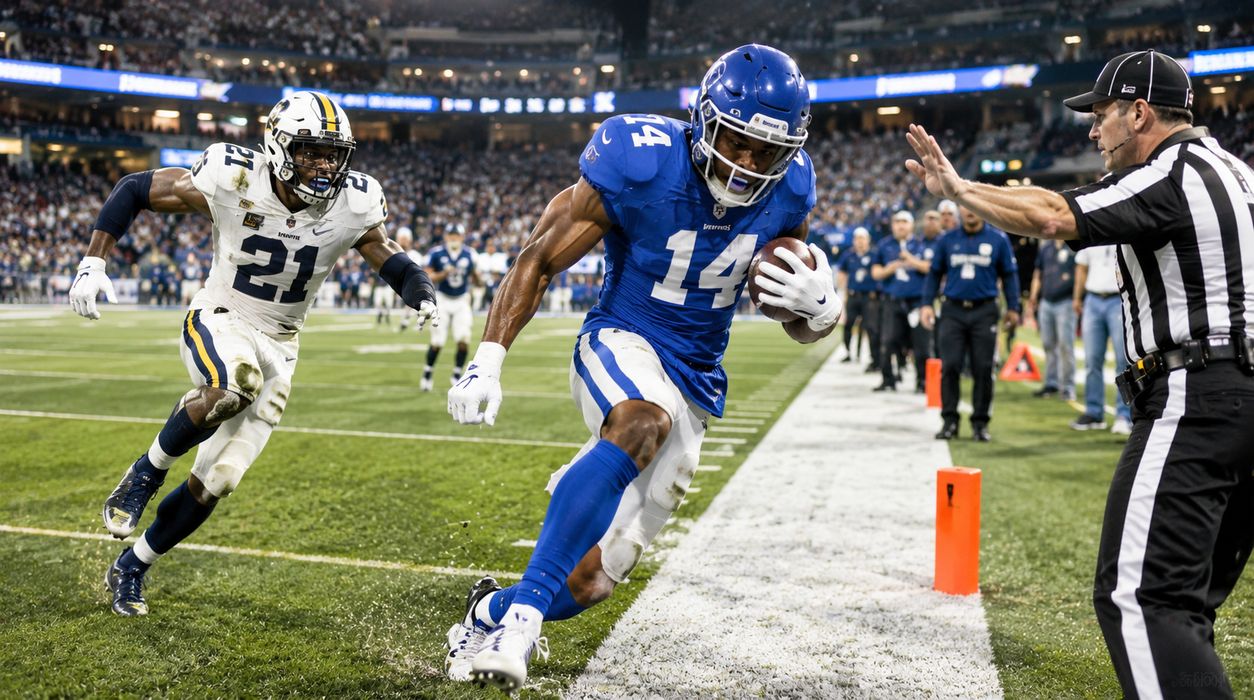
You’re watching an NFL game, and your favorite team is trying to protect a narrow lead. A running back heads toward the sideline, steps out of bounds, and the officials stop the clock. A few seconds later, however, the clock starts running again before the next play.
What happened?
If you’ve ever wondered why the NFL clock keeps running after a player goes out of bounds, you’re not alone. It’s one of the most confusing rules for new football fans, especially when television commentators talk about saving time during the final minutes.
The explanation comes down to when the play happens.
Under the NFL’s 2026 rules, going out of bounds generally stops the game clock temporarily. During most of the game, the clock restarts when the referee signals that the ball is ready for play. But during the final two minutes of the first half and the final five minutes of the second half, the clock generally stays stopped until the next snap.
That difference can completely change how teams manage a close game.
Here’s everything you need to know about NFL out-of-bounds clock rules, including real-game examples, common misconceptions, and strategies teams use to control the final minutes.
Does the NFL Clock Stop When a Player Goes Out of Bounds?
Yes. When a ball carrier goes out of bounds on a play from scrimmage, the game clock initially stops.
However, stopping the clock and keeping it stopped until the next play are two different things.
During most of an NFL game, the clock resumes when the referee signals that the ball has been returned to play.
That means a player can step out of bounds, the clock can briefly stop, and then time can begin running again even though the offense has not snapped the football.
This is completely normal.
The important exceptions occur late in each half, when the rules allow teams to preserve more time by getting out of bounds.
According to the official 2026 NFL Rulebook, these timing rules are covered under Rule 4, which governs game timing.
NFL Out-of-Bounds Clock Rules: Quick Explanation
The easiest way to understand the rule is to remember two important time windows.
| Game Situation | When the Clock Restarts |
|---|---|
| First quarter | Referee’s ready-for-play signal |
| Second quarter, before the two-minute warning | Referee’s ready-for-play signal |
| Second quarter, after the two-minute warning | Next snap |
| Third quarter | Referee’s ready-for-play signal |
| Fourth quarter, more than five minutes remaining | Referee’s ready-for-play signal |
| Fourth quarter, inside the final five minutes | Next snap |
This table describes the normal result when a runner goes out of bounds on a scrimmage play and no other timing rule changes the restart.
A change of possession, penalty, timeout, or other special circumstance can affect the clock.
The most important takeaway is that the final two minutes of the first half and the final five minutes of the second half receive special treatment.
Why Does the NFL Clock Restart After Going Out of Bounds?
The NFL uses different clock rules to balance game flow and late-game strategy.
If every out-of-bounds play kept the clock stopped until the next snap, teams could preserve substantial amounts of time throughout the game simply by running toward the sideline.
That would change the pace of football and potentially extend games.
Instead, the league generally allows the clock to resume after officials prepare the ball for the next play.
This keeps the game moving while still giving officials time to manage the end of the previous play.
Near the end of each half, the rules change because time management becomes a central part of the competition.
Teams that are trailing need opportunities to preserve the remaining seconds and attempt a comeback.
That is why getting out of bounds becomes particularly valuable late in the game.
What Happens When a Player Runs Out of Bounds in the First Quarter?
Imagine a running back catches a short pass with eight minutes remaining in the first quarter.
He gains 12 yards and steps out of bounds.
The clock stops immediately.
Officials retrieve and spot the football, prepare for the next down, and signal that play can resume.
At that point, the game clock starts again.
The offense does not receive a guaranteed stoppage until the next snap simply because the player reached the sideline.
For fans who are unfamiliar with this rule, the restart can look like a mistake.
But it is exactly how normal NFL timing works.
This situation is different from an incomplete forward pass, which ordinarily keeps the clock stopped until the next snap.
What Happens During the Final Two Minutes of the First Half?
The last two minutes of the first half are different.
After the two-minute warning, when a runner goes out of bounds on a qualifying play, the game clock remains stopped until the next snap.
For example, imagine a team has the football with 1:24 remaining before halftime.
The quarterback completes a pass to a receiver near the sideline.
The receiver steps out of bounds with 1:17 remaining.
The clock stops at 1:17 and normally remains there until the offense snaps the next play.
This gives the quarterback time to communicate, organize the offense, and prepare without losing additional game-clock seconds.
It also creates opportunities to advance the ball into field-goal range.
Coaches frequently design late-half passing plays to take advantage of this rule.
Why Is the Fourth-Quarter Rule Different?
The fourth quarter has a longer special timing window.
Instead of applying only after the two-minute warning, the out-of-bounds exception begins inside the final five minutes of the second half.
That means a player who goes out of bounds with 4:30 remaining can stop the clock until the next snap.
This is especially important for teams trying to come from behind.
Consider two examples.
Example A: 7:30 remaining in the fourth quarter
A receiver catches a pass and steps out of bounds.
The clock stops, but it normally restarts on the referee’s ready-for-play signal.
Example B: 3:30 remaining in the fourth quarter
The receiver makes a similar catch and goes out of bounds.
This time, the clock normally stays stopped until the next snap.
The plays may look nearly identical, but their timing consequences are different.
That is why the final five minutes of an NFL game can feel dramatically different from the rest of the fourth quarter.
Does the Clock Stop After an Incomplete Pass?
Yes.
An incomplete forward pass generally stops the game clock until the next snap.
Unlike a normal out-of-bounds running play outside the special timing windows, the clock does not restart simply because officials have spotted the football.
This is one reason quarterbacks frequently attempt passes during late-game situations.
A completed pass can gain valuable yardage, but the clock may continue running if the receiver is tackled in bounds.
An incomplete pass gains no yardage, but it normally preserves the remaining time.
Of course, an offense cannot simply throw the ball away without considering the intentional grounding rules.
The quarterback must comply with the requirements for legally discarding a pass.
The distinction between completed and incomplete passes is one of the most important parts of NFL clock management.
What Is the Difference Between the Game Clock and Play Clock?
The NFL uses two separate clocks, and confusing them can make the out-of-bounds rules harder to understand.
The game clock measures the time remaining in the quarter.
The play clock measures how long the offense has to begin the next play.
A standard play clock often starts at 40 seconds after the previous play ends, although certain administrative situations use a 25-second clock.
The game clock might be stopped while the play clock continues counting down.
For example, after an incomplete pass, the game clock stays stopped, but the offense must still snap the ball before the play clock expires.
The NFL Football Terms glossary explains the difference between the 25-second and 40-second play clocks.
Understanding both clocks makes it easier to follow late-game strategy.
Can a Player Stop the Clock by Running Backward Out of Bounds?
A player cannot assume that crossing the sideline will always produce the desired clock stoppage.
NFL officials consider the circumstances of the play, including forward progress and whether the runner’s action qualifies under the applicable timing rules.
For example, if a defender forces a runner backward before the runner reaches the sideline, the officials may rule that forward progress ended in bounds.
In that situation, the play is treated differently from a runner who clearly advances and voluntarily goes out of bounds.
This distinction matters during late-game situations.
A receiver trying to preserve time should not assume that simply moving toward the sideline guarantees the clock will remain stopped.
Officials must determine where and how the play ended.
What Happens If a Player Is Pushed Out of Bounds?
Being pushed out of bounds does not automatically prevent the clock from stopping.
If the play legally ends out of bounds, the normal timing rules generally apply.
However, forward-progress rulings can change the situation.
Suppose a running back is stopped near the sideline and driven backward by defenders.
If the officials determine that his forward progress ended in bounds, the game clock may continue according to the applicable rule.
By contrast, if the runner is legally forced across the boundary while advancing, the play may be treated as an out-of-bounds play.
The key is the officials’ ruling, not simply whether the player’s body eventually crosses the white sideline.
Why Do NFL Teams Try to Get Out of Bounds Late in Games?
Time becomes extremely valuable when a team is trailing.
Imagine a team needs a touchdown with 1:15 remaining and has no timeouts.
If a receiver catches the ball in the middle of the field and is tackled, the offense may need to hurry to the line of scrimmage while the clock continues running.
But if the receiver catches the ball near the sideline and gets out of bounds, the clock can remain stopped until the next snap.
That gives the offense more time to prepare.
Teams often use sideline routes, quick passes, and carefully planned formations during these situations.
The goal is to gain yards without allowing too much time to disappear.
This kind of strategic preparation is a useful example of the difference between consistent execution and simply repeating the same action. Grandloopy explores those ideas in its article on constant vs. consistent.
How Do NFL Teams Run Down the Clock When Winning?
Clock management works in the opposite direction for a team protecting a lead.
If a team is winning late in the fourth quarter, it generally wants the clock to continue running.
Running plays can be useful because a runner tackled in bounds ordinarily keeps the clock moving.
The offense may also wait until the play clock is nearly expired before snapping the ball.
This can remove valuable seconds from the game.
For example, a team leading by four points with three minutes remaining may prefer a short running play that stays in bounds over a longer play that ends at the sideline.
The longer gain might be attractive, but preserving possession and consuming time could be more important.
That is why football coaches sometimes make decisions that seem conservative to casual viewers.
Their objective is not always to gain the maximum possible yardage.
Sometimes the most valuable result is keeping the clock moving.
How Do Timeouts Affect the NFL Game Clock?
Each NFL team receives three charged timeouts per half.
A team can use a timeout to stop the clock when permitted under the rules.
This is particularly important late in games.
For example, a trailing team might use timeouts after defensive stops to prevent the leading team from running additional time off the clock.
An offense might use a timeout to organize an important play or avoid a delay-of-game penalty.
However, timeouts are limited resources.
Using them too early can leave a team without options during the final seconds.
That is why coaches often consider the score, field position, down, distance, and remaining time before deciding whether to call one.
Clock management requires both planning and quick decision-making.
What Is the Two-Minute Warning?
The two-minute warning is an automatic official timeout near the end of each half.
It occurs when the game reaches the applicable two-minute point under NFL timing procedures.
The warning creates a natural break and introduces important late-half clock rules.
In the second quarter, the special out-of-bounds restart rule applies after the two-minute warning.
In the fourth quarter, the corresponding out-of-bounds protection has already begun inside the final five minutes.
The warning is therefore especially important before halftime.
It signals that teams have entered the part of the half where going out of bounds can preserve time until the next snap.
The two-minute warning is also a major part of television broadcasts and late-game strategy.
Does the NFL Clock Stop When a Player Gets a First Down?
Not automatically.
This is a common point of confusion for fans who also watch college football.
In the NFL, simply gaining a first down does not ordinarily stop the game clock.
If a runner gains enough yardage for a first down and is tackled in bounds, the clock generally continues running unless another rule requires a stoppage.
The officials may need to establish the new line to gain, but that does not automatically create a full clock stoppage.
A first down achieved by running out of bounds is different because the out-of-bounds timing rules apply.
This distinction becomes especially important during two-minute drills.
A quarterback may complete a pass for a first down, but the offense still needs to manage the clock carefully.
Does the NFL Clock Stop After a Touchdown?
Yes.
A touchdown ends the scoring play and stops the game clock.
The game does not immediately resume with another ordinary offensive snap.
The scoring team must complete the try procedure, and the subsequent kickoff follows the applicable rules.
This is different from a routine running play that ends in bounds.
The same general principle applies to other scoring situations, although the precise restart procedures depend on the type of score and the next play.
Fans sometimes focus heavily on the final seconds before a touchdown, but the timing of the score can be just as important.
A team may intentionally use more time before scoring to reduce the opponent’s opportunity for a comeback.
What Happens When a Runner Goes Out of Bounds in Overtime?
Overtime has its own game procedures, and fans should not automatically apply every fourth-quarter timing assumption without checking the relevant rule.
The general game-clock principles still matter, but overtime administration depends on the competition format and the situation.
For example, regular-season and postseason overtime have different structural requirements.
The safest approach is to consult the applicable overtime provisions rather than assume that every overtime situation works exactly like the final five minutes of regulation.
The official NFL rulebook provides the governing procedures for these situations.
Why Do NFL Clock Rules Confuse So Many Fans?
One reason is that the visible result of a play does not always reveal the timing rule being applied.
A receiver might go out of bounds in the first quarter, and the clock restarts before the snap.
The same receiver could make an almost identical play late in the fourth quarter, and the clock stays stopped.
Without knowing the time-based exception, the difference looks inconsistent.
Another source of confusion is the distinction between the game clock and the play clock.
Fans may see one clock moving while another remains stopped.
Forward-progress rulings and administrative stoppages can create additional confusion.
Football has many technical rules, and timing decisions are among the most noticeable because they affect every possession.
For readers interested in how sports terminology creates memorable descriptions, Grandloopy’s guide to basketball metaphors offers examples of how sports concepts are expressed in everyday language.
Common NFL Clock Management Mistakes
Even experienced players and coaches must pay close attention to the clock.
One mistake is allowing a player to be tackled in bounds when the offense urgently needs to preserve time.
Another is using a timeout unnecessarily when the clock would already stop under the rules.
Teams can also lose valuable seconds through slow substitutions, poor communication, or confusion at the line of scrimmage.
A quarterback may need to decide whether to attempt another play or spike the football legally to stop the clock.
These situations demand preparation.
The pressure can be intense because a single mistake may eliminate the opportunity for another play.
Grandloopy’s article on challenge vs. challange provides a useful language reference for describing difficult situations, including the challenges athletes face under pressure.
NFL Clock Rules vs. College Football Rules
NFL and college football timing rules are not identical.
One important difference involves first downs.
In college football, the clock may stop temporarily after a first down during certain late-half situations under NCAA rules.
The NFL does not use an automatic first-down stoppage in the same way.
Out-of-bounds timing procedures also have their own league-specific details.
That means fans who watch both college football and the NFL should avoid assuming that every clock rule transfers directly between competitions.
The best reference is always the rulebook for the league being played.
This is especially important when watching late-game drives, where even a few seconds can influence the outcome.
Three Realistic NFL Clock Examples
Let’s compare three hypothetical situations.
Example 1: Early Second Quarter
The offense completes a pass near the sideline with 11:42 remaining.
The receiver steps out of bounds.
The clock stops temporarily, but it restarts when the referee signals the ball ready for play.
The offense cannot preserve the entire interval before the next snap simply by reaching the sideline.
Example 2: Final Minute Before Halftime
A receiver catches a pass with 48 seconds remaining and steps out of bounds.
Because the game is inside the final two minutes of the first half, the clock normally stays stopped until the next snap.
The offense gains an opportunity to organize another play without using a timeout.
Example 3: Fourth-Quarter Comeback
A team trails by three points with 3:12 remaining.
Its running back reaches the sideline after gaining nine yards.
The clock stops and normally remains stopped until the next snap.
That gives the offense additional time to continue its drive.
These examples demonstrate why understanding the game situation matters as much as understanding the play itself.
How Can New NFL Fans Learn Clock Management Faster?
The easiest method is to focus on three questions.
First, how much time remains in the half?
Second, how did the previous play end?
Third, did the officials stop the clock for another reason?
If a runner went out of bounds, check whether the game is inside the special late-half timing window.
If the pass was incomplete, remember that the clock ordinarily stays stopped until the next snap.
If the runner was tackled in bounds, expect the clock to continue unless another rule applies.
Watching several games with these questions in mind makes clock management easier to understand.
You can also compare the way different sports handle time. Grandloopy’s basketball similes and examples provide a lighter introduction to the language of competition and teamwork.
Frequently Asked Questions
Why does the NFL clock run after a player goes out of bounds?
During most of the game, the clock stops temporarily and then restarts when the referee signals the ball ready for play. Late-half exceptions allow it to remain stopped until the next snap.
Does the NFL clock stop when a player goes out of bounds in the first quarter?
Yes, initially. However, it normally restarts on the referee’s ready-for-play signal rather than waiting for the next snap.
When does going out of bounds stop the clock until the next snap?
Normally, after the two-minute warning of the first half and inside the final five minutes of the second half.
Does an incomplete pass stop the NFL clock?
Yes. An incomplete forward pass generally stops the game clock until the next snap.
Does a first down stop the clock in the NFL?
No. A first down alone does not automatically stop the NFL game clock.
What is the difference between the play clock and game clock?
The game clock tracks the remaining time in the quarter. The play clock limits how long the offense has to begin the next play.
Can a team stop the clock without using a timeout?
Yes. Incomplete passes, qualifying out-of-bounds plays, and other rule-defined situations can stop the clock without a charged team timeout.
Does the clock stop when a defender pushes a player out of bounds?
It depends on the officials’ ruling, including whether the runner’s forward progress was stopped in bounds.
Final Thoughts
The NFL clock keeps running after some out-of-bounds plays because the league uses different restart rules depending on the stage of the game.
During most of the first three quarters and the early part of the fourth, the clock normally restarts when officials signal that the ball is ready for play.
But after the two-minute warning of the first half and inside the final five minutes of the second half, qualifying out-of-bounds plays generally keep the clock stopped until the next snap.
That distinction is one of the foundations of NFL clock management.
Once you understand it, late-game decisions become much easier to follow.
The next time a receiver races toward the sideline with seconds remaining, you’ll know exactly why that white boundary line can be just as important as the yards gained.

Ryan Mitchell is a passionate writer and digital content creator dedicated to sharing insightful, engaging, and informative articles across multiple niches. With a strong interest in technology, lifestyle, trending topics, and online media, Ryan Mitchell focuses on delivering well-researched and reader-friendly content that inspires and informs audiences worldwide.