What Is a Two-Way Contract in the NBA? Salary and Roster Rules Explained (2026–27)
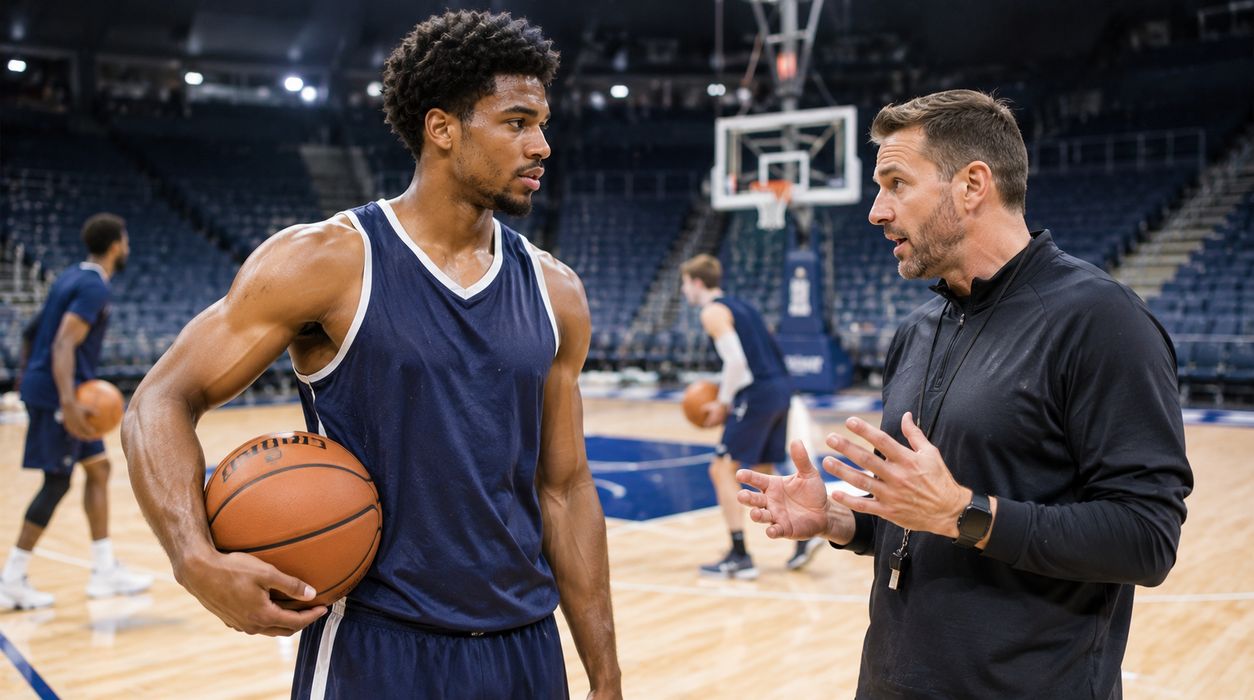
Every NBA season, talented basketball players fight for a limited number of roster spots. Some are first-round draft picks with guaranteed opportunities. Others are undrafted prospects hoping to prove they belong in the world’s most competitive basketball league.
For many of those players, an NBA two-way contract provides an important opportunity.
A two-way contract allows an eligible player to spend time with both an NBA team and its affiliated NBA G League team. The arrangement gives developing players access to NBA coaching, practices, and regular-season games without occupying one of the team’s standard roster positions.
For the 2026–27 season, an NBA two-way contract pays approximately $678,882 for a full season. Teams can carry up to three two-way players, and each player is generally limited to 50 regular-season games on the NBA team’s active list.
But the system involves more than salary and game limits.
Here’s how NBA two-way contracts work in 2026–27, who qualifies, how players move between leagues, and what happens when someone earns a permanent NBA opportunity.
What Is a Two-Way Contract in the NBA?
An NBA two-way contract is a special player agreement that allows an athlete to provide services to an NBA team and its affiliated G League organization.
The contract is designed primarily for developing players who have limited NBA experience.
Unlike a standard NBA contract, a two-way agreement does not occupy one of the team’s 15 regular roster spots.
Instead, NBA teams have three additional positions specifically reserved for two-way players.
These athletes can practice with the NBA team, participate in eligible regular-season games, and spend time developing in the G League.
For example, imagine a rookie guard signs a two-way agreement with an NBA franchise.
The team may initially assign him to its G League affiliate, where he receives regular playing time.
Later, injuries or strong performances might create an opportunity with the NBA club.
The player can then join the NBA team under the terms of the same contract.
This flexibility makes two-way agreements valuable for both organizations and developing athletes.
How Do NBA Two-Way Contracts Work in 2026–27?
The basic system remains straightforward.
An NBA franchise signs an eligible player to a one-year or two-year two-way agreement.
The player becomes part of the organization’s developmental structure and can move between the NBA club and its G League affiliate.
However, the NBA limits how frequently a two-way player can be on the parent team’s active list.
The following table summarizes the major rules for the 2026–27 season.
| Rule | 2026–27 Details |
|---|---|
| Maximum two-way players | Three per NBA team |
| Standard roster spots | Up to 15 |
| Combined roster capacity | Up to 18 |
| Full-season two-way salary | Approximately $678,882 |
| NBA active-list limit | 50 regular-season games |
| Contract length | One or two seasons |
| Typical experience requirement | Fewer than four NBA years of service |
| Playoff eligibility | Requires conversion to a standard contract |
| G League participation | Permitted under the agreement |
The rules are established through the NBA’s collective bargaining framework.
The official NBA G League two-way contract tracker provides additional information about current players and their affiliated teams.
How Much Do NBA Two-Way Players Make in 2026–27?
For the 2026–27 NBA season, the full-season two-way salary is approximately $678,882.
This figure is based on the collective bargaining agreement’s salary formula.
A two-way player receives 50% of the minimum annual NBA salary for a player with zero years of service.
The 2026–27 rookie minimum is $1,357,763.
Half of that amount equals $678,881.50, commonly rounded to $678,882.
The salary is significantly higher than what many developmental basketball players earn outside the NBA.
However, there are important details to understand.
First, a two-way player receives one salary covering services in both leagues.
The player does not automatically receive separate NBA and G League salaries.
Second, contracts signed after the regular season begins are prorated.
Third, the full-season salary is not necessarily the amount guaranteed to every player.
Salary protection depends on the agreement and applicable contract provisions.
NBA Two-Way Salary Comparison
| Season | Full-Season Two-Way Salary |
|---|---|
| 2024–25 | $578,577 |
| 2025–26 | $636,435 |
| 2026–27 | Approximately $678,882 |
The increase reflects changes in the underlying NBA minimum salary.
For developing players, the financial opportunity can be substantial.
Do Two-Way Players Get Paid More When They Play NBA Games?
No. A two-way player’s salary does not automatically increase simply because he spends more time with the NBA club.
The agreement establishes compensation for services to both the NBA team and its G League affiliate.
A player might spend several weeks in the G League before joining the NBA team for a stretch of games.
The basic two-way salary arrangement remains the same.
However, a contract conversion changes the situation.
If the NBA team converts the player’s agreement into a standard NBA contract, the player’s compensation and roster status change according to the new terms.
That can represent a meaningful financial improvement.
For this reason, many two-way players hope to earn standard contracts through strong performances.
How Many Two-Way Players Can an NBA Team Have?
Each NBA franchise can carry up to three two-way players at a time.
These positions exist in addition to the team’s standard roster spots.
A team with 15 standard-contract players and three two-way players can therefore have 18 players under those roster arrangements.
However, this does not mean all 18 players can dress for every game.
NBA active-list requirements and two-way restrictions still apply.
The additional spots provide roster flexibility and allow teams to develop prospects without immediately committing standard roster positions.
This is particularly useful during a long season when injuries, fatigue, and unexpected roster changes can create opportunities.
The importance of managing player workloads is also relevant to Grandloopy’s broader Sports coverage, including discussions about NBA scheduling and consecutive games.
What Is the NBA 50-Game Rule for Two-Way Players?
One of the most important restrictions is the 50-game limit.
A two-way player can generally be on his NBA team’s active list for no more than 50 regular-season games.
The limit applies to active-list status rather than simply counting games in which the player records minutes.
That distinction matters.
For example, a two-way player could be active for a game but never enter the court.
The game can still count toward his active-list allowance.
A player cannot avoid the limit simply by remaining on the bench.
The rule prevents teams from using two-way agreements as unrestricted replacements for standard NBA contracts.
It also encourages organizations to make a decision when a developing player becomes an important part of the rotation.
What Happens After 50 Games?
Once a player reaches the applicable active-list limit, the team cannot continue using him on the NBA active list under that two-way agreement.
The organization may choose to convert the player to a standard NBA contract if it wants him available for additional games.
Otherwise, the player can continue in an eligible developmental role without exceeding the NBA limit.
The 50-game allowance is also prorated for contracts signed during the regular season.
Therefore, a player signing halfway through the season should not automatically be assumed to have the full 50-game allowance.
Can Two-Way Players Play in the NBA Playoffs?
No, not while they remain on two-way contracts.
Two-way players are not eligible to participate in NBA playoff games under their existing two-way status.
To become playoff-eligible, a player generally must have his contract converted to a standard NBA agreement before the applicable regular-season deadline.
This creates an important decision for teams approaching the postseason.
Imagine a two-way guard becomes a valuable contributor during the final months of the regular season.
If the team wants him available during the playoffs, it needs to address his contract status in time.
The organization must also have an appropriate standard roster opening and comply with the applicable rules.
This is why late-season contract conversions can attract attention among NBA fans.
A player who began the season as a developmental prospect may earn a more permanent role.
Who Is Eligible for an NBA Two-Way Contract?
Two-way contracts are intended mainly for players early in their professional careers.
Under the standard eligibility rules, players generally must have fewer than four years of NBA service.
There is a narrow exception involving certain players with four years of service who spent an entire NBA season on a roster without appearing in a regular-season, play-in, or playoff game.
The eligibility calculation depends on official NBA service-time definitions.
A player’s age alone does not determine eligibility.
For example, an older rookie who previously played professionally overseas may still qualify if he meets the NBA service requirements.
Meanwhile, a younger player with several NBA seasons of experience might no longer qualify.
Teams must evaluate the player’s service history before offering a two-way agreement.
How Long Can an NBA Two-Way Contract Last?
A two-way contract can cover one or two seasons.
The agreement cannot contain an option year.
There are also restrictions on how long a player can remain on two-way agreements with the same franchise.
Under the collective bargaining framework, a player generally cannot be under a two-way contract with the same NBA team during parts of more than three salary-cap years.
This prevents organizations from keeping developing players in the same limited contract category indefinitely.
Eventually, a player who continues progressing may need a standard NBA agreement to remain with that organization.
The rules encourage teams to evaluate prospects and make decisions about their long-term roles.
What Is the Difference Between a Two-Way Contract and a Standard NBA Contract?
The biggest differences involve salary, roster status, game availability, and postseason eligibility.
A standard NBA contract generally provides greater opportunities and fewer restrictions on regular-season participation.
A two-way agreement is designed for development and flexibility.
| Feature | Two-Way Contract | Standard NBA Contract |
|---|---|---|
| Roster position | Special two-way spot | Standard roster spot |
| Salary | Fixed formula | Depends on contract |
| NBA games | Limited active-list availability | No two-way 50-game limit |
| G League assignments | Built into arrangement | Possible under separate rules |
| Playoff eligibility | Not eligible without conversion | Eligible if other requirements are met |
| Contract duration | One or two seasons | Varies by contract type |
For a young player, a two-way agreement may be the first step toward a standard NBA career.
For a team, it provides an opportunity to evaluate talent before making a larger commitment.
What Is the Difference Between a Two-Way Contract and a 10-Day Contract?
A 10-day contract is a short-term standard NBA agreement.
It allows a team to sign a player for a limited period, subject to league rules.
A two-way contract serves a different purpose.
It can last one or two seasons and allows the player to participate in the organization’s NBA and G League development structure.
A 10-day contract is often used when a team needs immediate roster assistance.
For example, injuries may leave a franchise short of available guards.
The team might sign an experienced free agent to a 10-day deal.
A two-way agreement, by comparison, often focuses on longer-term player development.
Both arrangements can create opportunities, but they involve different compensation structures and roster requirements.
Can an Undrafted Player Sign a Two-Way Contract?
Yes.
Undrafted players are among the athletes who frequently benefit from two-way agreements.
Not every talented college basketball player is selected during the NBA Draft.
Some prospects are overlooked because of their size, age, competition level, or perceived limitations.
A two-way agreement gives those players a chance to demonstrate their abilities in a professional environment.
A player might perform well in summer league, impress during training camp, or attract attention through G League performances.
The NBA organization can then offer a two-way contract if the player qualifies.
For athletes who were not drafted, the opportunity can be especially meaningful.
It provides a direct relationship with an NBA franchise and a possible path toward a standard contract.
Can NBA Teams Convert Two-Way Contracts?
Yes.
NBA teams can convert eligible two-way agreements into standard NBA contracts under the applicable collective bargaining rules.
A conversion changes the player’s status from a two-way roster position to a standard NBA roster position.
This can allow the player to continue appearing in NBA games beyond the two-way active-list limit.
It can also establish playoff eligibility if the conversion occurs within the required timeframe.
However, a team must comply with roster and contract requirements.
A conversion is not automatic simply because a player performs well.
The organization must decide that the player deserves a standard roster commitment.
For a developing athlete, earning a conversion can represent an important career milestone.
Why Do NBA Teams Use Two-Way Contracts?
NBA teams use two-way contracts for several reasons.
Developing Young Talent
Some prospects need additional playing time before they are ready for consistent NBA minutes.
The G League provides opportunities to practice and compete against professional players.
Creating Roster Flexibility
Teams can retain promising athletes without using standard roster positions.
This allows organizations to balance immediate competitive needs with long-term development.
Evaluating Players
A two-way agreement gives coaches and front-office staff opportunities to assess a player’s progress.
They can evaluate shooting, defense, decision-making, conditioning, and professionalism.
Managing Injuries
When standard roster players become unavailable, eligible two-way players may provide additional depth within the league’s limits.
Building Organizational Continuity
Players can learn the NBA team’s terminology, offensive concepts, and defensive principles while developing within its affiliated system.
The value of dependable improvement connects with the ideas discussed in Grandloopy’s article on constant vs. consistent.
What Are the Benefits for Players?
Two-way contracts offer several important advantages.
First, players receive an NBA contract rather than relying entirely on an ordinary G League arrangement.
Second, they gain access to an NBA organization’s coaching and development resources.
Third, they can earn opportunities to participate in NBA regular-season games.
Fourth, they can demonstrate their abilities directly to decision-makers who may eventually offer standard contracts.
Finally, the salary provides meaningful compensation while players work toward long-term career goals.
The opportunity is not guaranteed to lead to a permanent NBA position.
Still, it gives eligible athletes a structured way to compete for one.
What Are the Disadvantages of Two-Way Contracts?
Despite the benefits, two-way agreements have limitations.
The most obvious is restricted NBA game availability.
A player may perform well but still reach the active-list limit.
Two-way players also cannot participate in the playoffs without an appropriate contract conversion.
Salary protection is another consideration.
The full-season amount should not be confused with a fully guaranteed payment in every situation.
A player who is waived may receive less than the headline annual salary, depending on the contract’s protection terms.
There is also uncertainty surrounding long-term employment.
A two-way agreement offers an opportunity, but it does not guarantee a standard NBA contract.
Players must continue competing for their positions.
Do Two-Way Players Travel With NBA Teams?
They can.
Two-way players may participate in NBA team activities, including practices and travel, depending on their assignments and the organization’s plans.
However, traveling with the team does not automatically mean the player is active for a particular game.
The team must manage the player’s status according to league rules.
For example, a two-way player might accompany the NBA club during a road trip while another player receives regular playing time.
The coaching staff may adjust assignments as circumstances change.
Travel and scheduling decisions also involve workload management.
Grandloopy’s Sports category explores related professional sports questions, including NBA scheduling and player preparation.
Can Two-Way Players Become NBA Stars?
Yes, although most two-way players face significant competition.
A two-way contract does not establish a player’s ultimate talent ceiling.
Some athletes need more time to develop their skills or find the right opportunity.
A player might initially struggle to earn NBA minutes but later become a reliable contributor.
The important factors include performance, health, improvement, opportunity, and fit within a team’s system.
Not every two-way player becomes a long-term NBA regular.
However, the system provides a legitimate pathway for overlooked prospects.
For fans, following these players can be rewarding because their careers often involve persistence and gradual progress.
Grandloopy’s article about basketball metaphors explores expressions connected to teamwork, competition, and the pursuit of success.
Examples of NBA Two-Way Players in 2026–27
The NBA G League maintains an official tracker of players signed to two-way agreements.
During the 2026–27 season, the tracker has included players such as Ryan Nembhard with Denver’s organization, Amari Williams with Boston’s organization, and Caleb Love with Philadelphia’s organization.
These examples demonstrate how teams use the system to maintain relationships with developing talent.
However, two-way rosters can change throughout the season.
A player may be waived, traded, converted to a standard contract, or replaced by another prospect.
For that reason, readers should check the official NBA G League tracker for the latest status rather than assume an early-season listing remains unchanged.
What Happens When a Two-Way Player Is Waived?
An NBA team can waive a player on a two-way agreement, subject to applicable contract and waiver rules.
The player’s remaining compensation depends on the agreement’s salary protection provisions.
Being waived does not necessarily end the player’s professional basketball career.
The athlete may seek another opportunity, potentially with a different NBA organization or through the G League.
However, signing a new two-way contract requires continued eligibility under the league’s service-time and contractual restrictions.
For developing players, roster changes are part of the business.
Remaining prepared can be essential when another opportunity becomes available.
The process can be challenging, a term also explored in Grandloopy’s language guide to challenge vs. challange.
Why Are Two-Way Contracts Important to the NBA?
Two-way contracts connect the NBA’s competitive environment with its developmental system.
The arrangement gives franchises a way to identify and develop talent while maintaining roster flexibility.
It also creates opportunities for players who may not immediately receive standard contracts.
From an organizational perspective, teams can evaluate prospects over time rather than relying entirely on brief training-camp performances.
From a player’s perspective, the system provides a pathway toward more stable NBA employment.
The relationship between the NBA and G League has become an important part of modern player development.
The NBA G League’s official roster-building guide explains how two-way players fit alongside other developmental roster categories.
Frequently Asked Questions
What is a two-way contract in the NBA?
A two-way contract allows an eligible player to provide services to both an NBA team and its affiliated G League team under one agreement.
How much does an NBA two-way contract pay in 2026–27?
A full-season two-way contract pays approximately $678,882. In-season signings are prorated, and guaranteed compensation depends on contract terms.
How many two-way players can an NBA team have?
Each NBA team can carry up to three two-way players in addition to its standard roster.
Can two-way players play all 82 NBA games?
No. A two-way player is generally limited to 50 regular-season games on the NBA team’s active list, with prorated limits for in-season signings.
Can a two-way player play in the NBA playoffs?
Not while remaining on a two-way agreement. The player must be converted to an eligible standard NBA contract within the applicable deadline.
Do two-way players get NBA benefits?
They are NBA-contracted players, but their specific compensation, benefits, and employment rights are governed by the collective bargaining agreement and their contracts.
Can an undrafted player get a two-way contract?
Yes. Eligible undrafted players can sign two-way agreements with NBA organizations.
Is a two-way contract guaranteed?
Not necessarily in full. Salary protection depends on the applicable rules and negotiated contract provisions.
Can a two-way player become a full-time NBA player?
Yes. Teams may convert eligible two-way agreements into standard NBA contracts.
How long does a two-way contract last?
A two-way agreement can last one or two seasons, subject to league eligibility restrictions.
Final Thoughts
An NBA two-way contract gives developing basketball players an opportunity to compete within both the NBA and its G League system.
For the 2026–27 season, the full-season salary is approximately $678,882, and teams can carry up to three two-way players.
The 50-game active-list restriction and playoff eligibility rules make these agreements different from standard NBA contracts.
For teams, the system provides flexibility and a way to develop promising talent.
For players, it offers meaningful compensation, professional experience, and a potential pathway toward a permanent NBA roster spot.
Not every two-way player becomes an established NBA regular, but the opportunity can change a career.
Understanding these contracts helps fans appreciate the work that happens beyond the starting lineup and recognize how developing players earn their place in professional basketball.

Ryan Mitchell is a passionate writer and digital content creator dedicated to sharing insightful, engaging, and informative articles across multiple niches. With a strong interest in technology, lifestyle, trending topics, and online media, Ryan Mitchell focuses on delivering well-researched and reader-friendly content that inspires and informs audiences worldwide.