Is Uniqlo Fast Fashion? Honest Answer 2026
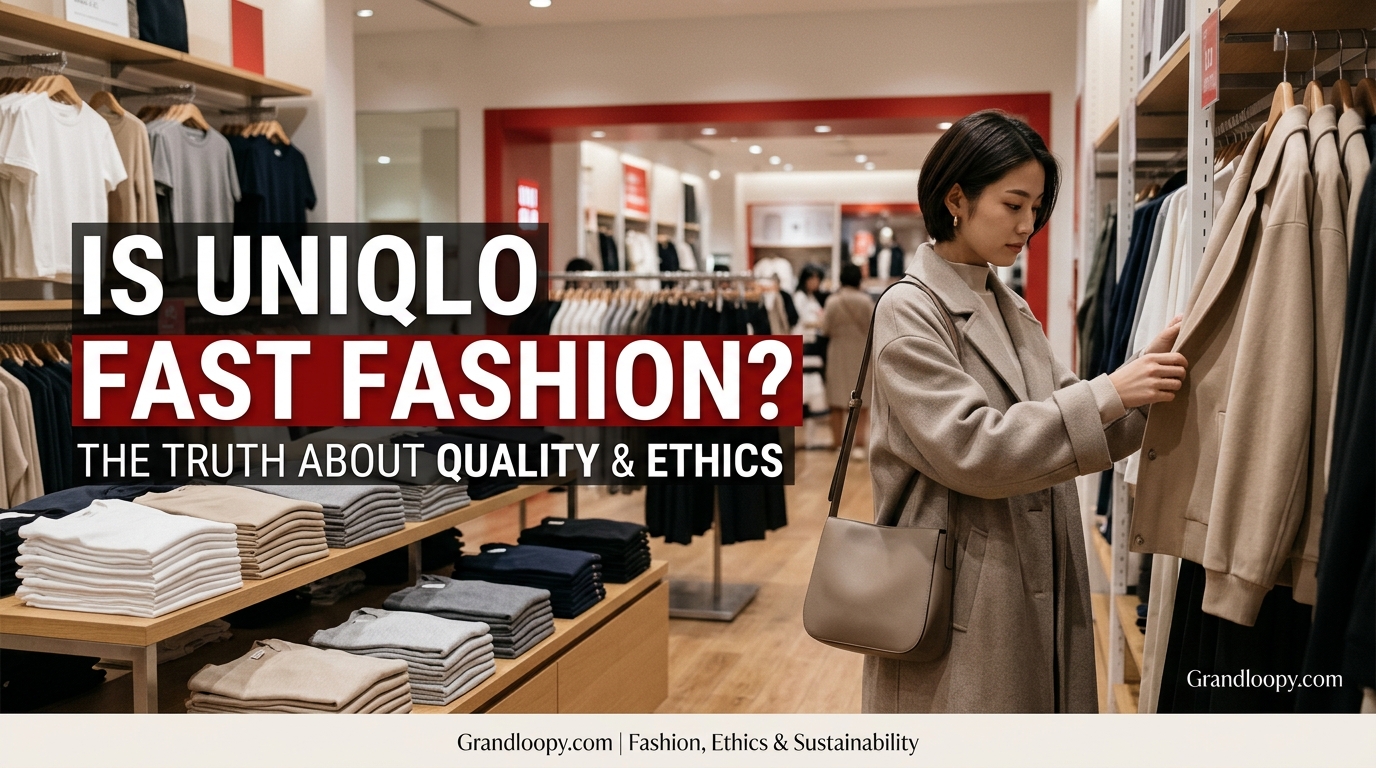
Is Uniqlo fast fashion? Yes, mostly, by the common definitions of the term, but Uniqlo rejects the label and has real differences from Zara and Shein.
Uniqlo is the third-largest clothing brand in the world, with nearly 3,000 stores and about 25 billion dollars in annual sales, according to Sustainable Jungle. That scale alone puts it in fast fashion territory.
At the same time, Uniqlo sells timeless basics, not weekly trends, and its core lines stay in stores far longer than Zara equivalents.
This guide lays out both sides, with ratings, comparisons, and the 2026 controversy record, so you can decide for yourself.
What Is Fast Fashion?
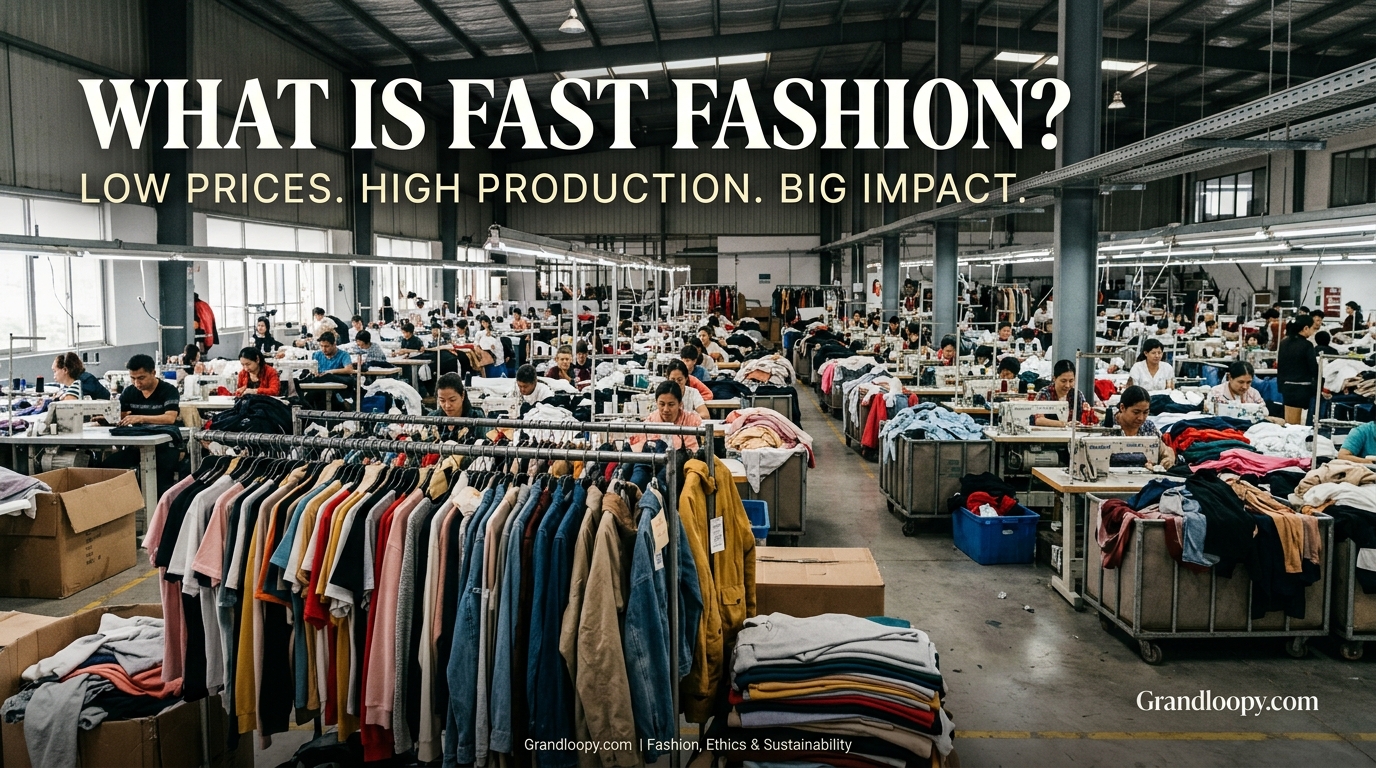
Fast fashion is a business model that prioritises the rapid production of trendy, affordable clothing to meet ever-changing consumer demands. Speed and volume matter more than durability or ethics.
The model has four hallmarks: frequent product refreshes, large global supply chains producing at scale, low average prices that encourage volume buying, and quick replication of runway looks at a fraction of the price.
The industry significantly contributes to environmental damage, including excessive textile waste, pollution from synthetic fibers, and high carbon emissions from rapid production cycles.
A commonly cited estimate says fashion is responsible for about 10 percent of global carbon emissions, more than all international flights and maritime shipping combined.
That figure is widely repeated and hard to verify precisely, so treat it as an estimate, not a fact.
The Wikipedia page on fast fashion defines the model the same way, with speed, volume, and low prices as the core traits. Use that definition as the test for every brand in this guide.
| Fast fashion trait | What it looks like | Does Uniqlo fit? |
|---|---|---|
| Frequent product refreshes | New styles every week or season | Partly: seasonal drops, fewer than Zara |
| Large global supply chain | Thousands of stores, global factories | Yes: nearly 3,000 stores worldwide |
| Low prices | Cheap enough to buy in volume | Yes: basics priced for volume buying |
| Trend replication | Runway looks copied in weeks | No: Uniqlo copies few runway trends |
| High production volume | Hundreds of millions of garments | Yes: volume is the business model |
| Short product life | Clothes designed to be discarded | No: basics designed to last seasons |
| Low transparency | Hidden factories and wages | Partly: factory lists published, wage evidence absent |
Uniqlo scores yes on three traits, no on two, and partly on two. That split is why the debate exists, and why neither side can claim a clean win.
Why Uniqlo Fits the Fast Fashion Definition
By the common definitions, Uniqlo is fast fashion. Large scale, frequent new drops, broad basics at low prices, and volume-driven production are all fast fashion traits, and Uniqlo has all of them.
The parent company name gives the game away. Uniqlo is owned by Fast Retailing of Japan, and the word fast is right there in the holding company name.
Uniqlo’s founder is Tadashi Yanai, who has been Japan’s richest man for years.
He built the brand on affordable, durable, everyday clothes that never go out of style, and that formula needs enormous volume to work.
Scale: Thousands of Stores and Billions in Sales
Uniqlo operates at a scale few brands match. Sustainable Jungle reports nearly 3,000 stores worldwide and about 25 billion dollars in annual sales, making it the third-largest clothing brand in the world.
Store counts conflict by source and date, so treat the figures as reported, not exact. Some sources say about 2,400 stores, and others say nearly 3,000, and the difference is mostly the count date.
Fast Retailing reported strong growth in fiscal 2024, with first-half revenue rising 12 percent to 1.79 trillion yen and operating profit up 18.3 percent to 304.22 billion yen.
Growth on that scale needs volume, and volume is the fast fashion engine.
Every new billion in revenue and every new market reinforces the same dynamic. The problem is not the quality of the garments but the scale at which they are put on the market.
Volume: Hundreds of Millions of Garments
Annual production exceeds hundreds of millions of garments, and the company does not disclose its exact production volumes. The growth of the group confirms the direction of travel.
Low prices and low margins mean the model needs you to buy a lot.
The business works when shoppers buy the same basic in a full rainbow of colors, and that is not eco-friendly by any measure.
Volume is the fundamental issue with the brand. Even if every garment lasts for years, making hundreds of millions of them still uses enormous resources.
Price: Low Prices That Encourage Buying More
Uniqlo prices are low enough to encourage volume buying. A T-shirt, a pair of socks, or a scarf costs little, and shoppers buy several at once without thinking twice.
Frequent discounting pushes shoppers to buy more, and Good On You names that discounting as a key aspect of the unsustainable fast fashion business model.
Scheduled limited offers replace markdowns, but the effect is the same.
Low prices are not proof of exploitation by themselves. They are proof of a model that depends on selling a lot of units, and that model has environmental costs.
Speed: Frequent Drops and Seasonal Turnover
Uniqlo releases new styles frequently and turns over seasonal collections quickly. The pace is slower than Zara, which puts new designs in stores twice a week, but it is still fast by traditional retail standards.
New products are created as a function of demand, not quantity, and the timing of introductions into stores is the core of the distribution strategy.
That responsiveness is a fast fashion trait, even when the products are basics.
Collaborations add speed too. Designer lines and limited collections create urgency, and urgency drives buying, and buying drives volume.
Why Uniqlo Says It Is Not Fast Fashion
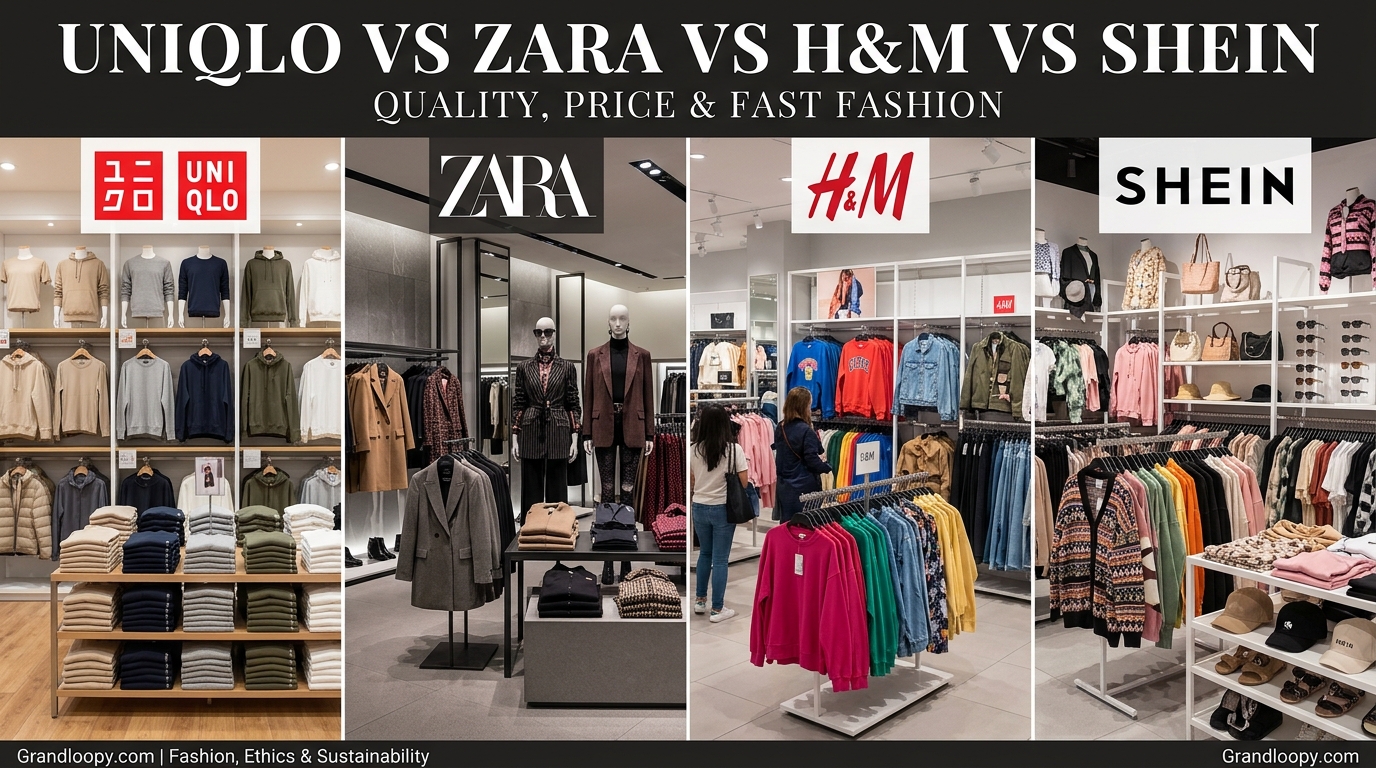
Uniqlo rejects the fast fashion label completely. The company calls itself the opposite of fast fashion, and it points to durability, timeless design, and emotional sustainability as the proof.
The argument has real substance. Uniqlo does not chase weekly trends, and its products are designed to be worn repeatedly, not thrown away after a season.
Whether that argument wins depends on what you think fast fashion means. If it means trend-chasing, Uniqlo is different. If it means scale and volume, Uniqlo is the same.
LifeWear and Timeless Basics
LifeWear is Uniqlo’s design philosophy, and it means simple, high-quality clothing designed to improve everyday living. The concept is deliberately vague, somewhere between branding and a utopia.
The philosophy translates into essential garments, designed to adapt to every body and every context.
No logos, no sequins, no ruffles, and not even an asymmetrical neckline, in the words of creative director Clare Waight Keller.
Waight Keller took over creative direction of the main lines at the end of 2024, including the new Uniqlo C line.
She described the shift from high fashion to designing for the masses as liberating, because at Uniqlo she has to think about real bodies.
The brand’s goal is clothing that transcends age, gender, and cultural barriers. That is the Made for All idea, and it is the opposite of trend-driven fashion.
Slower Design Cycles and Longer Product Life
Uniqlo’s core lines stay in stores far longer than Zara equivalents.
A 2026 data study that tracked 40,000 SKUs across Zara, H&M, and Uniqlo found Uniqlo core lines persisted 4.1 times longer in catalog than Zara equivalents.
That finding is the study’s own data, and it supports the LifeWear continuity claim. It does not prove Uniqlo is sustainable, but it does prove the product cycle is slower.
Zara produces over 10,000 different articles of clothing per year, while most retailers produce 2,000 to 4,000. Uniqlo sits closer to the traditional end of that range, with fewer styles and longer runs.
Longer runs mean less waste from unsold trend items, and they mean customers can rebuy the same basic year after year. That continuity is genuinely different from fast fashion.
Quality and Durability
Uniqlo prioritises durable materials and thoughtful construction, and its clothes are designed to last for many seasons. That durability is the brand’s strongest defence against the fast fashion label.
The quality edge comes from three places: fabric, hardware, and construction. Uniqlo uses Japanese Kaihara denim and reliable YKK zippers, and its stitching is consistent across millions of units.
Compared with H&M, Uniqlo quality is substantially better, according to independent comparisons. H&M builds a product meant to capture a trend, and Uniqlo builds a product meant to be a staple.
Durability lowers cost per wear, and cost per wear is the honest way to judge a cheap garment.
A 20 dollar shirt worn 50 times costs 40 cents per wear, and a 10 dollar shirt worn twice costs 5 dollars per wear.
Black clothes fade faster in the sun, and faded black reads as sloppy in a wardrobe built on Uniqlo basics.
Our guide to why black clothes fade so quickly covers the ten causes and the fixes.
Uniqlo Quality Up Close: Fabrics, Construction, and Cost Per Wear
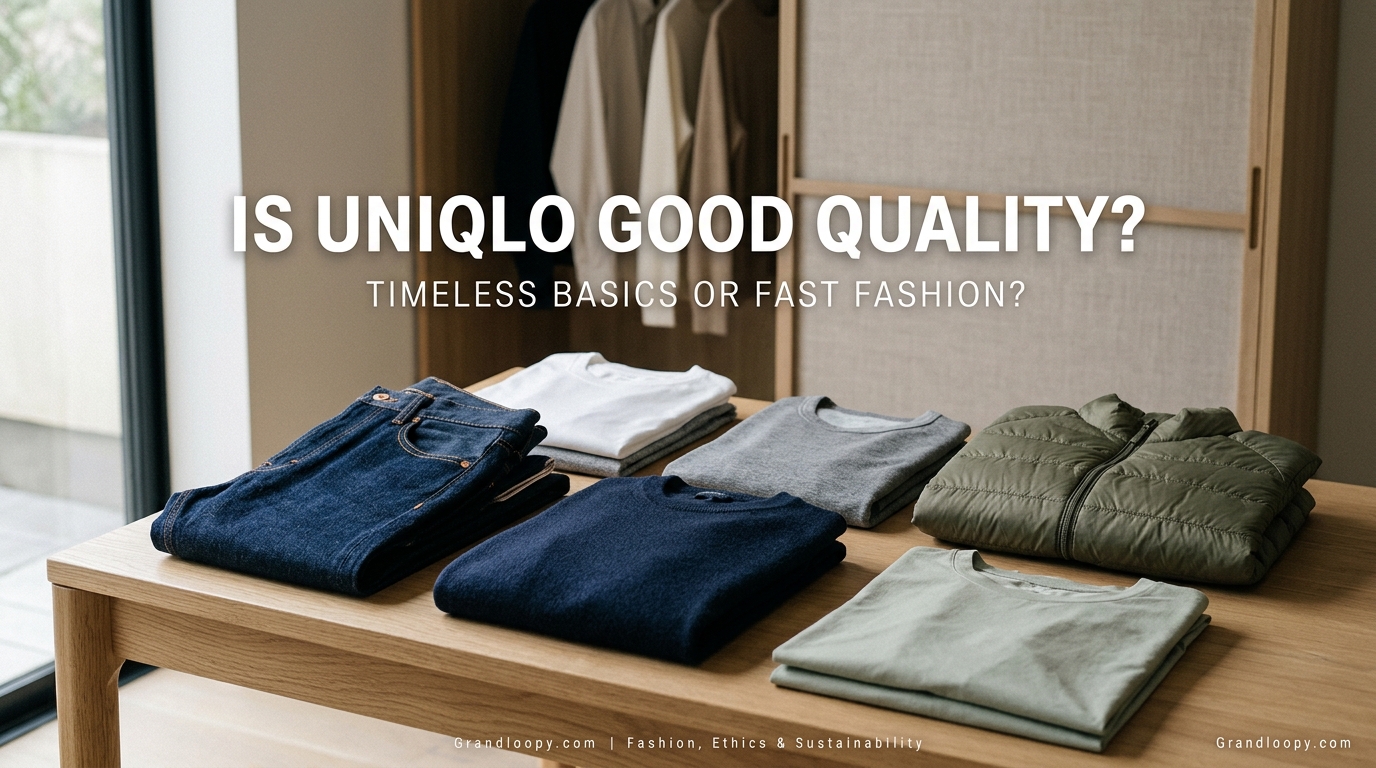
Uniqlo quality is the brand’s strongest defence, and it is also the most misunderstood part of the debate. Quality does not cancel scale, and scale does not cancel quality.
Both facts can be true at once. A brand can make excellent basics and still operate at a fast fashion scale, and judging it fairly means looking at both sides.
The Fabrics That Built the Brand
Heattech is the signature Uniqlo fabric. It turns body moisture into heat, and it keeps wearers warm without bulk, and it is the reason Uniqlo owns winter basics.
AIRism is the summer counterpart. It wicks moisture, dries fast, and feels smooth against the skin, and it is the reason Uniqlo owns summer underlayers.
Ultra Light Down is the third signature fabric line. It packs into a small pouch, weighs almost nothing, and provides real warmth, and it is the brand’s best-selling outerwear.
Cashmere and merino wool round out the range. Both are natural fibers, and both are softer than high-street rivals at the same price, and both need gentle care to last.
Construction: Denim, Zippers, and Stitching
Uniqlo jeans use Kaihara denim from Japan, and the mill is one of the most respected denim makers in the world. The fabric is dense, even, and consistent across millions of pairs.
YKK zippers are the hardware standard across the range. YKK is a Japanese company, and its zippers are the industry benchmark, and Uniqlo uses them on jeans, jackets, and bags.
Stitching is consistent because production runs are long. Long runs mean fewer changeovers, and fewer changeovers mean fewer defects, and that consistency shows in the finished garment.
Cost Per Wear: The Honest Math
Cost per wear is the price divided by the number of times you wear the garment. It is the only honest way to compare a cheap shirt with an expensive one.
| Item | Example price | Wears | Cost per wear |
|---|---|---|---|
| Uniqlo Supima cotton T-shirt | $15 | 50 | $0.30 |
| Zara basic tee | $13 | 15 | $0.87 |
| H&M basic tee | $10 | 10 | $1.00 |
| Uniqlo Ultra Light Down jacket | $70 | 100 | $0.70 |
| Uniqlo cashmere sweater | $100 | 60 | $1.67 |
The table shows why Uniqlo wins on value. A higher price with far more wears costs less per wear, and that is the durability argument in numbers.
The prices above are example prices, not quotes, and they change by season and region. Use the method, not the numbers, and count your own wears before you judge a purchase.
Uniqlo vs Zara vs H&M vs Shein
The comparison is where Uniqlo’s position becomes clear.
It is slower and better made than Zara and H&M, and it is far slower and better made than Shein, but it shares their scale and their volume.
Zara is the speed leader, with new designs in stores twice a week and a design-to-store time of about a month. H&M is the price leader, with the broadest range and the deepest discounts.
Shein is the volume leader by far, with thousands of new styles daily and prices lower than any high-street brand. Uniqlo is none of those things, and that is why the debate exists.
| Feature | Uniqlo | Zara | H&M | Shein |
|---|---|---|---|---|
| Core philosophy | Timeless basics, LifeWear | Runway trends, fast | Cheap trends, broad range | Ultra-fast trends, cheapest |
| New styles | Seasonal drops, slower | Twice a week, 10,000 plus per year | Weekly, very broad | Thousands daily |
| Price level | Low, stable prices | Mid, higher than H&M | Lowest on high street | Lowest overall |
| Quality | Best of the four | Decent for the price | Acceptable, short-lived | Lowest, inconsistent |
| Product life | Core lines persist 4.1 times longer than Zara | Short, trend-led | Short, trend-led | Very short, disposable |
| Transparency | Factory lists, 41 to 50 percent index score | Moderate, improving | Moderate, improving | Very low |
| Fast fashion? | Yes, mostly, by scale | Yes, definitively | Yes, definitively | Yes, ultra-fast |
The table shows why Uniqlo is the hardest case.
It is the best of the four on quality and product life, and the worst of the four is Shein by a wide margin, and Uniqlo still shares the scale problem.
A detailed three-brand business model comparison is the Investopedia guide to H&M, Zara, and Uniqlo. It covers supply chains, store counts, and the strategies that separate the three brands.
How Ethical Is Uniqlo? Ratings by Source
No single rating settles the ethics question. Different raters use different methods, and their scores conflict, so this section presents each rating by source and date, never merged.
The most authoritative rating is from Good On You, published in June 2026.
It rates Uniqlo overall as It is a Start, which is a middling score, and it breaks the score into environment, labour, and animal welfare.
The Fashion Transparency Index gave Uniqlo a score of 41 to 50 percent in 2022. Compared with other large retailers, that is sadly decent, and it is still less than half the possible score.
A third rater, The Fashionography, gives Uniqlo an accountability score of 231 out of 500, grade D, in a record reviewed in October 2026.
That is a much harsher verdict than Good On You, and the methods differ.
| Rater | Date | Score | What it measures |
|---|---|---|---|
| Good On You | June 2026 | Overall: It is a Start | Environment, labour, animals |
| Good On You environment | June 2026 | It is a Start | Materials, climate, circularity |
| Good On You labour | June 2026 | Good | Auditing, code of conduct, wages |
| Good On You animal welfare | June 2026 | It is a Start | Fur, leather, down, materials |
| Fashion Transparency Index | 2022 | 41 to 50 percent | Disclosure and transparency |
| The Fashionography | October 2026 | 231 out of 500, grade D | Incidents, labour, recovery |
| Trustpilot customer reviews | 2026 | 1.6 out of 5, 4,624 reviews | Customer satisfaction, not ethics |
The Trustpilot score is not an ethics rating. It measures customer satisfaction, and it is included here only because shoppers confuse it with an ethics score.
The full Good On You rating is the Good On You page on how ethical Uniqlo is.
It explains the environment, labour, and animal scores in detail, and it is the strongest single source for this section.
Environment: It Is a Start
Good On You rates Uniqlo’s environment as It is a Start.
The brand takes some steps in the right direction, and it still produces a huge volume of clothes and discounts frequently to push shoppers to buy more.
On the positive side, Uniqlo has a repair and reuse program, and it offers clothing recycling to consumers to help address end-of-life textile waste. It designs long-lasting and timeless items, which is good for circularity.
On the negative side, Good On You could not find an aggregate breakdown of what percentage of Uniqlo’s materials are lower-impact. The brand uses some lower-impact materials, but the share is not disclosed.
Uniqlo has set a science-based climate target to reduce emissions in its supply chain, and it stated it was aiming to eliminate hazardous chemicals after 2025.
At the June 2026 rating review, analysts could not find evidence of whether the brand was on track.
Labour: Good, With a Living Wage Gap
Good On You rates Uniqlo’s labour as Good.
Its social auditing program covers the entire final production stage and is accredited by the Fair Labor Association, and its Code of Conduct covers the ILO Four Fundamental Freedoms.
That is a genuinely strong labour setup for a brand of this size.
FLA accreditation means an outside body checks the auditing, and the ILO principles cover forced labour, child labour, discrimination, and freedom of association.
The gap is living wages. Uniqlo states it has a project to improve wages, but there is no evidence it ensures a living wage is paid at any stage of its supply chain.
Other sources are harsher on labour. Panaprium reports unpaid wages and factory closures without severance in the supply chain, particularly in Indonesia, and those reports are allegations, not proven findings.
Animal Welfare: It Is a Start
Good On You rates Uniqlo’s animal welfare as It is a Start. The brand does not use fur, alpaca, shearling, or mohair, which is positive, and it uses leather without commitments to certifying leather production.
The down supply chain is the weak point. A PETA Asia investigation released in November 2022 showed ducks being slaughtered while conscious at a slaughterhouse supplying Vina Prauden, which PETA says supplies Uniqlo.
That video is an allegation by PETA Asia, and it has not been independently verified as a Uniqlo supply chain fact.
It is included here because it is part of the public record, and it should be read as alleged.
Uniqlo Controversies: What Actually Happened
Uniqlo has faced real controversies, and they matter to the verdict. This section lists them in a timeline, with each one labelled as ruled, reported, or alleged, so readers can tell fact from claim.
Allegations are not findings, and a seizure is not a conviction. The timeline keeps that distinction visible, because merging allegations into facts would be unfair to the brand and misleading to readers.
| Date | Event | Status |
|---|---|---|
| 2021 | US Customs seizes Uniqlo shirts suspected of Xinjiang forced-labour cotton | Reported; Uniqlo denies Xinjiang sourcing |
| November 2022 | PETA Asia video at a slaughterhouse supplying Vina Prauden | Alleged; PETA says the supplier serves Uniqlo |
| 2023 | Complaint involving Uniqlo France and alleged Uyghur forced-labour links | Reported; complaint filed, outcome unclear |
| June 2025 | California Prop 65 case over BPS in thermal receipts | Alleged; Uniqlo USA named defendant May 2026 |
| December 2025 | Uniqlo China stores allegedly photograph shoppers | Alleged; reported by Jiupai News |
| June 24, 2026 | UK ASA rules Uniqlo fleece recycled materials ad misleading | Ruled; ad must not appear again in that form |
Xinjiang Cotton and the 2021 US Customs Seizure
In 2021, US Customs seized Uniqlo shirts suspected of being produced using forced labour in China’s Xinjiang region.
The seizure was reported by the Business and Human Rights Resource Centre, and it is the most serious allegation in Uniqlo’s record.
Uniqlo states that it does not source cotton from China’s Xinjiang region. That denial is the company’s position, and it has not been disproven in a public finding.
A 2023 complaint involving Uniqlo France and alleged links to Uyghur forced labour was also reported.
The outcome of that complaint is unclear in the public record, and it should not be presented as a finding.
Sheffield Hallam University research on Xinjiang cotton supply chains is the academic background here. It documents the risks in the region, and it does not by itself prove any single brand used forced labour.
The UK ASA Recycled Fleece Ad Ruling (June 2026)
On June 24, 2026, the UK Advertising Standards Authority upheld a complaint against Uniqlo.
A paid search ad for women’s fleece coats and jackets claimed recycled materials, and the ASA found the claim was too vague to substantiate.
The ruling reference is A26-1327727, and the ASA found the ad breached CAP Code rules on misleading advertising and environmental claims. Some components and fabrics were not recycled, so the absolute claim could not stand.
The ad must not appear again in that form, and Uniqlo was told to make the basis of environmental claims clear.
That is a formal ruling, not an allegation, and it is the strongest greenwashing evidence in the record.
The ruling matters because it is recent, official, and specific. It does not prove Uniqlo greenwashes everything, but it does prove one environmental claim was misleading.
Labour, Wages, and Transparency Gaps
The labour record is mixed, and the transparency record is thin.
Fast Retailing publishes lists of garment factories and core fabric mills, and it conducts weekly factory visits in key production regions including Bangladesh and Indonesia.
Fast Retailing’s 2024 Modern Slavery Statement outlines efforts to identify, prevent, and remediate modern slavery risks in its supply chains. That is a real document with real commitments.
Critics argue the company lacks comprehensive transparency on factory conditions and audit results. Publishing a factory list is not the same as publishing audit findings, and the findings are what would prove the system works.
Workers in Indonesia have reported being owed severance pay, and those reports are allegations from workers, not findings from a court. They belong in the record, labelled as reported.
Is Uniqlo Sustainable?
Uniqlo’s own website says it has been on a path to sustainability for more than 20 years.
The company describes itself as a global company creating responsible clothing, committed to a healthy planet, society, and people.
Claims like that are common among the worst fast fashion brands, and a total lack of transparency would be a red flag. Uniqlo is not totally opaque, but it is far from fully transparent.
The honest answer is that Uniqlo sustainability is a work in progress. It has real programs and real gaps, and the scale of the business works against the programs.
What Uniqlo Gets Right
RE.UNIQLO is the flagship sustainability program. It collects used clothing from customers for recycling or reuse, and it gives old garments a second life instead of a landfill.
The repair and reuse program is a second real step. Repairing clothes extends their life, and extended life is the most effective sustainability measure a clothing brand can offer.
Fast Retailing has set goals to reduce greenhouse gas emissions across its supply chain and invest in renewable energy sources. A science-based target is a serious commitment, even when progress is hard to verify.
Uniqlo has also worked on lower-impact materials and jean processing methods that reduce water usage. Those are real engineering improvements, and they matter at Uniqlo’s scale.
Where It Falls Short
The biggest shortfall is volume. No recycling program can offset hundreds of millions of new garments per year, and no repair program can offset a model that needs shoppers to buy in volume.
Frequent discounting is the second shortfall. Good On You names discounting as a key aspect of the unsustainable fast fashion model, because it trains shoppers to buy more than they need.
Disclosure is the third shortfall. Good On You could not find an aggregate breakdown of lower-impact materials, and analysts could not find evidence on climate target progress at the June 2026 review.
The ASA ruling is the fourth shortfall. A misleading recycled materials claim in 2026 shows the marketing can run ahead of the evidence, and that is the definition of greenwashing risk.
A deep dive into the brand’s record is the Sustainable Jungle guide to whether Uniqlo is fast fashion. It covers the controversy roundup, the ethics gaps, and the sustainability work in progress.
Uniqlo Pros and Cons
Every shopper weighs the same trade-off. Uniqlo offers the best quality basics at the lowest stable prices, and it does so at a scale that has real environmental costs.
| Pros | Cons |
|---|---|
| Best quality basics among fast fashion brands | Massive production volume and scale |
| Timeless designs that last for seasons | Low prices encourage buying in volume |
| Low cost per wear over time | Frequent discounting pushes overbuying |
| Wide size range and real-body fit | No evidence of living wages in the supply chain |
| FLA-accredited labour auditing | Transparency gaps on materials and climate progress |
| RE.UNIQLO recycling and repair programs | ASA ruled a 2026 recycled claim misleading |
| Innovative fabrics like Heattech and AIRism | Synthetic fabrics and fossil-fuel materials |
How to Shop Uniqlo More Ethically
You do not have to boycott Uniqlo to shop better. Five steps cut the impact sharply, and they work for any fast fashion brand, not just this one.
1. Buy basics, not trends. Choose the timeless pieces Uniqlo does best: T-shirts, Heattech, AIRism, and Ultra Light Down. Skip the limited collaborations and the trend drops.
2. Buy fewer, wear longer. One well-chosen shirt worn 50 times beats five cheap shirts worn twice. Cost per wear is the honest metric, and durability is Uniqlo’s strength.
3. Skip the sale trap. Scheduled limited offers are designed to make you buy more, and the discount is not a saving if the item stays unworn. Buy only what you planned to buy.
4. Care for what you own. Wash cold, hang dry, and repair small damage instead of replacing the garment. Care extends life, and life is the sustainability measure that matters most.
5. Recycle and repair through RE.UNIQLO. Return used clothing through the brand’s recycling program, and use the repair service when it is available in your region.
Clothes look better in stores than at home for a reason, and that reason is lighting, fit, and styling.
Our guide to why clothes look better in stores than at home explains the tricks, and it helps you shop smarter and buy less.
Ethical Alternatives to Uniqlo
If the verdict pushes you elsewhere, three brands cover the same basics with stronger ethics. None is perfect, and each trades something for its principles.
Everlane is the transparency leader, with cost breakdowns and factory stories for each product. It costs more than Uniqlo, and its basics are plainer, and its ethics record is stronger.
Muji is the minimalist alternative, with a similar Japanese design philosophy and a similar price range. It is quieter on labour transparency than Uniqlo, and its quality is comparable.
COS is the design-led alternative, with better tailoring and more interesting cuts. It is owned by H&M Group, so it shares the parent company’s scale problem, and its prices are higher.
| Brand | Price | Quality | Ethics edge | Trade-off |
|---|---|---|---|---|
| Uniqlo | Low | Best basics | FLA auditing, RE.UNIQLO | Volume and scale |
| Everlane | Mid | Good | Radical transparency | Higher prices, plainer design |
| Muji | Low to mid | Good | Minimalist, durable | Quieter on labour |
| COS | Mid | Very good | Better tailoring, design | H&M Group ownership |
| Thrift and vintage | Lowest | Varies | No new production | Time and luck needed |
Thrift is the strongest alternative of all. Buying second-hand Uniqlo is more sustainable than buying new from any ethical brand, because it needs no new production at all.
Our guide to how to build a capsule wardrobe without buying more clothes shows how to build a basics wardrobe from pieces you already own. That is the cheapest and greenest way to start.
Key Takeaways
Is Uniqlo fast fashion? Yes, mostly, by the common definitions. Scale, volume, low prices, and frequent drops are all fast fashion traits, and Uniqlo has all of them.
Uniqlo is different from Zara, H&M, and Shein in real ways.
Its basics are timeless, its core lines last 4.1 times longer in stores than Zara equivalents, and its quality is the best of the four.
The ethics ratings are middling, not terrible. Good On You says It is a Start overall, with labour rated Good, and the Fashion Transparency Index scored 41 to 50 percent in 2022.
The controversies are real and labelled. The 2021 US Customs seizure is reported, the June 2026 ASA ruling is a formal finding, and the PETA video and China photography reports are allegations.
The most ethical way to shop Uniqlo is to buy less and wear longer. Basics, not trends, and cost per wear, not sale price, are the rules that cut the impact.
Keep Reading on GrandLoopy
Uniqlo is not the only brand facing the fast fashion question. Our guide to is Cider fast fashion applies the same verdict-with-evidence method to another popular brand, with the same checklist and ratings approach.
Fashion history helps the verdict make sense too. Our guide to what Y2K fashion is explains the 1998 to 2004 era that fast fashion revived, and it shows how trends cycle back into stores.
Frequently Asked Questions
Is Uniqlo fast fashion?
Yes, mostly, by the common definitions. Large scale, frequent drops, broad basics at low prices, and volume-driven production are all fast fashion traits, and Uniqlo has all of them.
Is Uniqlo considered fast fashion?
Most independent guides say yes, and Uniqlo says no. The brand rejects the label and calls itself the opposite of fast fashion, while critics point to scale and volume as the deciding factors.
Why is Uniqlo not fast fashion?
Uniqlo argues it is not fast fashion because it sells timeless basics, not weekly trends. Its LifeWear philosophy, slower design cycles, and durable products are the core of that argument.
Why do people say Uniqlo is fast fashion?
People say Uniqlo is fast fashion because of its scale and volume. Nearly 3,000 stores, about 25 billion dollars in sales, and hundreds of millions of garments per year fit the fast fashion model.
Is Uniqlo ethical?
Uniqlo is middling on ethics, not terrible and not excellent.
Good On You rates it It is a Start overall in June 2026, with labour rated Good and environment and animal welfare rated It is a Start.
Is Uniqlo sustainable?
Uniqlo sustainability is a work in progress. It has real programs like RE.UNIQLO recycling and a science-based climate target, and it still produces a huge volume of clothes with disclosure gaps.
Is Uniqlo a good brand?
Uniqlo is a good brand for quality basics at low prices.
Its ethics and sustainability record is middling, and the best way to judge it is by cost per wear and by how long you keep each garment.
Why is Uniqlo so cheap?
Uniqlo is cheap because of scale, simplicity, and efficiency. Timeless basics need no trend chasing, long production runs cut costs, and huge volume spreads fixed costs across millions of units.
Where are Uniqlo clothes made?
Uniqlo clothes are made in factories across Asia, including China, Bangladesh, Indonesia, and Vietnam. Fast Retailing publishes lists of garment factories and core fabric mills.
Does Uniqlo use sweatshops?
There is no proven finding that Uniqlo uses sweatshops, and there are reported labour violations in its supply chain. Reports include unpaid wages and severance disputes, and they are allegations, not court findings.
Does Uniqlo use child labour?
Uniqlo’s Code of Conduct prohibits child labour, and there is no proven finding of child labour in its supply chain. Its auditing program is accredited by the Fair Labor Association.
Does Uniqlo use Xinjiang cotton?
Uniqlo states it does not source cotton from China’s Xinjiang region. US Customs seized Uniqlo shirts in 2021 on suspicion of Xinjiang forced-labour cotton, and that seizure is reported, not a proven finding.
What is Fast Retailing?
Fast Retailing is the Japanese holding company that owns Uniqlo. It is one of the largest apparel companies in the world, and its name contains the word fast.
Who owns Uniqlo?
Uniqlo is owned by Fast Retailing Co., Ltd. of Japan. The company also owns GU, Theory, and other brands, and Uniqlo is its largest brand by far.
Who founded Uniqlo?
Tadashi Yanai founded Uniqlo, opening the first store in Hiroshima in 1984. He has been Japan’s richest man for years, and he still leads Fast Retailing.
When was Uniqlo founded?
The first Uniqlo store opened in Hiroshima in 1984. The parent company Fast Retailing traces its own history to 1949, which is a different date and should not be confused with the brand.
What is LifeWear?
LifeWear is Uniqlo’s design philosophy of simple, high-quality clothing designed to improve everyday living. It means timeless basics with no logos, made for all ages, genders, and cultures.
Is Uniqlo better than Zara?
Uniqlo is better than Zara on quality and product life, and slower on trends. Zara is better on fashion-forward design and speed, and both are fast fashion by scale.
Is Uniqlo better than H&M?
Uniqlo is better than H&M on quality, durability, and cost per wear. H&M is cheaper and trendier, and its garments are designed for shorter lives.
Is Uniqlo better than Shein?
Uniqlo is far better than Shein on quality, durability, and transparency. Shein is ultra-fast fashion with thousands of new styles daily, and Uniqlo is slower and better made by a wide margin.
Is Uniqlo good quality?
Yes, Uniqlo quality is good for the price, and the best among fast fashion brands. Japanese Kaihara denim, YKK zippers, and consistent stitching are the reasons most often cited.
Does Uniqlo last long?
Yes, Uniqlo basics are designed to last for many seasons. Core lines persist 4.1 times longer in stores than Zara equivalents, according to a 2026 data study, and owners report years of wear.
Does Uniqlo pay living wages?
There is no evidence Uniqlo ensures a living wage at any stage of its supply chain. Good On You notes the brand has a project to improve wages, but no proof of living wages paid.
What is RE.UNIQLO?
RE.UNIQLO is Uniqlo’s clothing recycling and reuse program. Customers return used clothing, and the brand recycles it or gives it a second life instead of sending it to landfill.
Should I boycott Uniqlo?
That is a personal decision, and most ethical guides do not call for a boycott.
Buying fewer basics, wearing them longer, and using RE.UNIQLO cuts the impact more than switching brands and buying just as much.
Conclusion
Is Uniqlo fast fashion comes down to what the term means. By scale, volume, price, and drops, yes. By trend-chasing and disposability, no. Both answers are honest, and the evidence supports both.
The ratings tell the same mixed story. Good On You says It is a Start, the Fashion Transparency Index scored 41 to 50 percent, and one tracker gives a D grade.
No rater calls Uniqlo excellent, and no rater calls it the worst.
Shop accordingly. Buy basics, not trends, and buy fewer, wear longer, and recycle through RE.UNIQLO. That is the whole system, and it works whether you keep shopping at Uniqlo or switch to an alternative.
A short verdict guide to another popular brand is the Nimble Made guide to whether Uniqlo is fast fashion. It gives the same short answer, with a checklist and smarter alternatives.