Why Do White Sneakers Turn Yellow After Washing?
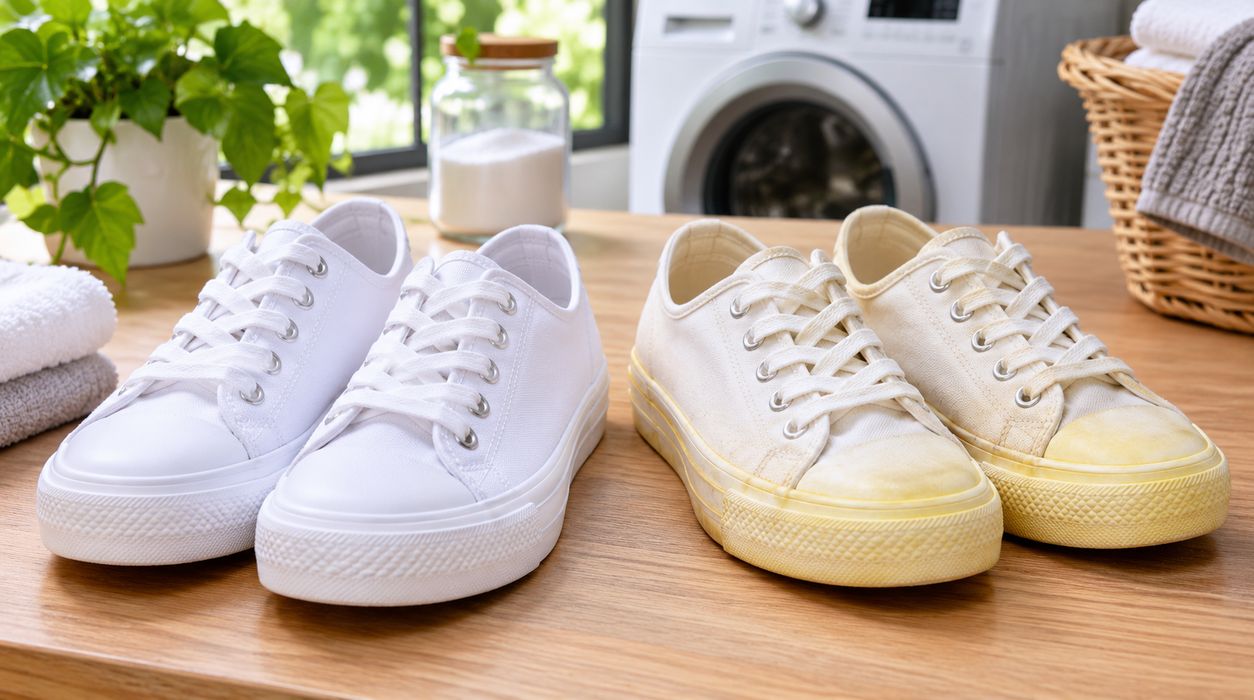
White sneakers are a wardrobe favorite because they look clean, versatile, and easy to style. Whether you wear classic canvas shoes, white leather sneakers, or everyday athletic footwear, a fresh white pair can complement almost any casual outfit.
But there is a frustrating problem many sneaker owners experience.
You wash your shoes to remove dirt and stains, leave them to dry, and discover that the once-white fabric has developed yellow patches.
Sometimes the yellowing appears around the soles. Other times, the entire upper looks slightly cream-colored or stained.
So, why do white sneakers turn yellow after washing?
The most common explanations include leftover detergent, dissolved dirt migrating through the fabric, chemical changes in shoe materials, sunlight exposure, and improper drying.
The good news is that some yellow stains can be removed or reduced with careful cleaning.
However, not every type of yellowing is reversible, and using aggressive chemicals can make the problem worse.
This guide explains what causes white sneakers to turn yellow, how to clean different materials safely, and how to prevent discoloration after future washes.
What Causes White Sneakers to Turn Yellow After Washing?
White sneakers can turn yellow for several reasons, and identifying the cause is the first step toward choosing an effective solution.
Some yellow stains are caused by substances remaining on the fabric after cleaning. Others result from changes in the materials themselves.
Common causes include:
- Detergent or cleaning product residue
- Dirt migrating to the fabric surface during drying
- Aging adhesives and rubber
- Oxidation of certain shoe materials
- Exposure to sunlight and heat
- Improper use of bleach
- Incomplete rinsing
- Uneven drying conditions
- Repeated aggressive cleaning
Different shoe materials react differently to moisture and cleaning products.
For example, canvas sneakers may develop visible stains as moisture evaporates, while synthetic midsoles can gradually yellow because of material aging.
Understanding this distinction can help prevent unnecessary damage.
1. Detergent Residue Can Leave Yellow Stains
One common reason white canvas sneakers look yellow after washing is that cleaning products were not completely removed.
Laundry detergent contains ingredients designed to loosen dirt and oils.
When too much detergent is used, or rinsing is inadequate, residue may remain in the fabric.
As the shoes dry, this residue can become visible.
Why Does Detergent Remain Inside Shoes?
Sneakers often contain multiple layers of fabric, padding, foam, and adhesive.
These materials can absorb water and cleaning solutions.
Unlike a thin cotton shirt, a shoe may be difficult to rinse thoroughly.
Detergent trapped inside the upper can migrate toward the surface during drying.
How to Prevent Detergent Residue
Use a small amount of mild cleaning solution suitable for the shoe material.
Avoid soaking shoes unnecessarily.
Remove cleaning product carefully with a damp cloth or controlled rinsing when the manufacturer permits it.
The American Cleaning Institute provides general guidance on using cleaning products correctly and following manufacturer instructions.
More detergent does not necessarily mean better cleaning.
2. Dirt Can Move Back to the Surface During Drying
Sometimes sneakers look clean immediately after washing but develop yellow or brownish marks as they dry.
This may happen because dissolved dirt and other substances move through wet fabric toward the surface.
As water evaporates, those substances can remain behind.
This process is often described as wicking.
Why Canvas Shoes Are Vulnerable
Canvas is an absorbent textile.
When the material becomes saturated, moisture can carry dissolved substances through the fibers.
If dirt remains inside the shoe, it may become visible again during drying.
The result can look like a new stain even though the discoloration comes from material already present in the footwear.
How to Reduce Wicking
Avoid oversaturating canvas shoes.
Remove loose dirt before applying water.
Clean the affected areas carefully and remove as much dirty cleaning solution as possible.
Dry shoes in a well-ventilated location according to the manufacturer’s recommendations.
If staining repeatedly returns, professional cleaning may be preferable to repeated soaking.
3. Sunlight Can Contribute to Yellowing
Sunlight is another possible contributor to sneaker discoloration.
Some plastics, rubber compounds, adhesives, and synthetic materials can change color after prolonged exposure to ultraviolet radiation.
This process depends on the material’s chemical composition and environmental conditions.
Does Sunlight Always Turn White Sneakers Yellow?
No.
Sunlight affects different materials in different ways.
Some footwear materials contain stabilizers that help resist ultraviolet damage.
Others may become discolored as they age.
Drying sneakers in direct sunlight is not guaranteed to cause immediate yellowing, but prolonged exposure may contribute to unwanted changes in certain materials.
Where Should You Dry White Sneakers?
For many shoes, a shaded and well-ventilated area is a practical option.
Avoid placing footwear directly against heaters or other strong heat sources.
Always follow the shoe manufacturer’s drying instructions.
4. Bleach Can Damage White Sneakers
Many people assume chlorine bleach is the best way to restore white shoes.
However, bleach is not appropriate for every sneaker material.
It can damage certain fabrics, affect adhesives, and cause discoloration.
Why Can Bleach Cause Yellow Stains?
Chlorine bleach is a strong oxidizing chemical.
Its effects depend on the materials and dyes it contacts.
Some shoe components may react poorly to bleach, resulting in weakened fibers or unwanted color changes.
Using too much bleach or failing to rinse it properly can increase the risk of damage.
Should You Use Bleach on White Shoes?
Only use a bleach-containing product when the footwear manufacturer explicitly recommends it.
Never mix chlorine bleach with vinegar, ammonia, or other cleaning chemicals.
Such mixtures can release dangerous gases.
For most everyday sneaker cleaning, starting with a mild, manufacturer-approved method is safer.
5. White Rubber Soles Can Yellow With Age
Not all yellowing comes from washing.
Sometimes the soles of white sneakers gradually change color because of aging.
Rubber and synthetic sole materials can undergo chemical changes over time.
Exposure to oxygen, heat, light, and environmental pollutants may influence those changes.
Why Do White Sneaker Soles Turn Yellow?
The explanation depends on the specific sole material.
Some polymers and additives can discolor as they age.
Certain adhesives may also become more visible or change color over time.
Washing may make existing yellowing more noticeable because surrounding dirt has been removed.
Can Yellow Rubber Be Made White Again?
Some surface discoloration can be cleaned.
However, yellowing caused by changes within the material may not be removable through ordinary washing.
Specialized restoration products exist, but they may involve chemical treatments that can damage footwear when used incorrectly.
Avoid aggressive restoration methods on valuable or delicate sneakers.
6. Hot Water Can Affect Shoe Materials
Hot water may seem useful for removing stubborn dirt, but it can be unsuitable for certain sneakers.
Many shoes combine materials with different temperature tolerances.
Heat may affect adhesives, foam, synthetic components, and fabric finishes.
Is Cold Water Better for White Sneakers?
Cool water is often a reasonable choice when the manufacturer permits wet cleaning.
However, cleaning requirements vary by material.
Leather, suede, canvas, and synthetic mesh should not automatically receive the same treatment.
Avoid Unnecessary Soaking
Submerging an entire shoe can saturate internal components that are difficult to dry.
Spot cleaning is often preferable when only a small area is dirty.
7. Washing Machines Can Cause Unexpected Problems
Some sneakers are machine-washable, while others are not.
Putting unsuitable footwear in a washing machine can damage its shape, construction, or surface finish.
Why Machine Washing May Increase Yellowing
Machine washing can saturate shoes with water and detergent.
If internal materials retain cleaning solution, discoloration may appear during drying.
Mechanical agitation can also affect adhesives and delicate components.
Check the Manufacturer’s Instructions
Do not assume that all canvas or athletic sneakers are machine-washable.
Some brands recommend hand cleaning instead.
If machine washing is permitted, follow the specified cycle, temperature, and drying guidance.
8. Improper Drying Can Leave Water Marks
Drying is an important part of sneaker care.
Shoes contain multiple layers, and moisture may evaporate unevenly.
This can sometimes leave visible marks on absorbent materials.
Avoid High-Heat Drying
Do not place sneakers in a tumble dryer unless the manufacturer explicitly permits it.
High temperatures can damage certain adhesives, foam, and synthetic materials.
Improve Air Circulation
Place shoes in a well-ventilated location.
Remove removable insoles when appropriate and allowed by the manufacturer.
Avoid storing footwear while it remains damp.
Do Paper Towels Prevent Yellowing?
Some cleaning guides recommend using white paper towels to absorb moisture from canvas shoes.
This may help manage surface moisture in certain situations, but it is not a guaranteed method for preventing yellowing.
Paper products can also leave fibers or residue.
Use only clean, colorfast materials and avoid pressing damp paper into delicate finishes.
9. Shoe Materials and Manufacturing Quality Matter
Two pairs of white sneakers may react differently to the same cleaning method.
One pair may remain bright, while another develops yellow patches.
The difference can come from fabric composition, adhesives, surface coatings, and manufacturing processes.
Canvas Sneakers
Canvas absorbs moisture and may show stains caused by residue or wicking.
Leather Sneakers
Leather requires cleaning products suitable for its finish.
Excessive water or harsh chemicals can damage the surface.
Synthetic Mesh Sneakers
Mesh may contain multiple fiber types and bonded components.
Aggressive scrubbing can damage delicate structures.
Rubber and Foam Soles
Soles may discolor through aging or chemical changes.
Cleaning cannot always reverse these processes.
This is why material-specific care is more effective than using one cleaning recipe for every shoe.
How to Clean Yellowed White Canvas Sneakers Safely
If your white canvas sneakers have developed yellow stains, begin with a gentle approach.
Step 1: Check the Care Instructions
Look for the manufacturer’s recommended cleaning method.
Do not proceed with wet cleaning if the material requires a different treatment.
Step 2: Remove Loose Dirt
Use a soft, dry brush to remove dust and loose particles.
Avoid scrubbing aggressively.
Step 3: Prepare a Mild Cleaning Solution
If permitted, mix a small amount of suitable mild detergent with cool water.
Avoid combining multiple cleaning chemicals.
Step 4: Test a Hidden Area
Apply a small amount of solution to an inconspicuous section.
Check for discoloration or material damage.
Step 5: Clean Gently
Use a soft cloth or brush suitable for the fabric.
Work carefully without saturating the entire shoe.
Step 6: Remove Cleaning Residue
Use a clean, slightly damp cloth to remove remaining solution.
Repeat gently if necessary.
Step 7: Air-Dry Properly
Allow the shoes to dry in a shaded, well-ventilated area.
Avoid direct heat.
Step 8: Reassess the Stains
Once completely dry, examine the shoes.
If the discoloration remains, determine whether it is surface staining or permanent material yellowing.
Do not repeatedly apply stronger chemicals without understanding the cause.
How to Clean White Leather Sneakers
White leather sneakers require a different approach from canvas footwear.
Leather can be sensitive to excessive moisture and inappropriate cleaning agents.
Start by removing loose dirt with a soft cloth.
Use a cleaner recommended for the specific leather finish.
Apply the product according to its instructions and remove residue carefully.
Avoid soaking leather sneakers or using abrasive brushes.
For persistent discoloration, a professional leather-care service may be appropriate.
The goal is to preserve the surface finish rather than aggressively remove every visible mark.
How to Clean Yellow Sneaker Soles
White rubber soles can collect dirt, scuff marks, and surface stains.
Some discoloration may be removable with gentle cleaning.
Begin With Mild Cleaning
Use a soft cloth and an appropriate cleaning solution.
Avoid allowing chemicals to contact delicate uppers or decorative finishes.
Treat Scuff Marks Carefully
A suitable soft cleaning tool may remove surface marks.
However, abrasive products can wear away finishes or textures.
Test any product in a small area first.
Know When Yellowing Is Permanent
If the sole has changed color internally because of aging, surface cleaning may produce little improvement.
Repeated aggressive treatment can cause more harm than good.
Can Baking Soda Remove Yellow Stains From White Sneakers?
Baking soda is frequently recommended as a household cleaning ingredient.
Its mild abrasive properties may help remove certain surface deposits.
However, it is not a universal solution for sneaker yellowing.
On delicate materials, abrasive rubbing can damage the surface.
Baking soda residue may also be difficult to remove from textured fabrics.
Use it only when compatible with the material and manufacturer instructions.
For expensive footwear, a purpose-made cleaning product may be a more predictable option.
Does Toothpaste Make White Sneakers White Again?
Toothpaste is another popular cleaning suggestion.
Some toothpaste formulations contain mild abrasives, but they are designed for teeth rather than footwear.
Ingredients vary, and certain products may leave residue or damage shoe finishes.
Toothpaste is not a reliable treatment for oxidation or permanent yellowing.
A shoe-specific cleaner is generally a more appropriate starting point.
How to Prevent White Sneakers From Turning Yellow
Prevention is often easier than restoration.
A few practical habits can help preserve white footwear.
Clean Small Stains Promptly
Remove surface dirt before it becomes deeply embedded.
Use a method suitable for the shoe material.
Avoid Excessive Detergent
Too much cleaning solution can leave residue.
Follow product instructions.
Reduce Unnecessary Water Exposure
Spot cleaning may be sufficient for lightly dirty sneakers.
Avoid soaking shoes unless recommended.
Dry Shoes Correctly
Choose a well-ventilated location and avoid excessive heat.
Store Sneakers Properly
Keep footwear clean and dry.
Avoid prolonged exposure to direct sunlight and damp storage conditions.
Use Appropriate Shoe-Care Products
Protective treatments may be suitable for certain materials.
However, not every spray or coating is compatible with every shoe.
Test products and follow the manufacturer’s guidance.
Why White Sneakers Look Different Under Store Lighting
White shoes can appear slightly different under warm indoor lighting, cool LED lighting, and natural daylight.
This is partly because the color and direction of light affect how materials appear.
A sneaker that looks bright white in a store may appear warmer or creamier at home.
That does not necessarily mean the shoe has yellowed.
Grandloopy’s guide to shiny versus shiney explains terminology related to reflective appearances, which is useful when describing glossy sneaker finishes.
For accurate color evaluation, compare shoes under consistent, neutral lighting.
How to Style White Sneakers Even When They Are Slightly Aged
Not every minor color change means sneakers are unusable.
A slightly worn pair may still be comfortable and suitable for everyday outfits.
White sneakers can work with jeans, casual trousers, dresses, and layered clothing.
For example, pairing sneakers with a casual hoodie creates a relaxed outfit.
Grandloopy’s hoodie versus hoody guide explains the preferred American English spelling of this common fashion item.
You can also refresh an outfit by changing existing accessories or experimenting with clothing combinations.
Grandloopy’s article about customize versus customise discusses the American spelling of “customize,” a useful word for personal styling and clothing adjustments.
Replacing sneakers is not always necessary when the discoloration is purely cosmetic.
Should You Replace Yellowed White Sneakers?
The decision depends on more than color.
Consider the shoe’s comfort, structural condition, and intended use.
A slightly yellowed sneaker may still be suitable for casual wear.
However, footwear with damaged soles, poor support, or deteriorating construction may need replacement.
Check the Sole Condition
Look for separation, unusual wear, or reduced traction.
Inspect the Upper
Check for tears, broken stitching, or material deterioration.
Consider Comfort
If the shoes cause discomfort or no longer provide adequate support for your activities, appearance should not be the only consideration.
Maintaining functional footwear is more important than achieving perfect whiteness.
Sustainable Sneaker Care and Clothing Maintenance
Extending the useful life of footwear can help reduce unnecessary consumption.
The U.S. Environmental Protection Agency provides resources on waste reduction, reuse, and recycling.
The Ellen MacArthur Foundation also discusses circular approaches to fashion and keeping products in use longer.
For sneaker owners, this can mean cleaning footwear appropriately, repairing minor problems when practical, and avoiding replacement solely because of small cosmetic imperfections.
Build a Consistent Cleaning Routine
Regular, gentle care is often more practical than aggressive cleaning after dirt has accumulated.
Grandloopy’s explanation of constant versus consistent highlights the distinction between continuous activity and maintaining a reliable pattern.
Sneaker care benefits from consistency rather than excessive washing.
Keep Purchase and Care Information
Manufacturer instructions may help you determine which cleaning methods are safe.
If a product develops an unexpected defect, purchase documentation can also be useful.
Grandloopy’s receipt versus reciept guide explains the correct spelling of “receipt,” an important document for purchases, warranties, and returns.
Frequently Asked Questions
Why do my white sneakers turn yellow after washing?
Possible causes include detergent residue, dirt migrating through wet fabric, material oxidation, aging adhesives, and improper drying. The exact cause depends on the shoe material and cleaning method.
Can yellow stains be removed from white sneakers?
Some surface stains and residues can be removed with gentle cleaning. Yellowing caused by permanent chemical changes in rubber or synthetic materials may not be reversible.
Does sunlight make white shoes yellow?
Prolonged sunlight exposure can contribute to discoloration in certain shoe materials. However, the effect depends on the fabric, rubber, adhesives, and protective treatments.
Is baking soda safe for white sneakers?
Baking soda may help with some surface deposits, but its abrasive nature can damage delicate materials. Always check manufacturer recommendations and test carefully.
Can I wash white sneakers in a washing machine?
Only if the manufacturer permits machine washing. Many sneakers contain materials and adhesives that can be damaged by excessive water or agitation.
Why do white shoe soles turn yellow?
Rubber and synthetic sole materials can discolor because of aging, oxidation, light exposure, and chemical changes. Surface dirt may also contribute.
What is the safest way to dry white sneakers?
Follow the manufacturer’s instructions. For many sneakers, shaded air-drying in a well-ventilated area is preferable to direct heat.
Final Thoughts
So, why do white sneakers turn yellow after washing?
The answer usually involves a combination of cleaning residue, moisture movement, material aging, sunlight, and drying conditions.
Some yellow stains can be improved through careful cleaning, while others result from permanent changes within the shoe materials.
The best approach is to identify the cause before applying stronger cleaning products.
Use gentle methods, follow manufacturer instructions, avoid unnecessary soaking, and allow sneakers to dry properly.
With consistent care, your favorite white sneakers can stay cleaner and maintain their appearance for longer—without relying on risky cleaning hacks.

Ryan Mitchell is a passionate writer and digital content creator dedicated to sharing insightful, engaging, and informative articles across multiple niches. With a strong interest in technology, lifestyle, trending topics, and online media, Ryan Mitchell focuses on delivering well-researched and reader-friendly content that inspires and informs audiences worldwide.