Why Does Your Heart Rate Stay High After Exercise?
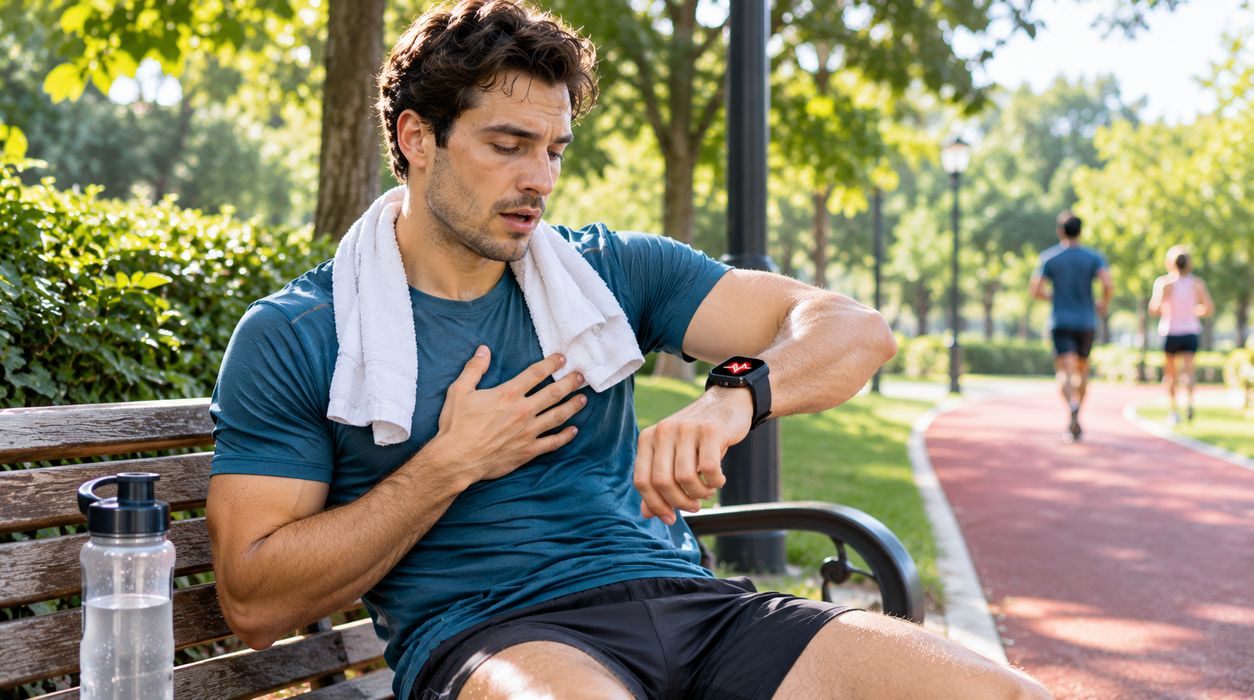
You finish your workout, slow down, and take a seat. Your breathing begins to settle, but your smartwatch still shows a surprisingly high pulse. Several minutes pass, and your heart seems to be beating faster than you expected.
If your heart rate stays high after exercise, you may wonder whether this is a normal part of recovery or a sign that something is wrong.
During physical activity, your heart beats faster to deliver more oxygen-rich blood to working muscles. When exercise ends, your body’s demand for oxygen gradually decreases, and your heart rate usually begins moving toward its resting level.
However, the speed of that recovery varies.
Workout intensity, temperature, hydration, physical conditioning, stress, medications, and underlying medical conditions can all influence how quickly your pulse slows.
A temporarily elevated heart rate after exercise is often expected. But an unusually persistent or irregular heartbeat, particularly when accompanied by concerning symptoms, deserves medical attention.
This guide explains why your pulse may remain elevated, how heart rate recovery works, and what you can do to support safe post-workout recovery.
What Happens to Your Heart Rate During Exercise?
Your heart is responsible for pumping blood throughout your body.
When you begin exercising, working muscles require additional oxygen and nutrients.
Your cardiovascular system responds by increasing blood flow.
One way your body accomplishes this is by raising your heart rate.
During more demanding exercise, your pulse generally increases further.
Why Your Heart Beats Faster
Exercise activates several physiological responses, including changes in nervous system activity, breathing, circulation, and hormone signaling.
These changes help your body meet the demands of physical activity.
After exercise, those responses gradually decrease.
The American Heart Association provides guidance on target heart rates during physical activity, including how exercise intensity affects pulse rate.
Your Heart Rate Does Not Instantly Return to Normal
Stopping exercise does not immediately return your cardiovascular system to its resting state.
Your body continues adjusting circulation, temperature, and breathing during recovery.
This is why a pulse that remains temporarily elevated after exercise is not necessarily abnormal.
What Is Heart Rate Recovery?
Heart rate recovery, often abbreviated as HRR, describes how much your heart rate decreases after exercise stops or transitions into a defined recovery period.
It is sometimes measured by comparing your heart rate at the end of exercise with the rate one or two minutes later.
For example, imagine your heart rate is 160 beats per minute immediately after exercise and 135 beats per minute one minute later.
Your one-minute heart rate recovery would be:
160 − 135 = 25 beats per minute.
This measurement can provide information about how your cardiovascular system responds after exertion.
However, its interpretation depends on the testing method, exercise intensity, whether you stop completely or continue moving, medications, and individual health factors.
There is no single universal recovery number suitable for every person or situation.
1. Your Workout Was Particularly Intense
One of the simplest explanations for a high post-workout pulse is exercise intensity.
A challenging workout places greater demands on your cardiovascular system than a gentle walk.
After intense activity, your body may need additional time to return toward its resting condition.
High-Intensity Interval Training
High-intensity interval training, or HIIT, alternates demanding exercise with recovery periods.
During intense intervals, your heart rate may increase substantially.
It can remain elevated during the recovery period, especially after repeated hard efforts.
Running and Cycling
Long or challenging endurance sessions can also produce a sustained cardiovascular response.
Workout duration, pace, terrain, and temperature may influence recovery.
Resistance Training
Weightlifting can temporarily increase heart rate, particularly during demanding sets involving large muscle groups.
However, heart rate responses during resistance training can differ from those during continuous aerobic exercise.
What You Can Do
Reduce exercise intensity gradually when appropriate.
Allow sufficient recovery between demanding sessions.
If you are new to exercise, begin at a manageable intensity and progress over time.
2. Dehydration May Contribute to an Elevated Pulse
Sweating helps regulate body temperature during exercise.
However, sweating also causes fluid loss.
If fluid losses are substantial and not adequately replaced, your cardiovascular system may need to work harder to maintain circulation.
This can contribute to an elevated heart rate.
Signs of Dehydration
Possible symptoms include:
- Increased thirst
- Dry mouth
- Headache
- Dizziness
- Darker urine
- Reduced exercise performance
- Feeling unusually tired
These symptoms are not specific to dehydration, and severe symptoms require medical attention.
How to Stay Hydrated
Drink fluids according to your needs, activity level, and environmental conditions.
Long or strenuous workouts in hot conditions may require additional planning for fluid and electrolyte replacement.
Avoid drinking excessive amounts of water in an attempt to force your heart rate down.
Overhydration can also be dangerous.
3. Hot Weather Makes Your Heart Work Harder
Exercising in hot or humid weather places additional demands on your body.
Your cardiovascular system helps transfer heat toward the skin, where it can be released.
At the same time, your muscles still require blood flow.
These competing demands can contribute to a higher heart rate.
Why Humidity Matters
Sweat evaporation becomes less effective in humid conditions.
This can make it harder for your body to cool itself.
As a result, you may feel more exhausted after a workout that would otherwise seem manageable.
Exercise Safely in the Heat
Choose cooler times of day when possible.
Reduce workout intensity during unusually hot conditions.
Take breaks in shaded or air-conditioned areas.
Wear appropriate clothing and pay attention to symptoms.
Confusion, collapse, or severe symptoms associated with heat exposure require emergency medical attention.
4. Your Fitness Level Influences Recovery
People with different levels of cardiovascular conditioning may experience different heart rate responses to similar activities.
Regular aerobic training can produce adaptations that improve cardiovascular efficiency.
Some well-conditioned individuals show relatively rapid heart rate recovery after exercise.
However, recovery varies considerably, and fitness is not the only factor.
Why Beginners May Recover Differently
Someone beginning an exercise program may find a moderate workout more demanding than an experienced athlete.
Their heart rate may rise higher relative to their capacity and take longer to settle.
Fitness Improves Gradually
Regular physical activity can support cardiovascular health over time.
The CDC’s adult physical activity recommendations describe the benefits of aerobic exercise and muscle-strengthening activity.
Begin with a realistic schedule and increase activity gradually.
For a related discussion of building reliable habits, Grandloopy’s constant versus consistent guide explains why maintaining a regular pattern is different from doing something continuously.
Fitness progress benefits from consistency rather than exhausting yourself every day.
5. Caffeine and Pre-Workout Products Can Affect Heart Rate
Coffee, energy drinks, and some pre-workout supplements contain stimulants.
These substances may increase alertness and can influence heart rate or blood pressure.
Effects depend on the ingredients, dosage, individual sensitivity, and other health factors.
Check Your Pre-Workout Ingredients
Some products contain substantial amounts of caffeine or combinations of stimulants.
Taking multiple stimulant-containing products can increase exposure.
Avoid Assuming Every Supplement Is Safe
Products marketed for exercise performance are not automatically suitable for everyone.
Certain ingredients may interact with medications or worsen existing health conditions.
If you repeatedly notice palpitations or an unusually elevated pulse after taking a supplement, stop using it and seek medical advice.
6. Stress and Anxiety Can Keep Your Pulse Elevated
Your heart rate responds to more than physical activity.
Emotional stress, nervousness, and anxiety can also activate physiological responses that increase pulse rate.
For example, a stressful event immediately after exercise may prevent you from feeling relaxed during recovery.
How Stress Affects Your Body
Stress-related nervous system activity can increase heart rate and breathing.
You may also become more aware of your heartbeat.
What May Help
Move to a comfortable environment.
Allow yourself time to recover.
Try relaxed, natural breathing rather than forcing rapid or unusually deep breaths.
If episodes are frequent, severe, or accompanied by concerning symptoms, seek medical evaluation.
Do not automatically attribute unexplained palpitations to anxiety.
7. Poor Sleep Can Affect Exercise Recovery
Sleep supports physical and mental health.
Insufficient or disrupted sleep may affect exercise performance, perceived effort, and autonomic regulation.
Some people notice that workouts feel harder after a poor night’s sleep.
Maintain a Regular Sleep Schedule
Most adults generally need seven to nine hours of sleep, although individual needs vary.
A predictable sleep schedule may support better overall recovery.
Pay Attention to Persistent Fatigue
If you regularly feel exhausted despite adequate sleep, consider discussing the problem with a healthcare professional.
Sleep disorders, medications, and other medical conditions can contribute.
A training routine should allow enough time for both exercise and recovery.
8. Medications Can Change Heart Rate Responses
Certain medications affect how the heart responds to physical activity.
For example, beta blockers can limit increases in heart rate during exercise.
Other medications may increase pulse rate or contribute to palpitations.
Why This Matters
If you take medication that affects heart rate, standard exercise heart rate targets may not apply in the usual way.
Your clinician may recommend alternative ways to monitor exercise intensity.
Do Not Change Medication Yourself
Never stop or adjust prescribed medication solely because of a smartwatch reading.
Discuss unexpected heart rate patterns with your prescribing healthcare professional.
9. Your Smartwatch May Not Be Measuring Accurately
Wearable fitness devices can be useful for monitoring general activity patterns.
However, wrist-based optical heart rate sensors have limitations.
Movement, device fit, skin contact, and other factors may affect readings.
Why Readings Can Be Misleading
During exercise, rapid movement or poor sensor contact may cause inaccurate measurements.
A device may occasionally display an unusually high or delayed reading.
Check the Measurement
If a reading seems inconsistent with how you feel, stop safely and reassess.
You may compare the device reading with a manually measured pulse if you know how to do so.
However, do not dismiss concerning symptoms simply because you suspect a device error.
Wearable Devices Are Not Diagnostic Tools
A smartwatch cannot independently determine whether an elevated pulse is harmless.
If you experience repeated abnormal readings or symptoms, professional evaluation may be necessary.
10. An Underlying Medical Condition May Be Responsible
Sometimes an elevated heart rate after exercise is associated with a medical condition.
Possible contributors include:
- Anemia
- Thyroid disorders
- Fever or infection
- Certain heart rhythm disorders
- Cardiovascular conditions
- Medication effects
- Significant dehydration
These conditions require different approaches.
What Is Tachycardia?
Tachycardia generally refers to a heart rate above 100 beats per minute in adults at rest.
However, a heart rate above 100 during or shortly after exercise can be a normal physiological response.
The context matters.
When Should You Be Concerned?
Seek medical advice if your heart rate repeatedly remains unusually elevated long after activity, especially when the pattern is new or unexplained.
An irregular heartbeat, frequent palpitations, or unusual exercise intolerance also deserves evaluation.
How Long Should Heart Rate Stay Elevated After Exercise?
There is no single recovery time that applies to everyone.
Heart rate often begins decreasing soon after exercise intensity falls, but returning to a person’s usual resting rate may take longer.
Recovery depends on exercise intensity, fitness, temperature, hydration, medications, and other factors.
The First Minute
The early decrease in heart rate is commonly used in clinical and exercise research.
However, measurements must be interpreted according to the testing protocol.
The Next Several Minutes
Your pulse may continue declining as your body recovers.
Following intense exercise, it may remain above your resting rate for some time.
Persistent Elevation
If your heart rate remains unexpectedly high after adequate rest, or you have concerning symptoms, seek medical advice.
Avoid relying on an arbitrary number of minutes to decide whether something is safe.
How to Measure Heart Rate Recovery
You can observe general recovery patterns using a suitable heart rate monitor or manual pulse measurement.
Step 1: Record Your Heart Rate
At the end of exercise, note your heart rate.
Step 2: Begin Recovery
Follow a safe recovery routine.
For example, you may walk slowly rather than stopping abruptly, depending on the activity and your condition.
Step 3: Measure Again
Check your heart rate after a defined period, such as one minute.
Step 4: Calculate the Difference
Subtract the later reading from the initial reading.
For example:
- End-of-exercise heart rate: 155 bpm
- Heart rate after one minute: 130 bpm
- Heart rate recovery: 25 bpm
Step 5: Interpret Carefully
A single home measurement cannot diagnose cardiovascular disease or determine overall fitness.
Clinical interpretation requires context, including the exercise protocol and individual health information.
If you have concerns, discuss your measurements with a healthcare professional.
Should You Cool Down After Exercise?
A cool-down is a gradual transition from demanding activity toward rest.
For many workouts, this may involve several minutes of slower movement.
Benefits of a Gradual Transition
Cooling down can help your body adjust to lower activity demands.
Stopping intense exercise abruptly may cause some people to feel lightheaded because of changes in circulation.
Simple Cool-Down Examples
After running, transition to slower jogging and then walking.
After cycling, pedal at an easier pace.
After resistance training, allow time for comfortable movement and recovery.
The appropriate routine depends on the exercise and your health.
Avoid Overexertion
A cool-down should not become another intense workout.
If you feel faint, experience chest pain, or develop severe symptoms, stop safely and seek appropriate help.
Does Walking Help Lower Heart Rate After Exercise?
Gentle walking can be part of a normal cool-down.
However, your heart rate may remain higher during walking than it would during complete rest.
This means heart rate recovery readings can differ depending on whether you continue moving.
Choose a Comfortable Pace
Walk slowly enough that the activity feels easy.
Pay Attention to Symptoms
If walking worsens dizziness, weakness, or other symptoms, stop safely.
Do not force movement to achieve a particular heart rate number.
Can Drinking Water Lower Your Heart Rate?
If dehydration contributes to an elevated pulse, appropriate fluid replacement may help address that contributing factor.
However, drinking water does not immediately correct every cause of a high heart rate.
Hydrate Appropriately
Replace fluids based on your needs and the conditions of your workout.
Avoid Excessive Water Intake
Drinking very large quantities of water rapidly can cause dangerous electrolyte disturbances.
Know When Fluids Are Not Enough
If your heart rate remains unusually elevated or you experience chest discomfort, fainting, or severe breathlessness, seek medical attention rather than relying on hydration alone.
Heart Rate Recovery vs. Resting Heart Rate
These measurements describe different aspects of cardiovascular function.
| Measurement | Meaning |
|---|---|
| Resting heart rate | Heartbeats per minute when the body is at rest |
| Exercise heart rate | Heartbeats per minute during physical activity |
| Heart rate recovery | The decrease in heart rate over a defined period after exercise |
| Heart rate variability | Variation in timing between consecutive heartbeats |
These measurements can provide useful information, but none should be interpreted in isolation.
A single unusual value does not necessarily indicate a medical problem.
Similarly, a normal-looking number does not rule out a condition when symptoms are present.
Can Overtraining Affect Heart Rate?
Excessive training without adequate recovery may contribute to fatigue and changes in physiological responses.
However, a high pulse after one workout does not establish overtraining.
Possible Signs of Inadequate Recovery
These may include:
- Persistent fatigue
- Declining performance
- Sleep disturbances
- Unusual irritability
- Prolonged muscle soreness
- Changes in usual heart rate patterns
These symptoms have multiple possible causes.
Balance Training and Recovery
Include appropriate rest periods.
Avoid increasing workout difficulty too quickly.
For related information about exercise recovery, Grandloopy’s article on why muscles feel sore two days after a workout discusses delayed onset muscle soreness and recovery habits.
Editor’s note: Confirm that the linked article is published at this URL before publishing this post.
How to Build a Heart-Healthy Exercise Routine
Regular physical activity can support cardiovascular health.
However, the most appropriate routine depends on your current fitness level and medical history.
Start Gradually
If you are new to exercise, begin with manageable activities such as comfortable walking.
Increase Activity Over Time
Gradually adjust duration or intensity as tolerated.
Include Recovery
Allow time between demanding workouts.
Prioritize Sleep and Nutrition
A balanced diet, adequate sleep, and appropriate hydration support general well-being.
Use Technology as a Guide
Fitness watches can help you observe patterns, but they should not replace attention to symptoms.
Grandloopy’s connecter versus connector article explains the correct terminology for connections, a concept also relevant when reading instructions for fitness sensors and connected devices.
When Should You See a Doctor?
An elevated heart rate after exercise does not always indicate a problem.
However, medical evaluation is appropriate when symptoms are persistent, unexplained, or unusual for you.
Consider contacting a healthcare professional if:
- Your heart rate repeatedly remains unusually high after rest.
- You experience frequent palpitations.
- Your heartbeat feels irregular.
- Your exercise tolerance changes unexpectedly.
- You develop recurring dizziness or unusual fatigue.
Emergency Warning Signs
Seek emergency medical care if an elevated or irregular heartbeat occurs with:
- Chest pain or pressure
- Severe shortness of breath
- Fainting or loss of consciousness
- Severe dizziness or near-fainting
- Sudden severe weakness or confusion
Do not attempt to treat these symptoms with supplements, water, or breathing exercises alone.
Frequently Asked Questions
Why is my heart rate still high 10 minutes after exercise?
A demanding workout, heat, dehydration, stimulants, and individual recovery differences may contribute. If the elevation is unusual, persistent, or accompanied by symptoms, seek medical advice.
What is a normal heart rate after exercise?
There is no single normal number immediately after exercise. Heart rate depends on activity intensity, age, fitness, medications, and recovery conditions.
Does a slow heart rate recovery mean I am unfit?
Not necessarily. Recovery is influenced by multiple factors, and a single measurement cannot determine fitness or diagnose disease.
Can dehydration cause a high heart rate after exercise?
Yes. Significant fluid loss can contribute to cardiovascular strain and an elevated pulse.
Does caffeine affect heart rate recovery?
Caffeine and other stimulants can influence cardiovascular responses in some individuals, depending on dosage and sensitivity.
Should I worry if my smartwatch shows a high heart rate?
A single reading may be inaccurate or reflect normal activity. However, repeated unexplained readings or concerning symptoms should be medically evaluated.
Can anxiety keep my heart rate elevated after working out?
Yes. Stress and anxiety can influence heart rate, but unexplained symptoms should not automatically be attributed to anxiety.
Final Thoughts
If your heart rate stays high after exercise, the explanation may involve normal recovery, workout intensity, hydration, temperature, or individual fitness.
Your cardiovascular system needs time to transition from demanding activity back toward rest.
A gradual cool-down, appropriate hydration, adequate recovery, and a sustainable exercise routine can support overall cardiovascular health.
However, a persistently unusual pulse, irregular heartbeat, or concerning symptoms should not be ignored.
Heart rate monitors can provide useful information, but they cannot replace medical evaluation.
The most important goal is not to force your heart rate to reach a specific number immediately after exercise. It is to exercise safely, recognize your usual recovery patterns, and seek professional advice when something seems wrong.

Ryan Mitchell is a passionate writer and digital content creator dedicated to sharing insightful, engaging, and informative articles across multiple niches. With a strong interest in technology, lifestyle, trending topics, and online media, Ryan Mitchell focuses on delivering well-researched and reader-friendly content that inspires and informs audiences worldwide.