

You just wrote “reciept” in an email, and now your brain is asking if that’s even a word. Red squiggly line under it doesn’t help either. Here’s the fast fix: receipt is the correct spelling, and reciept is simply wrong, no matter how many times your fingers want to type it that way. Stick around, because the reason this word trips up so many smart people is actually pretty interesting.
Receipt or Reciept: The Quick Answer
Receipt is correct. Reciept does not exist in any English dictionary.
The word comes from Old French receite and Latin recepta, and it kept that “ei” order the whole way through. Your keyboard isn’t broken. Your instinct is.
Why Do So Many People Spell It “Reciept”?
Most people learned the “i before e, except after c” rule in third grade. That rule works for words like believe and field.
The problem is receipt already has a “c” in it, right before the “ei.” So your brain applies the rule backward and flips the letters without realizing the rule was never designed to override a word’s actual spelling.
Add in the fact that the “p” in receipt is silent, and you’ve got a word that sounds nothing like it looks. That silent letter alone causes half the confusion.
What Does “Receipt” Actually Mean?
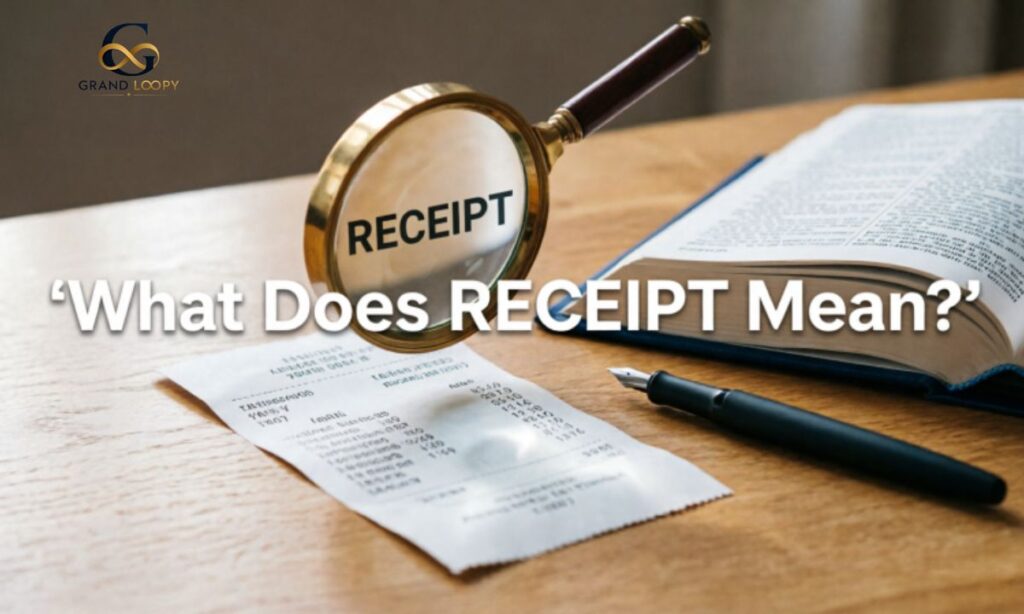
A receipt is a written or printed record showing that money, goods, or a service changed hands. Think of the slip of paper a cashier hands you after checkout.
It can also mean the act of receiving something, as in “upon receipt of your payment.” That second meaning shows up a lot in business and legal writing, so it’s worth knowing both.
Where Does the Word “Receipt” Come From?
Receipt has a longer history than most people expect. It traces back to the Latin word recipere, meaning “to receive,” which also gave us words like recipe and reception.
In fact, before “receipt” meant a payment slip, English speakers used it for medical instructions, basically an old-school version of a recipe. Doctors and apothecaries wrote out a “receipt” for a remedy, listing what to combine and how.
Merchants later borrowed the same word for proof of payment, since both uses shared the same core idea: something given and something recorded. Historical trade records from medieval Europe show merchants issuing handwritten receipts for goods exchanged at markets, a practice that eventually became standard in accounting long before printed paper receipts existed.
That shared root explains why “receipt” and “recipe” still look like cousins today, even though they mean completely different things now.
Click Here To Read More Like This…
Receipt vs Reciept: Quick Comparison Table
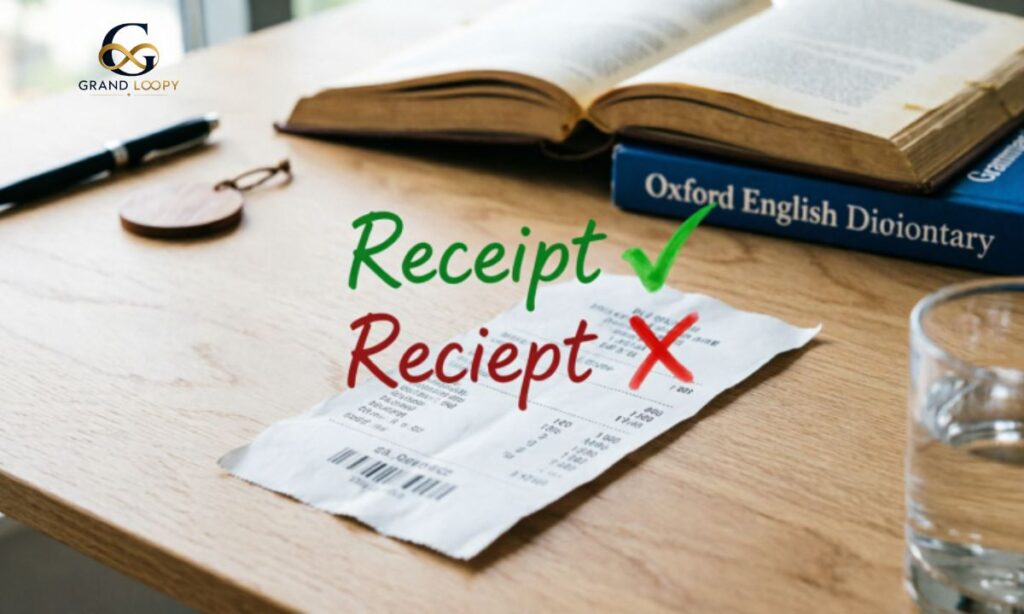
| Feature | Receipt (Correct) | Reciept (Incorrect) |
| Dictionary status | Valid English word | Not a real word |
| Origin | Latin recepta, French receite | No linguistic origin |
| Pronunciation | ri-SEET (silent p) | Same sound, wrong spelling |
| Used in | Business, law, everyday speech | Nowhere, ever |
| Spell check | Passes | Always flagged |
How to Pronounce “Receipt” Correctly
Say it out loud: ri-SEET. The “p” is completely silent, which is honestly a big part of why the spelling feels unpredictable.
Once you separate pronunciation from spelling in your head, the word gets much easier to remember. You’re not spelling what you hear, you’re spelling what history left behind.
Receipt in a Sentence: Real-Life Examples
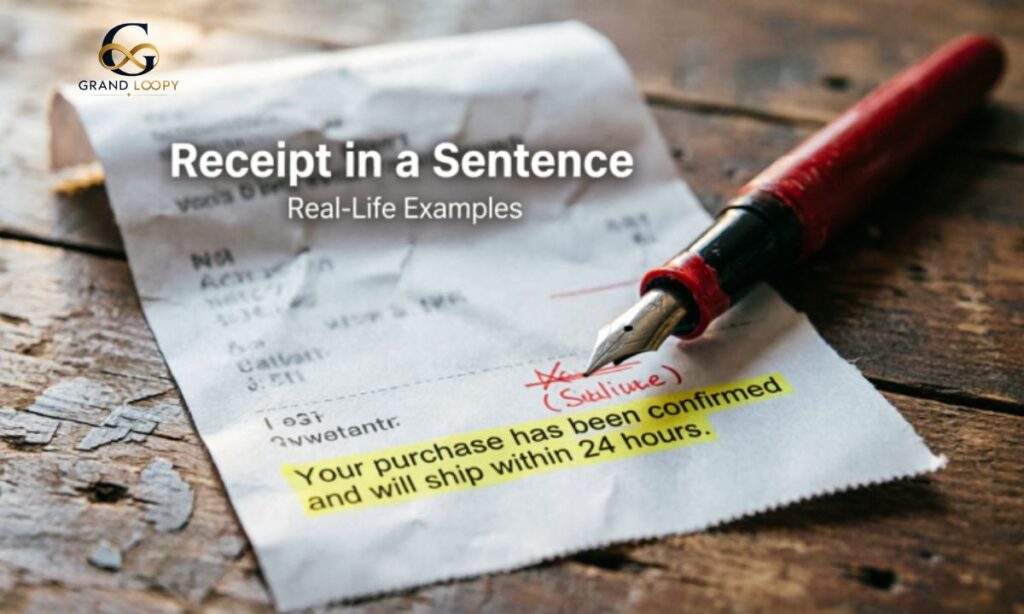
Seeing the word in context helps it stick better than any rule ever will.
- “Can I get a receipt for this purchase, please?”
- “Please keep your receipt in case you need a refund.”
- “We’ll process your refund upon receipt of the returned item.”
- “The accountant asked for every receipt from the business trip.”
Notice how natural and common the word is once it’s not fighting your instincts.
Common Mistakes People Make With “Receipt”
Beyond the classic “reciept” slip, a few other errors show up often.
- Recipt, missing the second “e” entirely
- Receit, dropping the “p” from the spelling too
- Reciept, the most frequent mix-up
- Confusing receipt (proof of payment) with recipe (cooking instructions)
Autocorrect usually catches the first three, but that fourth mix-up slips past spell check because both words are technically real.
The “I Before E” Rule and Why It Fails Here
Here’s a small confession most grammar guides skip: the “i before e, except after c” rule only reliably works when the sound is a long “ee,” and it fails constantly with exceptions like weird, seize, and yes, receipt.
Linguists actually consider it one of the least reliable spelling rules in English. So if you’ve been blaming yourself for getting it wrong, maybe blame the rule instead.
Related Words That Confuse People Too
Receipt isn’t the only word from this family that causes hesitation.
- Recipe: instructions for cooking a dish
- Receive: to get or accept something
- Deceit: dishonesty or trickery
All four share that same “receive” root, and all four keep the “ei” pattern after the “c.” Once you memorize receipt, the others tend to fall into place naturally.
Which One Should You Use?
Always use receipt. There is no context, formal or casual, where “reciept” is acceptable. It’s not a regional spelling, a British versus American difference, or an informal shortcut. It’s simply incorrect everywhere English is written.
If you’re ever unsure while typing quickly, picture the receipt you got from your last coffee run. That mental image is more reliable than trying to recall a spelling rule under pressure.
Simple Tricks to Never Misspell “Receipt” Again
A few memory tricks that actually work in daily writing:
- Remember the phrase “receive a receipt,” since both words share the same “ei” pattern
- Picture the silent “p” as a tiny stamp confirming the payment, present but unheard
- Break it into chunks: re-CEI-pt, focusing on the middle sound
- Type it slowly once or twice until muscle memory takes over
Small tricks like these beat memorizing grammar rules that have too many exceptions anyway.
Frequently Asked Questions
Is “reciept” ever correct in British English?
No. British and American English both use the same spelling, receipt. There’s no regional variation here, unlike words such as colour or color.
Why does “receipt” have a silent “p”?
The silent “p” comes from its Latin root recepta, which included a “p” sound that faded from pronunciation over centuries while the spelling stayed frozen in place.
What’s the difference between “receipt” and “recipe”?
A receipt proves a purchase or payment happened, while a recipe gives instructions for preparing food. They share a Latin ancestor but serve completely different purposes today.
Final Thoughts
Receipt is the only correct spelling, and now you know exactly why “reciept” keeps sneaking into your typing anyway. Between the silent “p,” a misleading spelling rule, and centuries of borrowed Latin, this word had every excuse to confuse people.
At least now you’ve got the receipt to prove you finally got it right.