

You typed the word, stared at it for three seconds, and suddenly it looked wrong. Is it “creater” or “creator”? You are not imagining things. This word trips up even confident writers because it sounds like it should end in “er,” the same way “player” or “teacher” does.
Here is the direct answer: creator is the correct spelling. “Creater” is a common misspelling and it does not appear in any standard English dictionary. If you remember nothing else from this article, remember that.
Now let’s clear up why this confusion happens and how to never fall for it again.
Is It Creater or Creator?
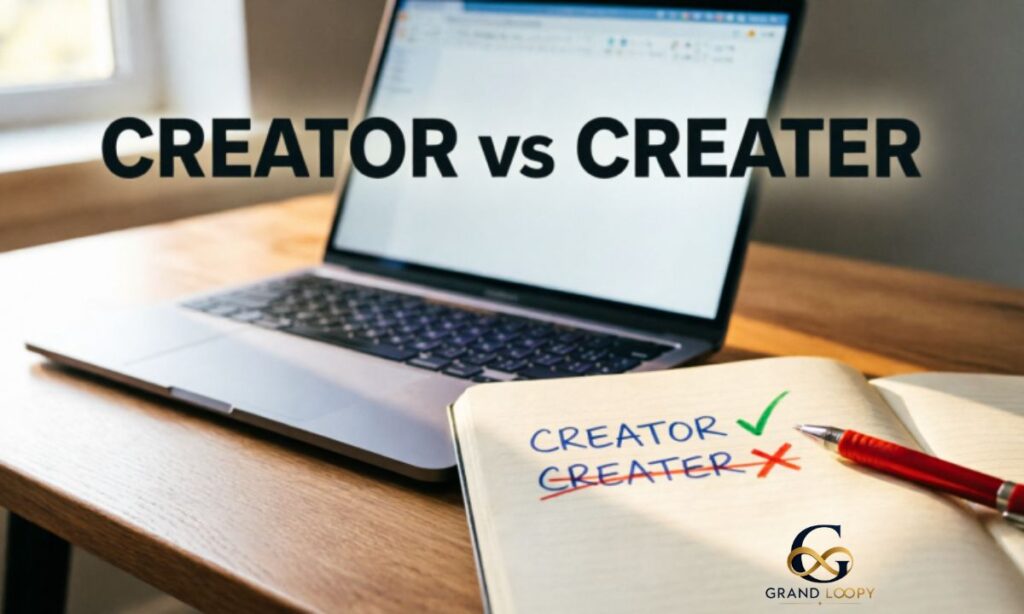
Creator is correct. “Creater” is incorrect in every context, whether you are talking about a YouTube creator, a novelist, or a higher power.
The confusion makes sense on the surface. English loves the “er” ending for people who do things: teacher, worker, painter. But “creator” breaks that pattern because it comes from Latin, not from adding “er” to the verb “create.”
Think of it this way: “create” plus “or” equals “creator,” the same pattern you see in “inventor,” “director,” and “narrator.” None of those end in “er,” and neither does this one.
What Does Creator Mean?
A creator is a person, group, or force that makes something exist that did not exist before. That could be a physical object, an idea, a piece of art, or an entire universe, depending on the context.
The word covers a huge range of uses:
- A content creator who posts videos or writes online
- An inventor who creates a new product
- A software developer who builds an app
- A capital letter Creator, referring to God in religious contexts
The common thread is simple. If something exists because someone made it happen, that someone is the creator.
Read More Knowledgeable articles Click Here
Why Do People Misspell Creator as Creater?
Most people misspell “creator” because of a mental shortcut called pattern matching. Your brain sees a verb like “create,” notices thousands of English words that turn a verb into a person by adding “er,” and applies that same rule here.
It happens with words like “player” from “play” and “worker” from “work.” The brain assumes “create” plus “er” should work the same way, and honestly, that is a reasonable guess. It is just the wrong one.
There is also a pronunciation factor. When people say “creator” quickly in casual speech, the “or” ending can sound almost identical to “er.” Your ears hear one thing, your fingers type another, and the typo sticks.
Creator vs Creater: Quick Comparison Table
| Feature | Creator | Creater |
| Correct spelling | Yes | No |
| Found in dictionaries | Yes | No |
| Word origin | Latin “creator” | Not a real word |
| Used in formal writing | Yes | Never |
| Common in casual typos | No | Yes |
This table is the fastest way to settle any doubt mid sentence. If you ever pause while typing, glance back at it.
Where Does the Word Creator Come From?
The word creator traces directly back to Latin. In Latin, “creare” meant to make or produce, and “creator” was the noun form describing someone who makes something.
The word moved into English through Old French around the 13th century, arriving largely unchanged. That is unusual for English, a language that tends to twist borrowed words beyond recognition, so consider “creator” one of the lucky survivors.
Because it kept its Latin structure, “creator” follows the “or” agent noun pattern instead of the native English “er” pattern. That single historical fact explains almost the entire spelling confusion people have today.
Does the Bible Use the Word Creator?
Yes, the word Creator appears throughout religious texts, almost always capitalized when referring to God as the maker of the universe.
In the King James Bible and many other translations, passages describe God as the Creator of heaven and earth. This usage reinforced the spelling across centuries of printed English, since Bibles were among the most widely read and copied texts in history.
That historical weight matters. When a spelling gets locked into religious, legal, and academic writing for hundreds of years, it becomes extremely resistant to change, no matter how tempting the “er” pattern feels.
How to Use Creator in a Sentence
Using creator correctly is simple once you see it in action across different contexts.
- She is the creator of one of the most popular cooking channels online.
- The company credited its founder as the sole creator of the original design.
- Many cultures describe a divine Creator responsible for shaping the world.
- He became a content creator after leaving his corporate job in 2021.
Notice the word works the same way in every sentence. It always points to the person or force behind something new.
Content Creator: A Modern Twist on an Old Word
The phrase “content creator” exploded in popularity over the last decade, and it uses the exact same spelling rules as the original word.
A content creator is someone who produces videos, blog posts, photos, or other media, typically for platforms like YouTube, Instagram, or TikTok. According to recent creator economy reports, the industry now supports millions of people worldwide who earn income primarily through content creation.
This modern usage did not change the spelling at all. It simply gave an old Latin derived word a brand new job title.
Creator vs Creater: Which One Should You Use?
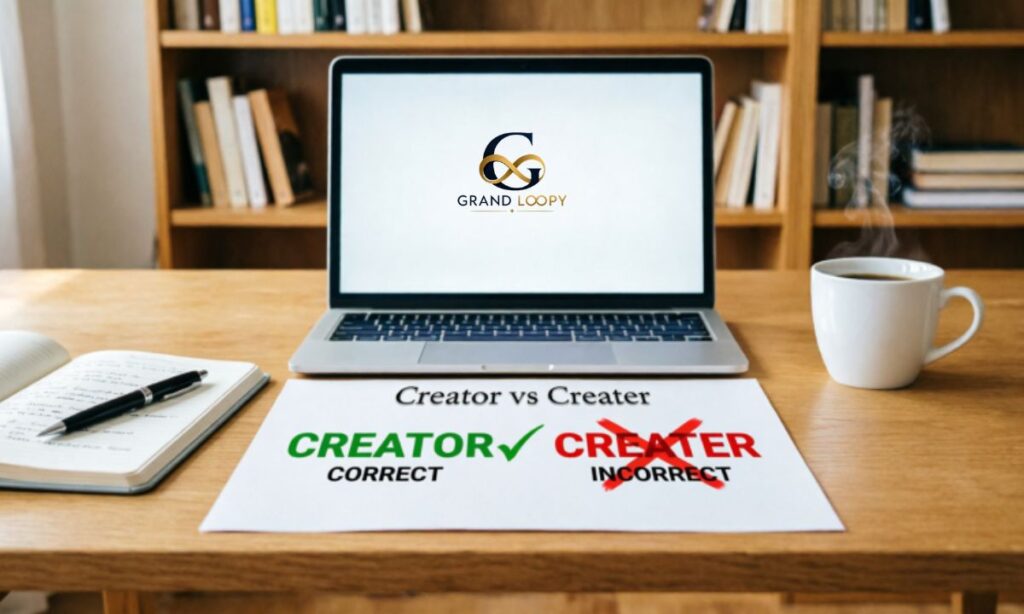
Use creator in every single situation. There is no context, formal or casual, where “creater” is acceptable.
Some writers assume slang or internet writing gets a pass on spelling. It does not, at least not for this word. Unlike genuine slang terms that evolve intentionally, “creater” is not a stylistic choice. It is a spelling error that happens to be common, which is different from being correct.
If you are ever unsure while writing quickly, a good trick is to pause and mentally substitute “inventor” or “director” into the sentence. Since all three words share the same Latin “or” ending, if “inventor” sounds right, “creator” is right too.
Common Mistakes People Make With This Word
Beyond the basic spelling error, a few related mistakes show up often.
- Writing “creater” in resumes or professional bios, which can undercut credibility instantly
- Confusing “creator” with “creature,” a completely different word with a different meaning
- Assuming British and American English spell it differently, when in fact both spell it identically
- Lowercasing “Creator” when referring to God in formal religious writing, where capitalization is often expected
Spell check catches most of these, but not always, especially in headlines, titles, or images where text is not automatically scanned.
Related Words That Follow the Same Pattern
Once you understand why “creator” ends in “or,” a whole family of similar words suddenly makes sense.
Words like “narrator,” “director,” “inventor,” “editor,” and “supervisor” all follow the identical Latin based pattern. None of them end in “er,” despite describing people who narrate, direct, invent, edit, or supervise.
Learning this pattern once means you stop guessing on dozens of similar words, not just this one. That is a genuinely useful shortcut for anyone who writes regularly.
Frequently Asked Questions
Is “creater” ever correct in any dictionary?
No. “Creater” does not appear as a valid spelling in Merriam Webster, Oxford, Cambridge, or any other major English dictionary. It is classified purely as a misspelling of “creator.”
What is the difference between creator and creature?
“Creator” refers to the maker of something, while “creature” refers to a living being, often an animal or an imaginary being. They share a Latin root but mean entirely different things, so mixing them up changes the meaning of a sentence significantly.
Why does English use “or” instead of “er” for creator?
Because “creator” was borrowed from Latin through Old French rather than built from the English verb using the native “er” suffix. Words with this Latin origin, like “director” and “inventor,” consistently use “or” instead.
Final Takeaway
Creator is the only correct spelling, and “creater” is a myth your spellcheck will never let live. The word carries centuries of Latin history, shows up everywhere from ancient scripture to modern YouTube bios, and follows the same reliable pattern as “inventor” and “director.”
Next time your fingers try to type “creater,” picture “director” instead. If that word looks right, you already know how to spell this one too.