Is Zara Fast Fashion? The Verdict & Evidence (2026)
Yes, Zara is fast fashion. The answer is not close, and it is not new. The term “fast fashion” was coined by the New York Times on December 31, 1989, in a piece about Zara.
The brand did not merely join the category. The category was named for it.
That makes Zara different from the other brands in this verdict series. Uniqlo rejects the label with a real argument about continuity and quality. Quince sits mostly on the fast-fashion side with genuine differences.
Zara is the original fast fashion brand, and every independent watchdog that rates it says the same thing.
What follows is the evidence behind that yes: the definition test, the speed and volume numbers, the ratings, the labor record, the sustainability claims tested against independent verification, and the controversy timeline.
It also covers what makes Zara different from Shein and H&M anyway, and what to buy instead.
The Verdict: Yes, Zara Is Fast Fashion
Zara is fast fashion by every definition that matters: speed, volume, price, trend replication, and product turnover.
Multiple industry trackers and sustainability watchdogs, including Good On You and Ethical Consumer, classify Zara squarely inside the fast fashion category.
Most coverage treats Zara as the brand that started the whole trend rather than just another player in it.
The verdict is unusually clear because Zara checks every box. It takes a design from sketch to store shelf in about two to three weeks, against four to six months for most traditional clothing brands.
It releases roughly 500 new designs a week. It moves around 450 million garments a year. Its prices sit low enough that shoppers buy on impulse and replace often.
One distinction is worth flagging clearly. Zara owns most of its production chain instead of outsourcing everything overseas the way brands like Shein and Forever 21 do.
That vertical integration makes Zara faster, more controlled, and less wasteful per garment than offshore mass production. It does not make Zara slow fashion. The model is still built on speed, volume, and constant novelty.
What Is Fast Fashion? The Definition Test
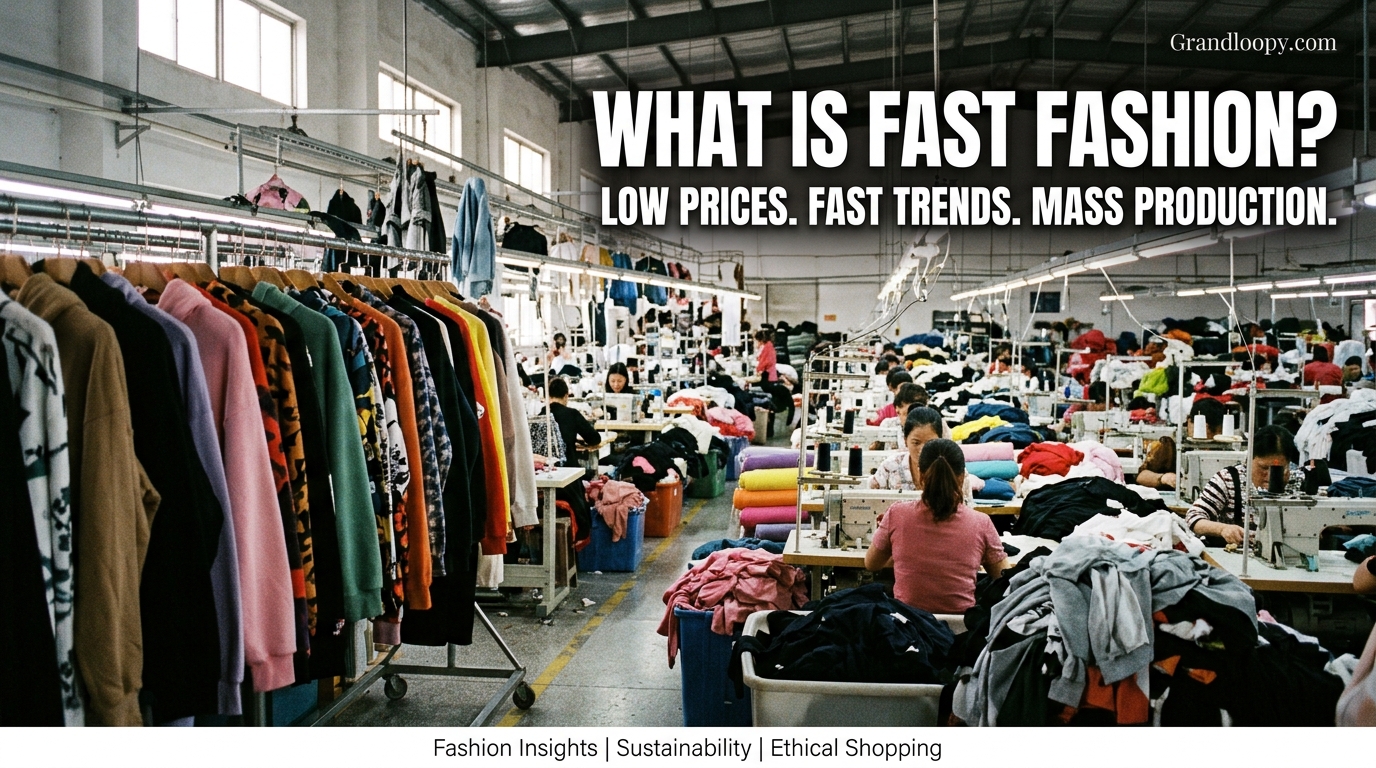
Fast fashion is clothing produced quickly, sold at low prices, and based on current trends. The model watches runways, social media, and street style, then creates similar pieces and brings them to stores within weeks.
Because prices are low, shoppers buy new clothes more often. Many items are worn only a few times before being replaced or thrown away.
The definition can be tested against six criteria. Zara scores yes on all six, which is why the verdict is unambiguous.
The table below applies the test directly, so readers can see exactly where Zara lands on each point.
| Fast-fashion criterion | Does Zara meet it? | Evidence |
|---|---|---|
| Rapid production | Yes | Design to shelf in 2 to 3 weeks, against 4 to 6 months for traditional brands |
| Low prices | Yes | Dresses $50 to $90, blouses $40 to $70, mid-market fast fashion pricing |
| Trend replication | Yes | Runway and social-media trends in stores within 2 to 3 weeks |
| High volume | Yes | Around 450 million garments a year |
| Frequent new drops | Yes | About 500 new designs a week, new stock up to 24 times a year |
| Short product life | Yes | Trend pieces designed for a season or two, not long-term staples |
The constant cycle of buying, wearing, and replacing clothes is what defines fast fashion. Zara’s model is built to feed that cycle.
Twice-weekly deliveries keep the racks fresh, small batches create urgency, and the next trend is always two weeks away. The business works because customers come back often and buy something new each time.
A slower brand would fail most of this test. It would plan collections months ahead, release two to four seasonal drops a year, and design garments to last for years.
Zara does the opposite on every count. That is the whole point of the model, and the reason the label fits without qualification.
Where the Term Came From
The New York Times coined the term “fast fashion” on December 31, 1989, in a piece about two new Manhattan boutiques, one of which was Zara.
The article quoted Zara’s then United States operations head saying stock changed every three weeks and a new idea could reach the sales floor in as little as 15 days.
Zara had opened its first store in Spain in 1975, founded by Amancio Ortega and Rosalía Mera, so the New York write-up landed roughly 14 years after the brand’s first shop opened in A Coruña.
The term described a real difference in how Zara worked. Traditional retailers planned a season months ahead. Zara reacted to what was selling now.
The history matters because it removes the usual defense. Zara cannot claim the label is a misunderstanding of its model. The model is the label.
The company that the term was invented to describe is still running the same model, at far greater scale, more than three decades later.
Why Zara Looks Different From Other Fast Fashion Brands
Zara does not look like a typical cheap clothing brand. Its stores are clean, well lit, and put together in a way that feels closer to a mid-range department store than a bargain rack.
Its prices sit above Shein and Primark. Its clothes often look more expensive than they are. That polish is real, and it is also the reason the question keeps coming up.
Underneath the clean displays, Zara runs on the same clock as the rest of the industry, just with a few of its own twists.
The twists are worth understanding, because they explain both why Zara is more successful than its rivals and why the fast-fashion label still applies.
The difference is in how the speed is achieved, not in whether speed is the point.
Vertical Integration: Zara Owns the Chain
Zara is built on a simple but hard-to-copy principle: own the chain, control the speed.
The company designs, produces, and ships new styles to stores in as little as 14 days, because it controls design, production, logistics, and retail under one roof. Most rivals outsource most of those steps.
About half of Zara’s products are manufactured in company-owned or closely controlled facilities in Spain and nearby countries, with final finishing, quality control, and distribution managed through the massive logistics hub in Arteixo, Spain.
That control is the structural advantage. When a style sells, Zara can make more of it immediately. When it flops, the loss is small.
The trade-off is higher labor costs than offshore production. Zara accepts that cost because the control it buys is worth more: faster response, fewer markdowns, and less unsold stock.
The model is described in detail in the 2004 Harvard Business Review article “Rapid-Fire Fulfillment,” which remains the best published explanation of how Zara works. The article is available from Harvard Business Review.
Proximity Sourcing: Spain, Portugal, Morocco, and Türkiye
Over half of Zara’s clothing is manufactured close to home in Spain, Portugal, Morocco, or Türkiye, which cuts shipping time compared with factories in Southeast Asia.
Finished garments ship out twice a week to stores worldwide, and the main distribution hub in Spain sends new products to European stores within 24 hours and to North American stores within 48 hours.
Proximity is the physical reason for the speed. A design approved on Monday can be cut, sewn, and shipped from a nearby factory within days.
The same design sent to a factory on another continent needs weeks of shipping alone. Zara’s geography is a business decision, and it is the decision that makes the two-week cycle possible.
Proximity does not mean all production is local. A significant share of Zara’s garments still comes from Asia and other regions, and the exact split is not published at brand level.
The near-sourcing advantage applies mainly to the most fashion-sensitive items, the ones where speed matters most. Basics and longer-lead items can travel further.
Small Batches and Late Commitment
Instead of committing to huge quantities upfront, Zara launches many styles in limited quantities. If a style flops, the loss is small. If it sells, more can be made quickly.
Supply-chain researchers call this approach postponement or late commitment: delaying big decisions until real demand data exists.
The approach reverses the traditional model. Traditional retailers guess what will sell months ahead, order large batches, and hope customers like it. If the guess is wrong, the stock must be sold at a discount.
Zara guesses small, watches what sells, and commits only after the evidence arrives. The result is fewer markdowns and less unsold inventory.
Press and academic reports suggest the model helps Zara sell a larger share of its stock at full price than many competitors.
Exact figures vary by source and year, so treat the specific percentages with care. The mechanism itself is well documented and is the core of Zara‘s advantage.
The Scarcity Model and Zero Advertising
Zara spends zero euros on traditional advertising, paid influencer partnerships, or digital advertising campaigns. Instead, it invests its marketing budget in premium store locations, in-store experience, window displays, and organic social media through customer-generated content.
The stores are the advertising.
The company’s scarcity model turns limited stock into a selling tool. Popular items deliberately sell out to create urgency rather than being continuously restocked.
Shoppers learn that a garment they like today may not be there next week, and Zara’s own executives have openly described this scarcity as intentional rather than incidental.
The psychology is straightforward: fear of missing out drives frequent visits, and frequent visits drive frequent purchases. A shopper who visits twice a week buys more than a shopper who visits twice a season.
The model converts the oldest anxiety in commerce into the most disciplined habit in retail.
Sell-Through: Why 85 Percent Matters
Zara’s vertically integrated model lets it maintain sell-through rates above 85 percent, far above the industry average of approximately 60 percent, according to a 2026 case-study analysis.
Sell-through is the share of stock sold at full price rather than discounted or discarded. A higher rate means less waste per garment sold.
This is Zara‘s best defense against the waste criticism, and it is a real one.
A brand that sells 85 percent of what it makes at full price wastes less fabric on unsold stock than a brand that sells 60 percent and clearances the rest.
The defense has a limit, though. Selling a higher share of a much larger volume can still mean more total waste than selling a lower share of a smaller volume.
The volume numbers in the next section make that limit concrete. Zara‘s efficiency per garment is better than most rivals. Its total production is so large that the absolute impact remains enormous.
Both facts are true at the same time, and the verdict depends on which one you weight more.
The Numbers: Speed, Volume, and Scale
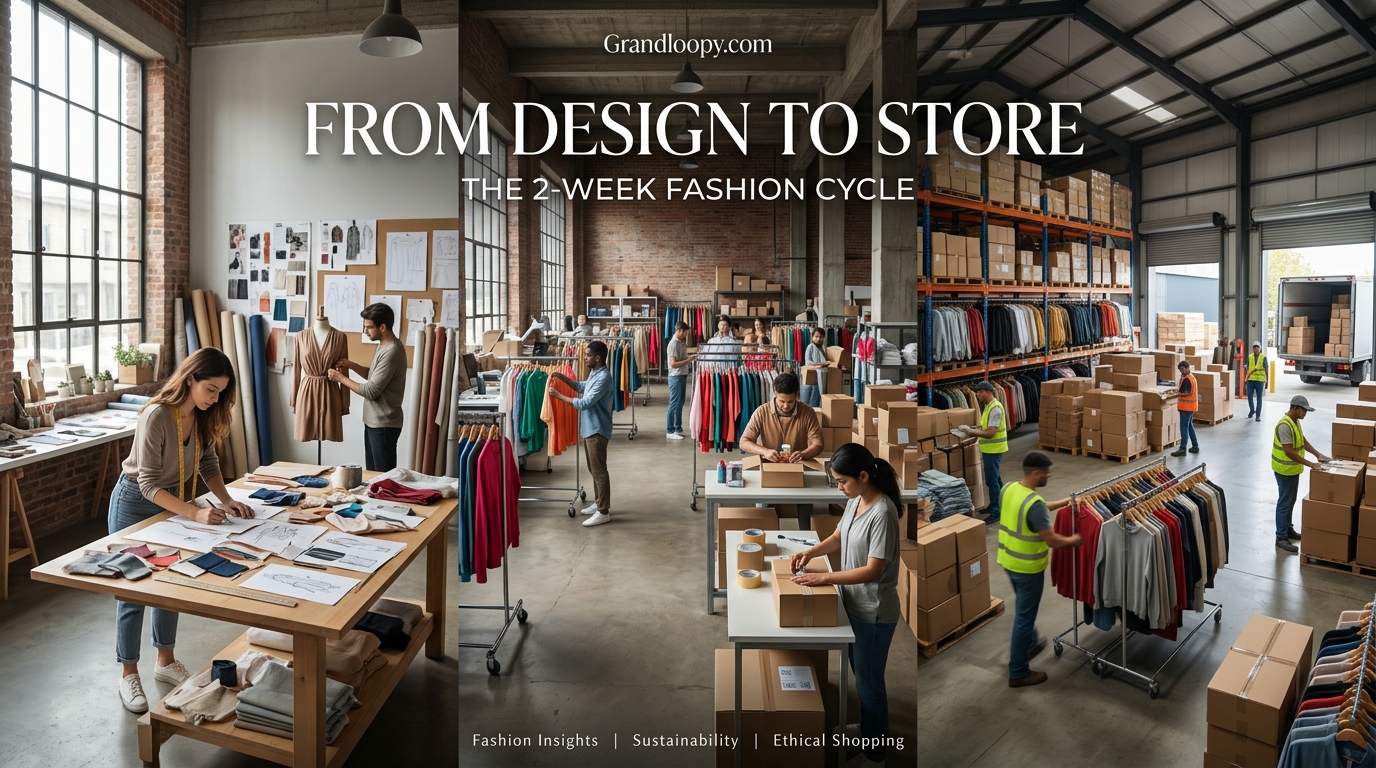
Zara‘s case rests on numbers, not adjectives. The speed, the volume, and the scale are all documented, and they are all large.
This section puts the figures together with their sources, and flags the places where sources disagree, so readers can see what is certain and what is contested.
Design to Shelf in Two to Three Weeks
Zara can take a design from sketch to store shelf in about two to three weeks.
That is significantly faster than the four to six months most traditional clothing brands need for the same job.
Some reporting puts the fastest cycle at 14 days for urgent trend responses, and the original 1989 New York Times piece quoted 15 days. Older accounts describe three to six weeks depending on garment complexity.
The range exists because the cycle varies by item. A simple top can move in two weeks. A tailored coat takes longer.
The consistent figure across sources is two to three weeks for a typical garment, against months for the traditional model. That gap is the whole business.
New stock can hit shelves up to 24 times a year, compared with the two to four seasonal drops most traditional retailers follow.
Some reporting puts Zara‘s real-world release rate closer to 500 new designs a week across its full range.
In 2024, Zara produced approximately 12,000 new designs selected from roughly 40,000 concepts, according to a 2026 SWOT analysis.
Other sources report more than 10,000 designs a year, and an older figure puts the annual total near 20,000. Treat the exact annual count as source-dependent; the order of magnitude is ten thousand plus.
How Many Garments Zara Makes a Year
Zara produces over 450 million items per year, according to multiple analyses.
Sustainable Jungle gives a wider range of 450 to 800 million units a year, noting that accurate volume statistics are tricky because the brand does not publish a single garment count.
Inditex, the parent company, placed roughly 621,000 tonnes of garments on the market in a single recent year, an increase of about 10 percent year over year.
The three figures measure different things: units for the brand, a range for the brand, and weight for the group. They are not interchangeable, and no competitor reconciles them.
The safe statement is that Zara moves hundreds of millions of garments a year, and the volume is growing. The 10 percent year-over-year increase in garments placed on the market is the direction of travel.
Volume is the hardest fact in the verdict to argue with. A brand making 450 million garments a year is a mass-production business by definition, whatever its store design looks like.
No slow-fashion brand operates at that scale. The scale is the verdict, expressed as a number.
Stores, Revenue, and Profit
Zara’s store count is one of the figures sources disagree on. One 2026 verdict page says roughly 2,000 stores in over 90 countries. Sustainable Jungle says more than 3,000 stores in 96 countries.
A 2026 business analysis describes thousands of stores across around 100 markets. Inditex reported 5,460 total group stores in fiscal 2025, which covers all of its brands, not Zara alone.
The disagreement is a reporting problem, not a material one. Every source agrees Zara operates thousands of stores across roughly 90 to 100 countries.
The exact count depends on the date and on whether Zara Home and other formats are included. At Step 2 publication, the Inditex annual report is the source to use for the current figure.
Revenue needs the same care, because one prominent verdict page mislabels it. The table below separates Zara-brand figures from Inditex-group figures, and labels each with its scope, so the numbers cannot be confused.
| Figure | Amount | Scope and source |
|---|---|---|
| Inditex group sales, fiscal 2025 | €39.9 billion | Group, fiscal year to January 31, 2026 |
| Inditex group net profit, fiscal 2025 | €6.22 billion | Group, record profit |
| Zara concept sales, fiscal 2025 | €28.051 billion | Zara, Zara Home, and Lefties together, about 70% of group sales |
| Inditex group sales, fiscal 2024 | €38.6 billion | Group, prior year |
| Zara brand revenue | About €27.8 billion | Zara brand alone; one verdict page mislabels this as Inditex group revenue |
| Inditex gross margin, fiscal 2023 | 57.8% | Group, on €20.8 billion of gross profit |
| Inditex online sales, fiscal 2025 | €10.7 billion | Group, about a quarter of sales |
| Inditex total stores, fiscal 2025 | 5,460 | All Inditex brands, not Zara alone |
The margin figure is worth a pause. Inditex kept a 57.8 percent gross margin in fiscal 2023, against 51.2 percent for H&M in the same year. Zara keeps almost 58 cents of every euro.
That profitability is the reward for the model: speed plus control plus scarcity equals full-price sales. It is also why the model is so hard for rivals to copy without Zara’s infrastructure.
Prices: Mid-Market, Not Ultra-Cheap
Zara keeps prices low enough that shoppers do not think twice before buying something new, and that pricing choice is one of the clearest signs of a fast fashion brand.
The price point sits deliberately between the ultra-cheap end of the market and the traditional department store markup.
A 2026 buying guide puts Zara dresses at $50 to $90, blouses at $40 to $70, and coats and blazers over $100.
A Zara dress priced at €39.95 has a Shein equivalent at €15.99, according to a 2026 SWOT analysis.
The gap is real and structural: Shein and Temu offer similar styles at prices 40 to 60 percent below Zara’s.
The mid-market price is part of why Zara feels different. A $50 dress is not a $5 dress, and the quality is usually better.
But the price is still low enough to encourage frequent buying and quick replacement, which is the fast-fashion behavior.
A garment that costs $50 and is worn three times costs more per wear than a $150 garment worn 30 times. The price tag hides the real cost.
Zara vs Shein vs H&M vs Uniqlo
People often group Zara, Shein, H&M, and Uniqlo together as fast fashion. As businesses, they have little in common.
The comparison table below shows the differences, and the subsections explain what each comparison reveals about Zara.
| Zara (Inditex) | Shein | H&M | Uniqlo | |
|---|---|---|---|---|
| Model | Near-sourcing, vertical integration | Ultra-fast, app-based, offshore micro-batches | Offshore scale, seasonal drops | Continuity basics, LifeWear |
| Design to shelf | 2 to 3 weeks | 10 to 20 days | 3 to 6 months | Months, planned seasons |
| New styles | About 500 a week | About 4,700 a day (early 2026) | Seasonal drops plus collaborations | Limited, carryover styles |
| Volume | About 450 million garments a year | Over 2 million styles listed | Billions of garments a year | Lower, basics-led |
| Price position | Mid-market | Lowest | Value to mid-market | Mid-market basics |
| Stores | Thousands, 90 to 100 markets | Online only | Thousands worldwide | Thousands worldwide |
| Gross margin | 57.8% (fiscal 2023) | Compressing, profit falling | 51.2% (fiscal 2023) | Not stated here |
| Good On You rating | “It’s a Start” (2 of 5) | “We Avoid” (1 of 5) | “Not Good Enough” (2 of 5) | “Not Good Enough” (2 of 5) |
| Fast fashion? | Yes, the original | Yes, ultra-fast | Yes | Mostly yes, with a real difference |
The Good On You ratings for Shein and H&M in the table are the commonly reported ratings for those brands, and should be re-checked on the Good On You site at publication.
The Zara rating is the January 2026 rating, documented in the ratings section below. The Uniqlo verdict follows the guide to whether Uniqlo is fast fashion, which owns the nuanced case for that brand.
Zara vs Shein: Fast vs Ultra-Fast
Shein is an online-only retailer from China that has exploded in popularity, especially with younger shoppers.
Its main draw is the combination of extremely low prices and an endless variety of styles that mimic current runway and social media trends, often appearing on the site within weeks of a trend emerging.
Prices are exceptionally low, with most dresses, tops, and pants falling in the $5 to $25 range.
The difference between Zara-era fast fashion and today’s ultra-fast fashion is digital acceleration. Zara relied on teams of trend scouts observing shoppers in physical stores.
Shein relies on algorithmic surveillance of the entire internet, and treats design as a data problem rather than an artistic one.
Initial production runs for Shein items are often as low as 30 to 200 units, micro-batches that serve as real-world market tests.
Shein sells the most clothes and keeps the least.
Its revenue was roughly $41.8 billion in 2025, with profit falling to $2.1 billion from $3.4 billion a year earlier, according to a 2026 report citing its prospectus.
Revenue growth fell to 1.1 percent in the first quarter of 2026, down from 41.1 percent in an earlier year. The ultra-fast model is under pressure from regulation, tariffs, and the bill for compliance.
Zara is better than Shein on quality, construction, and durability, and worse than Shein on price. Zara uses a mix of materials, including polyester, cotton, and linen blends, with generally better construction.
Shein quality is highly inconsistent, and many items use thin synthetic fabrics that may not withstand frequent washing.
The choice between them is a choice between a mid-market fast-fashion item and an ultra-cheap one, not between fast fashion and something else.
Zara vs H&M: Near-Sourcing vs Offshore
H&M is a Swedish retailer offering a broad assortment for the whole family. It strikes a balance between trendy collections, affordable basics, and a more public-facing commitment to sustainability initiatives than its competitors.
Pricing is similar to Zara, but often slightly more affordable, especially for basics. Tops are often in the $10 to $30 range, while dresses typically range from $25 to $60.
H&M relied on long planning cycles, lower prices, and vast scale. Its model depended heavily on Asian manufacturing, which meant designs often took three to six months to reach stores.
Forecasting, rather than rapid response, drove its collections. Although H&M introduced some rapid-response capabilities in the 2010s, it never matched Zara‘s speed.
A hands-on test in February and March 2026 bought five matching categories from Zara and H&M in London stores.
Zara averaged 8.4 against H&M’s 6.8 on construction scoring, and won four of five categories, while H&M’s five pieces cost $172 against Zara’s $340.
The test is a single reviewer and a small sample, so treat it as one data point, not a verdict.
Its conclusion matches the broader consensus: buy Zara for structure and tailoring, H&M for basics and price.
On sustainability, both brands score poorly.
A 2026 comparison notes that both rank “Not Good Enough” on one assessment, while the January 2026 Good On You rating for Zara is “It’s a Start” (see the ratings section for the conflict).
H&M is slightly more transparent on reporting; Zara is more aggressive on internal targets. Neither is genuinely good. The most effective move is buying less, not switching brands.
Zara vs Uniqlo: Same Model, Different Story
Uniqlo is the closest rival to Zara in the verdict series, and the comparison shows why the two verdicts differ.
Uniqlo rejects the fast-fashion label on the basis of LifeWear: continuity styles, quality materials, and garments designed to be worn for years. The argument has real substance, and the Uniqlo verdict is genuinely nuanced.
Zara has no equivalent argument. It does not sell continuity basics as its core. It sells trend replication on a two-week cycle, with new designs every week and deliberate scarcity.
The two brands share vertical integration and scale, but their product strategies point in opposite directions: Uniqlo toward fewer, longer-lived styles, Zara toward more, shorter-lived ones.
To decide between the two brands, read the full Uniqlo verdict as well.
The two articles answer different questions, and together they show how two vertically integrated retailers can end up on opposite sides of the same label.
Zara vs Quince: The Cluster Cross-Link
Quince is a newer brand that sells direct to consumers at lower prices, with a sustainability story built around factory-direct pricing and lower-impact materials.
Its verdict is mostly yes, with a real difference from ultra-fast fashion. Zara’s verdict is a plain yes.
The difference is scale and speed: Quince does not release 500 new designs a week, and it does not move 450 million garments a year.
The comparison matters because shoppers sometimes treat Quince as a Zara alternative. It can be, for basics and wardrobe staples, but it is not a like-for-like replacement for Zara’s trend-led range.
The full Quince verdict covers the evidence for that brand, including its Good On You rating and its lawsuit record.
The Ratings: What Independent Watchdogs Say
Zara’s own sustainability claims are extensive. The independent ratings are less generous.
This section reports what each rater says, with the rating date, and resolves the one genuine conflict in the record: whether Good On You rates Zara “It’s a Start” or “Not Good Enough.”
Good On You: “It’s a Start” (2 of 5)
Good On You, the independent sustainability ratings platform, gives Zara an overall rating of “It’s a Start,” its second-lowest tier.
The rating is dated January 2026, according to a 2026 guide that tracked the rating date.
The pillar scores, as reported by a rating tracker that cites the Good On You page directly, are Planet 3 of 5, People 3 of 5, and Animals 2 of 5.
The rating reflects a mixed record. Good On You credits Zara for using lower-impact materials and for supply chain auditing.
It flags the ultra-fast-fashion business model, the absence of evidence that workers are paid living wages across most of the supply chain, and unresolved links to Xinjiang-sourced cotton as material negatives.
On animals, Zara uses wool, leather, down, and exotic animal hair, with no evidence it traces any animal products to the first stage of production.
The Good On You rating page itself returns 200 to automated checks but with an empty title tag.
A browser fetch returns only the page’s hero image, so the rating could not be verified from the Good On You page directly at writing time.
The scores above are reported by the SustainabilityTracker profile, which cites the Good On You brand page as its source, and by a 2026 ratings guide that dates the rating to January 2026.
Both are named in plain text here, and the rating should be re-checked on the Good On You site at publication.
The Rating Conflict, Resolved by Date
Two 2026 sources say Good On You rates Zara “Not Good Enough”: a February-March 2026 Zara vs H&M comparison, which says both brands rank “Not Good Enough” on Good On You’s 2025 brand assessment.
A sustainability guide updated in July 2026 says Zara’s rating is “not good enough” and that it “isn’t satisfactory on any” of the watchdog’s ratings.
Three sources say “It’s a Start”: the SustainabilityTracker profile, which gives the pillar breakdown.
A 2026 ratings guide states explicitly that Good On You rated Zara “It’s a Start” overall in January 2026, and a verdict page states the same rating with the 2-of-5 score.
The January 2026 date is the key. Good On You re-rates brands periodically, and a 2025 assessment and a January 2026 rating can differ.
The most recent dated rating is “It’s a Start,” and that rating stands.
The lesson for readers is to check the rating date before using a score to compare brands. Ratings are snapshots, not permanent verdicts.
A score from 2025 and a score from January 2026 can both be accurately reported and still disagree, because the underlying assessment changed.
At Step 2 publication, re-check the Good On You page and update the date.
Ratings by Source
| Rater | Zara rating | What it measures |
|---|---|---|
| Good On You | “It’s a Start” (2 of 5); Planet 3/5, People 3/5, Animals 2/5 | Planet, people, animals; rating dated January 2026 |
| Ethical Consumer | Poor in the workers category | Workers, environment, animals, politics, product sustainability |
| Fashion Revolution Transparency Index | 90% Policies & Commitments, 1% Traceability | What brands publish vs what they can prove |
| FashionChecker | Lowest grade for living wage; lowest for transparency | Living wage paid, supply chain transparency |
| Eco-Stylist | Just under 50% for environmental sustainability | Environmental sustainability; 50 points is the pass mark |
| The Good Shopping Guide | Low score, below the 70/100 benchmark | Ethical fashion retailers table; poor on human rights |
The Fashion Revolution figures deserve a closer look. Zara scored 90 percent for Policies and Commitments but a mere 1 percent for Traceability in the yearly Fashion Transparency Index.
The gap is the story: Zara publishes extensive policies and commitments, but provides almost no traceable proof of what happens below the final production stage.
The index is published by Fashion Revolution, and the Transparency Index is the source to check at publication.
Eco-Stylist’s finding is similar in shape. Zara scored just below 50 percent for environmental sustainability, and a company must score at least 50 points to be considered sustainable on that measure.
The Good Shopping Guide gives Zara a low score in its ethical fashion retailers table and says it has not met the 70-out-of-100 fashion-category benchmark.
It also notes that Inditex participates in the Ethical Trading Initiative and publishes a Modern Slavery policy, which are genuine positives that do not lift the overall score.
What the ratings agree on: Zara is not a sustainability leader, it does not demonstrate living wages, and its transparency below the final production stage is weak.
Where they differ: the exact tier, which depends on the rater’s method and the rating date. No major rater calls Zara good. No major rater calls it the worst in its category either.
The consensus is a low-to-middling rating for a very large, very fast brand.
Labor: The Record
Zara has faced criticism about the way its clothing is produced for as long as it has been a global brand.
Investigations have documented concerns about worker wages, factory conditions, and labor practices at multiple points in its global supply chain.
This section reports the record with outcomes, because allegations and findings are different things, and competitors routinely blur them.
Brazil 2011: Settled, With the Outcome
In August 2011, Brazilian authorities found poor working conditions at a subcontractor used by a Zara supplier, after a São Paulo factory was found using employees under slave-like conditions to make clothes.
Brazil’s government listed 52 charges against Zara’s parent company Inditex, after it rescued 15 workers from a factory. One worker was found to be fourteen years old.
The case was settled. Zara paid $1.8 million and signed a Conduct Adjustment Term, and Zara was kept off Brazil’s “dirty list” of companies using slave labor.
That is the outcome, and it matters: the case ended in a settlement with a conduct agreement, not in a court finding of guilt, and not in an acquittal either.
Some activist sources report larger fines after later court cases, but the documented settlement is $1.8 million plus the conduct term, and that is the documented figure.
After the scandal, Zara promised due diligence to monitor its global supply chains.
Reporting since then indicates the company has done very little to hold up its end of that promise, according to the Business and Human Rights Resource Centre, cited by Sustainable Jungle.
The promise and the follow-through are separate facts, and both belong in the record.
Turkey, Myanmar, and Bangladesh: The Pattern
In 2016, BBC News reported evidence of child labor and exploitation in factories in Turkey.
Zara replied that there were some issues in June 2016 in one single factory, and that it had given a period of six months to solve them.
In November 2017, customers shopping at Zara stores in Istanbul found handwritten notes purportedly from Turkish workers in the pockets of in-store garments, asking shoppers to pressure Zara into paying them unpaid wages.
The company clarified that the unpaid wages were due to a third-party manufacturer, Bravo Tekstil, which had failed to pay its employees before going bankrupt.
As of August 2023, according to the Clean Clothes Campaign, pressure from workers and advocates resulted in some of the wages being paid to Turkish workers, but not all.
The dispute was still partly unresolved more than five years after the notes appeared.
In 2020, a number of Myanmar’s supply chain workers were fired for unionizing, and the military junta charged workers with possible prison time for demanding higher wages and better working conditions.
Zara’s initial response was to describe it as a matter between the factory and workers. In 2023, after international condemnation of the junta’s treatment of garment workers, Inditex announced its exit from working in Myanmar.
In September 2013, Bangladeshi garment workers for suppliers to Zara and Inditex protested following the Dhaka garment factory collapse, demanding a monthly $100 minimum wage.
Activist sources report that Inditex sourced from facilities involved in the 2013 Rana Plaza collapse, which killed more than 1,100 garment workers.
That link is activist-reported and should be labelled as such; the confirmed fact is that Zara‘s suppliers were among those whose workers protested after the collapse.
Living Wages: The Gap Every Rater Flags
The living-wage gap is the single most consistent finding across the ratings. Good On You notes there is no evidence that workers are paid living wages across most of the supply chain.
FashionChecker graded Zara its lowest rating for living wage paid.
Ethical Consumer rates Zara and Inditex poorly in its workers category, noting that the supplier code of conduct does not guarantee a living wage across the supply chain.
Zara publishes a supplier code of conduct, carries out factory audits covering the final stage of production.
It supports worker programs through Inditex’s “Workers at the Center” strategy, which aims to reach 3 million people across its supply chain.
Those are real programs. The gap is below the final production stage, where transparency is weakest and where the raters say the evidence stops.
A separate wage claim comes from an activist source.
Remake, a nonprofit, reported a $50 million wage theft via a supply chain in India also used by H&M, Nike, and Abercrombie, which it described as the largest wage theft in fashion history if true.
Workers have received only half of the amount owed, according to Sourcing Journal, cited by Sustainable Jungle.
The claim is single-source and activist-reported, and it is labelled as such rather than stated as established fact.
Xinjiang: The French Inquiry and Its Closure
Good On You flags an unresolved link to Xinjiang-sourced cotton as a material negative in its Zara assessment. Remake says Zara continues to use Uyghur slave labor out of China.
Both claims are allegations from advocacy sources, and they should be presented as such.
There was a legal process. A French inquiry into forced labor in Xinjiang was opened in July 2021 and closed without further action on May 4, 2023, for lack of jurisdiction.
That closure is a fact about the French proceeding, not a finding about the underlying supply chain.
No court has ruled on whether Zara’s supply chain includes forced labor, and no court has cleared it either. The record is: an allegation, an inquiry, and a closure on jurisdictional grounds.
Legal Outcomes Table
| Allegation or case | Date | Outcome |
|---|---|---|
| Brazil slave-like labor, 52 charges | 2011 | Settled: $1.8 million plus Conduct Adjustment Term; kept off the “dirty list” |
| French Xinjiang forced-labor inquiry | Opened July 2021 | Closed May 4, 2023, without further action, lack of jurisdiction |
| EU Greens €585 million tax-avoidance allegation | 2016 | Allegation only, disputed by Inditex, never a court finding |
| EU-level greenwashing sanction | To April 2026 | None, no EU-level sanction against Zara as of April 2026 |
| Turkey unpaid wages (Bravo Tekstil) | 2017 | Partly resolved: some wages paid by August 2023, not all |
| Myanmar union firings | 2020 | Inditex exited Myanmar in 2023 after international condemnation |
| India $50 million wage theft claim | Reported 2023 | Allegation only, single activist source; half reported paid |
No competitor puts the outcomes in one place. That is what makes the table useful. Readers who search for any of these cases find allegations. This table gives them the disposition.
That is the difference between a controversy roundup and a record.
Sustainability: Claims vs Independent Verification
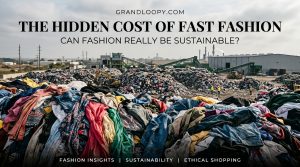
Zara’s sustainability story is best read with a clear-eyed distinction between company-stated figures and independent verification. The company-stated numbers are real and documented.
The independent verification is thinner, and the gap between the two is where the greenwashing debate lives.
The 2030 Targets and Reported Progress
Inditex has set public targets around hazardous chemical elimination and carbon neutrality, and Zara’s Join Life page lays out the goals with dates.
The targets are more specific than the vague pledges the industry is used to, and the reported progress is measurable. The table below shows both, with the source for each figure.
| Target | Goal | Reported progress |
|---|---|---|
| Emissions reduction | 53% by 2030 vs 2018, SBTi approved (updated from 50%) | Total emissions (Scopes 1, 2, and 3) cut 11% vs 2018 (fiscal 2025) |
| Net zero | 2040, climate neutrality, SBTi approved | Not yet achieved; interim target above |
| Lower-impact fibres | 100% by 2030 | 88% of textile fibres in the 2025 campaign; 47% recycled, 30% organic or regenerative |
| Water consumption | 26% relative reduction vs 2020 | Target met by 2025, 26% reduction in supply chain water use vs 2020 |
| Biodiversity | 5 million hectares protected, restored, or recovered by 2030 | In progress; not quantified in the sources read |
| Innovation funding | €50 million fund for lower-impact textile technology startups | Fund established; outcomes not quantified in the sources read |
The 2030 fibre target splits into roughly 40 percent from conventional recycling processes, 25 percent from next-generation fibres developed with startup partners, 25 percent from organic or regenerative farming.
The remaining 10 percent comes from other certified lower-impact sources, according to a 2026 verdict page summarizing the Inditex plan.
The 88 percent figure for the 2025 campaign is an Inditex group figure, not a Zara-only figure.
Zara does not publish a standalone brand-level sustainability report; all disclosures are consolidated at Inditex group level.
The targets are ambitious and the progress is real. The problem is the denominator.
Cutting emissions by 53 percent while increasing the number of garments placed on the market by 10 percent a year is a harder path than cutting emissions while holding volume flat.
The targets measure intensity and share. The volume measures absolute impact. Both are true, and the verdict depends on which one you weight more.
Join Life: Launched, Peaked, Discontinued
Join Life is Zara’s sustainability label, introduced in 2015 and applied at its peak to 61 percent of products.
The label marked items made with more sustainable materials, including organic cotton and Tencel, and was meant to signal the brand’s progress to shoppers.
In 2016, Zara launched the eco-friendly line and pledged that 50 percent of its entire collection would meet the standards by 2022.
The label was discontinued. The company said it was “no longer necessary to differentiate” collections with the label, according to The Industry Fashion, cited by a 2026 brand audit.
Most verdict pages still describe Join Life as a current collection, which is out of date. The 50 percent by 2022 pledge was also not met, according to Sustainable Jungle’s reading of the record.
The discontinuation matters for two reasons. First, shoppers can no longer use the label to identify lower-impact items in store.
Second, the decision removes the most visible sustainability signal Zara had, at a time when its sustainability claims face their sharpest scrutiny.
The Join Life page on zara.com still describes the sustainability strategy and goals, but the label itself is gone from the collections.
The zara.com Join Life page returns 403 to automated checks, so it is named in plain text here rather than linked.
The targets above are reported from the page’s content as summarized by multiple independent sources, and they should be re-checked on the live page at publication.
Zara Pre-Owned: What It Is and Where It Runs
Zara Pre-Owned is a platform that offers integrated repair, resale, and donation services for used Zara garments.
It launched in the United Kingdom in late 2022, and is currently present in 17 markets.
The markets are Spain, Germany, Austria, Belgium, Croatia, Slovakia, Slovenia, the United States, Finland, France, Greece, Ireland, Italy, Luxembourg, the Netherlands, Portugal, and the United Kingdom.
It reached the United States by the end of October 2024.
Pre-Owned is a genuine circularity service, and it is the most practical part of Zara’s sustainability story for a shopper.
A garment that is repaired or resold is a garment that is not thrown away.
Extending a garment‘s life by nine extra months cuts its impact by about 20 percent, according to a commonly cited estimate.
The platform’s scale is still small relative to Zara’s new production, and no competitor quantifies how many garments pass through it. The service is real; its impact on the total is unproven.
An in-store used clothing donation programme also runs alongside Pre-Owned, with collection containers in stores.
Take-back schemes provide no evidence that clothes are recycled into new garments, according to a 2026 greenwashing analysis, which is a fair caveat.
Donated clothing is often resold or downcycled, not turned into new Zara garments. The donation programme is a disposal service, not a closed loop.
Emissions: The Air-Freight Problem
Inditex reported 13,920,988 tons of CO2e in 2024.
Transport and distribution emissions rose 10 percent that year to more than 2.6 million metric tons of carbon dioxide.
That outpaced product volume growth by a factor of two, according to a 2026 analysis citing Public Eye.
A Public Eye investigation found that Inditex’s transport emissions jumped 37 percent in fiscal year 2023 alone.
The rise was driven in large part by the company’s reliance on air freight to shuttle clothing from Asian production centers to its logistics hub in Spain.
The air-freight figure is the sharpest contradiction in Zara’s sustainability story. The company reports an 11 percent cut in total emissions against 2018, while its transport emissions rise faster than its volume.
The two facts are compatible: emissions from factories and stores can fall while emissions from shipping rise.
The trend line for shipping is the one moving in the wrong direction, and it is driven by the speed model itself. Fast delivery needs fast transport, and fast transport means air freight.
One verdict page reports supply chain emissions of roughly 18 million tonnes of carbon dioxide equivalent in a recent year, comparable to a million round-trip flights between New York and London.
The figure’s vintage is not stated in that source, so treat it as a recent-year estimate rather than a precise annual total.
The 13.9 million ton figure for 2024 is the dated, sourced total.
Is Zara Greenwashing?
This is one of the most searched questions about the brand, and the honest answer is yes, according to multiple independent investigations, though Zara has also made some real changes alongside the disputed claims.
The evidence for the yes is specific and dated.
A 2021 report by the Changing Markets Foundation found that roughly 60 percent of sustainability claims made by European fast fashion companies, including Zara, were unsubstantiated or misleading.
A 2023 Greenpeace report accused Zara’s Join Life line of greenwashing. It cited confusing labeling, false certifications named after company sustainability programs, and no in-house or third-party verification.
It also cited no chain of production information made properly transparent, and no minimizing of large volume production.
It further cited misleading circularity claims with polyester made from plastic bottles, and the use of discredited measurement tools such as the Higg Index.
Zara has also faced specific scrutiny over individual product launches.
Its 2022 line made from carbon-captured polyester was framed as a sustainability milestone.
Critics pointed out that producing hundreds of millions of new garments a year while promoting one limited collection does very little to offset the scale of the underlying problem.
Highlighting a small percentage of lower-impact products while the main production line keeps growing in volume can create a false impression of overall progress, which is the textbook definition of greenwashing.
The counter-evidence matters too. There is no EU-level greenwashing sanction against Zara as of April 2026, according to a 2026 brand audit that checked the legal record.
The Changing Markets and Greenpeace findings are advocacy reports, not legal findings. The distinction is real: Zara has been accused by credible organizations, and it has not been sanctioned by a regulator.
Both facts matter.
The 2026 Rules: EU Green-Claims Enforcement and the Parcel Duty
The regulatory landscape for green claims in fashion shifts fundamentally in 2026.
The European Union’s Empowering Consumers for the Green Transition Directive must be transposed into national law by March 27, 2026, with enforcement beginning September 27, 2026.
Unsubstantiated green claims will carry real legal consequences for the first time. Zara’s Join Life label, unless backed by recognized EU certification, will need restructuring under the new rules.
The same year brings a second change.
A new EU customs duty of €3 on parcels worth under €150 came into force on July 1, 2026, and the European Commission fined Temu €200 million under the Digital Services Act in May 2026.
The platforms’ advantage was built on cheap international shipping and duty-free entry for low-value parcels.
The high-street chains, including Zara, rely on bulk imports, physical stores, and brand loyalty, so the parcel duty hurts Shein and Temu more than it hurts Zara.
These facts are the newest in the record, and no verdict page covers them.
They matter because they change the competitive landscape: the ultra-fast model faces rising regulatory costs, while the green-claims rules force every brand, including Zara, to prove its sustainability claims or drop them.
The next rating cycle will reflect both changes.
The Controversy Timeline, 2005-2026
Zara has gathered quite a few controversies since it began, and the pattern is worth seeing whole.
The timeline below covers the documented incidents, with dates and outcomes, and labels the sources where they are activist-reported rather than established.
| Date | Incident | Outcome |
|---|---|---|
| 2005 | Handbags featuring swastikas pulled from stores | Line withdrawn |
| 2011 | Brazil slave-like labor, 52 charges, 15 workers rescued | Settled: $1.8 million plus Conduct Adjustment Term |
| 2012 | Greenpeace finds hazardous chemicals, including dyes that break down into cancer-causing amines | Zara pledges toxic-free by 2020; removal unproven as of publication |
| 2014 | Children’s striped top with a six-pointed yellow star, likened to concentration-camp uniforms | Pulled; apology on Twitter; star said to be inspired by sheriff’s stars |
| 2015 | Racial profiling of customers reported (Guardian) | Zara denied the allegations |
| 2015-2017 | 40 artists and designers accuse Zara of plagiarism | Zara never paid; pursuing cases too pricey for indie designers |
| 2016 | BBC finds child labor and exploitation in Turkey factories | Zara says one factory, six months to fix |
| 2017 | Istanbul workers sew notes for help into garments (Bravo Tekstil unpaid wages) | Some wages paid by August 2023, not all |
| 2020 | Myanmar workers fired for unionizing | Inditex exited Myanmar in 2023 |
| June 2021 | Head designer Vanessa Perilman sends anti-Palestinian messages to model Qaher Harhash | Apology; Zara condemned the comments |
| Dec 2023 | “The Jacket” Atelier campaign resembles Gaza destruction; #BoycottZara trends | Campaign pulled; apology December 12, 2023, “regretted the misunderstanding” |
| Feb 2025 | Largest-ever Israeli store opens, 4,500 square meters, Tel Aviv (activist-reported) | BDS National Committee endorsed boycotting Zara in 2025 (activist source) |
| Mar 2026 | John Galliano two-year deal announced; collections from September 2026 | “Luxurywashing” framing by commentators |
| Sep-Oct 2026 | Halloween costume likened to concentration-camp uniform removed | Removed after social-media criticism; no reason given, no public statement |
The full controversy record, including the Gaza campaign and the wage disputes, is documented in detail by Sustainable Jungle’s Zara investigation, which has the most complete roundup of any competitor page.
The history of the brand, including the labor cases, is also covered in the Wikipedia article on Zara.
The Creative Misfires: A Pattern, Not a One-Off
The creative misfires are a pattern, not a one-off. In August 2014, Zara pulled a children’s striped top with a six-pointed yellow star, marketed with a “sheriff” theme, after comparisons to concentration-camp uniforms.
Zara apologized on Twitter, saying the star was inspired by sheriff’s stars from classic Western films.
In December 2023, Zara pulled “The Jacket” Atelier campaign after critics said images of mannequins with missing limbs and figures wrapped in white resembled the destruction in Gaza.
Zara said the campaign had been conceived in July and shot in September, apologized on Instagram on December 12, 2023, and said it “regretted the misunderstanding.”
In late September and early October 2026, Zara removed a Halloween costume listing likened to a concentration-camp uniform after social-media criticism, with no reason given and no public statement.
The pattern across three incidents in twelve years is the same: a product or campaign reaches the public, the resemblance is pointed out, the item is pulled, and an apology follows or does not.
The repetition suggests weak pre-launch cultural screening rather than a single mistake.
Design Theft: 40 Designers, 2015-2017
Between 2015 and 2017, 40 artists and designers accused Zara of plagiarism, and Zara never had to pay a dime.
Pursuing the court cases is simply too pricey for indie designers up against a huge multinational corporation. The accusations are documented by Hyperallergic and Vice, cited by Sustainable Jungle.
Design theft is a common low blow by the fast fashion industry, and big brands like Shein are also accused of stealing indie designers’ creations.
The mechanism is the same as the trend-replication model: a design appears on a runway or on social media, and a similar version reaches stores within weeks.
The difference between inspiration and copying is a legal question, and in Zara‘s case it has almost never been tested in court, because the cost of testing it falls on the designer.
The Galliano Deal and Luxurywashing
John Galliano, the designer whose work commands reverence in the halls of the Metropolitan Museum of Art, will spend the next two seasons sifting through Zara’s archives.
He will produce fast fashion collections starting in September 2026.
The announcement sent the fashion industry into its most necessary reckoning in years, according to a March 2026 commentary in The Ethos.
Luxurywashing is the deployment of prestige, a designer’s name, a celebrity’s face, a couture vocabulary, to launder the reputational damage of unethical or environmentally destructive business models.
The Galliano appointment is its most visible manifestation yet, arriving as public scrutiny of fast fashion‘s labor and environmental record has never been sharper.
Luxury fashion expert Dr. Hakan Karaosman told Fashion United that the deal is “a power move” by Inditex.
Inditex framed the partnership as a creative exploration, an invitation for the designer to deconstruct and reconfigure archival pieces into new seasonal expressions.
Zara’s own sustainability record makes the gap harder to bridge than a designer name alone can manage.
The collections will be the test: if they are produced on the same two-week, high-volume model, the name changes nothing about the verdict.
The Boycott Question
The Palestinian BDS National Committee officially endorsed boycotting Zara in 2025, according to activist boycott directories, citing Inditex‘s deep and growing complicity in Israel’s regime.
The boycott centers on Zara’s continued expansion in Israel during the war in Gaza, the December 2023 campaign, and the June 2021 Perilman messages.
Zara opened its largest-ever Israeli store in February 2025, a 4,500-square-meter facility in Tel Aviv, according to the same activist sources.
These claims come from activist boycott directories and should be labelled as activist-reported, not as established fact.
The confirmed facts are the December 2023 campaign and its pull, the June 2021 messages and the apology, and the #BoycottZara trend.
The financial impact of the boycott is not publicly quantified, and mainstream reporting has not confirmed the scale of any setback.
The boycott itself is a matter of record; its claims are not.
Is Zara Ethical?
Based on the available evidence, Zara is not considered an ethical brand by the standards most sustainability and labor watchdogs apply, though it is not the worst performer in its category either.
Good On You gives Zara an overall rating of “It’s a Start,” its second-lowest tier, citing a lack of published living wage guarantees and limited supplier transparency below the final production stage.
Ethical Consumer rates Zara and Inditex poorly across its workers category for similar reasons, while also flagging likely tax avoidance strategies and past controversies.
The tax point refers to the 2016 EU Greens allegation of €585 million in avoided tax, which Inditex disputes and which has never been a court finding. The rating reflects the allegation, not a verdict.
The short answer is that Zara sits in the middle of the fast-fashion ethics range: better than Shein on quality, construction, and transparency, worse than any genuinely ethical brand on wages, traceability, and volume.
A shopper who wants an ethical brand should not buy Zara. A shopper who wants the least-bad fast-fashion option has a real choice to make, and the ratings above are the evidence for it.
What Zara Gets Right
Zara’s strengths are real and should not be dismissed. Its vertical integration means it controls more of its chain than rivals that outsource everything.
Its sell-through rate above 85 percent means less unsold stock per garment than the industry average. Its proximity sourcing means shorter shipping distances for its most fashion-sensitive items.
Its Pre-Owned platform gives shoppers a genuine repair, resale, and donation option.
The company has also set measurable, dated targets: 53 percent emissions reduction by 2030, net zero by 2040, and 100 percent lower-impact fibres by 2030.
It also targets a 26 percent water reduction, which it reports as already met.
It publishes a supplier code of conduct, audits the final stage of production, and runs worker programs aiming to reach 3 million people.
It participates in the Ethical Trading Initiative and publishes a Modern Slavery policy.
None of these facts changes the verdict. They change the ranking within the category.
Zara is a fast-fashion brand that does some things better than its rivals, because the evidence says so.
What Zara Gets Wrong
Zara’s weaknesses are the verdict’s substance. It produces around 450 million garments a year, and the volume is growing. It has no evidence of living wages across most of its supply chain.
Its transparency below the final production stage is rated 1 percent by Fashion Revolution against 90 percent for its published policies. Its transport emissions are rising faster than its volume.
Its Join Life label was discontinued. Its creative screening has failed repeatedly.
The labor record is the sharpest point.
A settled slave-labor case in Brazil, child labor evidence in Turkey, unpaid wages in Istanbul, union firings in Myanmar, and an unresolved Xinjiang link are not a single bad year.
They are a pattern across fifteen years and four continents. The settlements and exits show the company responds to pressure. The repetition shows the pressure has to keep coming.
The sustainability record has the same shape. Real targets and real progress sit beside a business model that the targets cannot fix, because the model is volume.
A 53 percent emissions cut against a 10 percent annual increase in garments placed on the market is a race the volume side is currently winning.
How to Shop at Zara More Ethically
Shopping more ethically at Zara does not make Zara an ethical brand. It reduces the harm of your own purchases.
The five steps below are specific to Zara, and they work because they target the parts of the model a shopper can actually control.
Step 1: Buy Less, and Buy on Purpose
Visit Zara with a list, not a habit. The twice-weekly drops and the scarcity model are designed to make you browse and impulse-buy. A list breaks that loop.
Buy the item you came for, and leave without the second item you did not plan to buy. The single most effective ethical move is buying less, not switching brands.
Step 2: Apply the 30-Wear Test Before You Pay
Before you buy a Zara garment, ask whether you will wear it at least 30 times. A €39.95 dress worn 30 times costs €1.33 per wear.
The same dress worn 3 times costs €13.32 per wear, and it will be in landfill within a year. If the answer is no, do not buy it.
The test favors tailored pieces, neutral colors, and classic cuts over trend pieces, which is exactly the right filter for a fast-fashion store.
Step 3: Choose the Pieces That Last
Zara‘s construction is better than most fast-fashion rivals, and the difference shows in tailored items.
Blazers, coats, tailored trousers, and structured dresses are the categories where Zara earns its price premium, according to a 2026 hands-on test that scored Zara 8.4 against H&M’s 6.8 on construction.
Thin synthetic trend pieces are the ones that fall apart first. Buy the structure, skip the disposable trend item.
Step 4: Use Zara Pre-Owned Before You Buy New
Check Zara Pre-Owned for the item you want before buying it new. The platform offers repair, resale, and donation in 17 markets, including the United States.
A repaired or resold garment extends its life, and extending a garment’s life by nine extra months cuts its impact by about 20 percent.
If the item is not on Pre-Owned, buy it new and use the repair service when it needs it.
Step 5: Care for the Garment So It Lasts
Wash less often, wash cold, and air-dry. Synthetic textiles are a major source of microplastic shedding during washing, and Zara’s clothing uses a large share of polyester and synthetic blends.
Cold washing and air-drying extend the garment‘s life and reduce shedding. When the garment is finished, donate it through the in-store programme or resell it, rather than throwing it away.
What to Buy Instead: Ethical Alternatives to Zara
Zara products are not the commercial content. The brands that sell similar styles without the fast-fashion model are.
The table below names specific alternatives with factual notes on price, style, and ethics. None of these brands is perfect, and each should be checked against the same ratings used for Zara.
The notes are factual, not promotional.
| Brand | Style | Price range | Ethics note |
|---|---|---|---|
| Patagonia | Outdoor and casual basics | Higher than Zara | Strongest repair and resale programs in the industry; 1% for the Planet; B Corp |
| Eileen Fisher | Minimalist womenswear, tailoring | Higher than Zara | Take-back and renewal program; strong labor and materials reporting |
| Everlane | Basics and wardrobe staples | Similar to Zara, slightly higher | Radical transparency on factory costs; mixed ratings, check current Good On You score |
| Reformation | Trend-led womenswear, dresses | Higher than Zara | Carbon-neutral claims with reporting; trend styles without the two-week cycle |
| Pact | Organic cotton basics | Similar to Zara | Fair Trade certified factories; organic cotton focus |
| Kotn | Basics, Egyptian cotton | Similar to Zara | Direct trade with cotton farmers; traceable supply chain |
| Thought | Casual and contemporary womenswear | Similar to Zara | Natural and recycled fabrics; slower collections |
| Able | Womenswear and leather goods | Similar to Zara, slightly higher | Publishes lowest wages in the industry; living-wage focus |
Two honest caveats belong with the table. First, ethical brands cost more per item than Zara, because they pay more for labor and materials.
The price-per-wear math usually favors them anyway, because the garments last longer. Second, no brand in the table matches Zara’s range or speed. That is the point.
The trade is range and speed for durability and accountability, and the shopper decides which side they want.
Readers who want the full comparison for the other brands in this series can start with the Fashion Nova legitimacy review, which covers a different fast-fashion model.
The Cider verdict covers a newer online-first fast-fashion brand.
The guide to Y2K fashion explains the trend cycle Zara copies fastest, and why those styles return every few years.
Frequently Asked Questions
1. Is Zara fast fashion?
Yes. Zara is fast fashion by every definition that matters: speed, volume, price, trend replication, and product turnover.
The term “fast fashion” was coined by the New York Times in 1989 to describe Zara, and Good On You and Ethical Consumer both classify Zara inside the category.
2. Is Zara the original fast fashion brand?
Yes, effectively. The New York Times coined “fast fashion” on December 31, 1989, in a piece about Zara.
Zara opened its first store in 1975, and the model it built, rapid trend response on a two-week cycle, became the template for the whole industry.
3. Why is Zara considered fast fashion?
Zara takes a design from sketch to store in two to three weeks, releases about 500 new designs a week, and moves around 450 million garments a year.
It sells at prices low enough to encourage frequent buying and quick replacement.
Those four facts are the definition of fast fashion.
4. Is Zara fast fashion or slow fashion?
Fast fashion. Slow fashion means planned collections, durable garments, and small volumes. Zara does the opposite on every count: rapid cycles, trend pieces, and hundreds of millions of garments a year.
5. Is Zara ethical?
Not by watchdog standards. Good On You rates Zara “It’s a Start,” its second-lowest tier, and Ethical Consumer rates it poorly in its workers category.
Zara is not the worst performer in its category, but no major rater calls it ethical.
6. Is Zara sustainable?
Not yet, by independent measures. Zara has real targets, including a 53 percent emissions cut by 2030 and net zero by 2040, and reports 88 percent lower-impact fibres in 2025.
Independent raters give it low scores, and its transport emissions are rising faster than its volume.
7. Is Zara eco friendly?
No. Zara’s model is built on high-volume production of synthetic-heavy garments, and its total production is growing. Some of its materials are lower-impact, and its Pre-Owned platform helps, but the core business is not eco-friendly.
8. Is Zara greenwashing?
According to multiple independent investigations, yes, though Zara has made real changes too.
The Changing Markets Foundation found in 2021 that about 60 percent of European fast-fashion sustainability claims were unsubstantiated, and Greenpeace accused the Join Life line of greenwashing in 2023.
There is no EU-level greenwashing sanction against Zara as of April 2026.
9. What is Zara’s Good On You rating?
“It’s a Start,” 2 of 5 overall, with Planet 3 of 5, People 3 of 5, and Animals 2 of 5, in a rating dated January 2026.
Some older sources say “Not Good Enough”; the January 2026 rating is the most recent dated one. Re-check the rating at publication, because Good On You re-rates brands periodically.
10. Is Zara worse than Shein?
No, on quality and transparency. Zara is better than Shein on construction, materials, and store experience, and its Good On You rating is higher. Shein is cheaper and faster.
Both are fast fashion; Shein is ultra-fast fashion, a more extreme version of the same model.
11. Is Zara better than Shein?
On quality, yes. On price, no. Zara dresses cost $50 to $90 against Shein’s $5 to $25, and Zara’s construction scores higher in hands-on tests.
On ethics, both score poorly, and Zara’s rating is only one tier above Shein’s on Good On You.
12. Is Zara more ethical than H&M?
Roughly equivalent. Both brands score poorly on independent ratings. H&M is slightly more transparent on reporting; Zara is more aggressive on internal targets. The most effective move is buying less, not switching between them.
13. Is Zara better than Uniqlo?
For trend pieces, yes. For basics, no. Zara wins on trend speed and tailoring; Uniqlo wins on continuity basics and durability. Uniqlo’s verdict is genuinely nuanced, while Zara’s is a plain yes.
Read the full Uniqlo verdict for the comparison.
14. Why is Zara so cheap?
Zara’s prices are low because of scale, vertical integration, and proximity sourcing, which cut waste and shipping time. The price is mid-market for fast fashion, not ultra-cheap.
The low price also reflects low labor costs in the supply chain, which is the part the ratings flag.
15. Where are Zara clothes made?
Over half are made close to home in Spain, Portugal, Morocco, or Türkiye, in company-owned or closely controlled facilities. The rest come from Asia and other regions.
Zara does not publish a full brand-level factory list, and Fashion Revolution gives it 1 percent for traceability.
16. Who owns Zara?
Inditex, the Spanish fashion group founded by Amancio Ortega. Zara is Inditex’s flagship brand and provides about 70 percent of group sales.
Ortega founded Zara in 1975 with Rosalía Mera, and Inditex listed on the stock market in 2001.
17. How many garments does Zara produce a year?
Over 450 million items a year, according to multiple analyses. One source gives a range of 450 to 800 million.
Inditex placed roughly 621,000 tonnes of garments on the market in a recent year, up about 10 percent year over year.
18. How many stores does Zara have?
Thousands, across 90 to 100 countries. Sources disagree on the exact count: one 2026 page says roughly 2,000 stores in over 90 countries, another says more than 3,000 in 96 countries.
Inditex reported 5,460 total group stores in fiscal 2025, covering all its brands.
19. How fast is Zara’s supply chain?
Two to three weeks from design to store shelf, against four to six months for traditional brands. The fastest reported cycle is 14 days.
European stores receive new products within 24 hours of dispatch from the Spanish hub, and North American stores within 48 hours.
20. What is Zara Join Life?
Join Life was Zara’s sustainability label, introduced in 2015, applied at its peak to 61 percent of products, and marking items made with more sustainable materials. The label has been discontinued.
The company said it was no longer necessary to differentiate collections with the label.
21. Was the Join Life label discontinued?
Yes. The Join Life label was discontinued, according to The Industry Fashion, cited by a 2026 brand audit.
The zara.com Join Life page still describes the sustainability strategy and goals, but the label itself is no longer applied to collections.
22. Is Zara Pre-Owned available in the US?
Yes. Zara Pre-Owned, the repair, resale, and donation platform, is available in 17 markets including the United States, which it reached by the end of October 2024.
It launched in the United Kingdom in late 2022.
23. Does Zara use child labor?
There is documented evidence of child labor in Zara’s supply chain. In 2011, Brazilian authorities rescued a fourteen-year-old among 15 workers in slave-like conditions. In 2016, the BBC reported child labor evidence in Turkey factories.
Zara says it has a zero-tolerance policy and a supplier code of conduct, but the incidents are documented.
24. Does Zara use slave labor?
Workers were found in conditions Brazilian authorities described as slave labor in 2011, and the case was settled for $1.8 million plus a conduct agreement. Good On You flags an unresolved link to Xinjiang-sourced cotton.
A French inquiry into forced labor was closed in May 2023 for lack of jurisdiction, which is not a finding on the underlying facts.
25. Did Zara settle the Brazil labor case?
Yes. Zara paid $1.8 million and signed a Conduct Adjustment Term, and was kept off Brazil’s “dirty list” of companies using slave labor.
The settlement followed 52 charges after 15 workers were rescued from a São Paulo factory in 2011.
Conclusion
Yes, Zara is fast fashion.
The term was coined to describe Zara, and the brand still runs the model the term describes.
The model means two-to-three-week design cycles, about 500 new designs a week, around 450 million garments a year, and prices built for frequent buying.
No other verdict in this series is as clear, and no other brand has the same claim to the origin of the category.
Zara’s differences from Shein and H&M are real and worth naming. Its vertical integration, proximity sourcing, small batches, and high sell-through make it more controlled and less wasteful per garment than offshore mass production.
Its Pre-Owned platform is a genuine circularity service. Its targets are specific and dated, and some of the reported progress is measurable.
Those facts make Zara the least-bad option in its category for some shoppers.
They do not change the verdict.
The volume is growing, the living-wage evidence is absent, the traceability is rated 1 percent, the transport emissions are rising faster than the volume, and the labor record spans fifteen years and four continents.
A brand that makes 450 million garments a year on a two-week cycle is a fast-fashion brand, whatever its stores look like.
The practical answer for readers is simple. If you shop at Zara, buy less, apply the 30-wear test, choose the tailored pieces that last, and use Pre-Owned before you buy new.
If you want an ethical brand, buy from the alternatives in the table above, and check their ratings the same way Zara’s were checked. The verdict is the starting point.
What you do with it is the decision that matters.