Is Aritzia Fast Fashion? The Honest Answer, With the Evidence
Is Aritzia fast fashion? The honest answer is no, not in the classic sense, and yes, in several ways that matter.
Aritzia does not look like Shein or Forever 21. Its stores are calm, its prices run from 50 to 400 dollars and more, and its wool coats and tailored blazers last for years.
That polish is real, and it is the main reason the question keeps coming up.
Underneath the polish, though, the business model borrows several of fast fashion’s core habits. New styles arrive multiple times a week. Most clothes are made overseas. No public factory list exists.
Independent watchdogs rate its sustainability as poor.
Most analysts now describe the brand as premium fast fashion, or as contemporary mass-market retail. It sits in a grey zone between disposable fashion and genuinely slow, ethical fashion.
That grey zone is what the rest of the page explains.
You will find the definition of fast fashion, a scorecard that rates Aritzia trait by trait, and the factory and materials evidence.
The watchdog ratings come with their dates, alongside a head-to-head comparison with Zara, H and M, and Shein, a quality check by category, and a clear answer on whether the price is worth it.
The Short Answer
Aritzia is not classic fast fashion in the Shein or Forever 21 sense, but it behaves like fast fashion in almost every way that matters.
The main thing separating it from classic fast fashion is price and packaging, not the underlying business model.
Its clothes cost more and feel better, yet the speed, the volume, and the secrecy around production track much closer to fast fashion than to slow fashion.
Here is the verdict in one table, so you can see the balance before the detail.
| Question | Short answer |
|---|---|
| Is Aritzia fast fashion? | Not classic fast fashion, but premium fast fashion, a grey zone |
| Is Aritzia ethical? | Good On You rates it Not Good Enough overall, June 2026 |
| Is Aritzia sustainable? | Weak. The Commons rates it Insufficient, and its synthetic use is rising |
| Is Aritzia good quality? | Yes for structured pieces, mixed for knits and trend pieces |
| Is Aritzia a luxury brand? | No. It is premium contemporary, above fast fashion and below luxury |
| Is Aritzia worth the money? | Yes for staples, often no for trend pieces |
If you only need the verdict, you have it. If you want to know why, the evidence follows, with every figure labelled by its source and its year.
One warning matters before the detail. Several figures about Aritzia move year to year, and some sources disagree with each other. Where two sources conflict, the page names the conflict instead of picking a winner.
That is the only honest way to handle a brand that reports in fiscal years and discloses selectively.
What Fast Fashion Actually Means
Fast fashion is a business model, not a price point.
That distinction matters, because Aritzia’s prices are high and its stores look premium, which tricks many shoppers into assuming the model must be different too.
A brand counts as fast fashion when it does most or all of four things.
It releases new styles constantly, it produces at high volume, it chases trends quickly, and it shares little about how its clothes are made.
Price is not on that list, and that is exactly why Aritzia confuses people.
Here are the four traits, with a plain explanation of each.
| Trait | What it means |
|---|---|
| Speed | New styles arrive weekly or more often, not just once or twice a season |
| Volume | Huge numbers of styles and units, with constant replenishment |
| Trend chasing | Runway and celebrity looks copied and sold within weeks |
| Secrecy | Little public detail about factories, workers, and wages |
Zara, H and M, and Shein hit all four traits clearly. The question with Aritzia is whether it hits some of them while dodging others through pricing and branding.
The scorecard below answers that question directly.
A related term needs a definition too. Premium fast fashion describes a brand that uses the speed, marketing, and trend-sensitivity of fast fashion, then applies that model to a higher-quality, higher-priced product.
It is still fast fashion in its mechanics, but the product lasts longer and costs more.
Slow fashion is the opposite model. It means fewer styles, longer design cycles, transparent factories, durable materials, and prices that reflect the real cost of making clothes well.
Aritzia is not slow fashion by any of those measures.
Contemporary fashion is the label Aritzia prefers for itself. It means modern, trend-aware clothes at mid-range to higher prices, sold in polished stores. The label is real, but it describes positioning, not production.
A brand can be contemporary and fast at the same time.
The Fast-Fashion Checklist: Score Aritzia Yourself
Rather than taking anyone’s word for the verdict, run Aritzia through the checklist below. Score one point for each trait that applies, and see where the brand lands.
| Trait | Does Aritzia do it? | Evidence |
|---|---|---|
| New styles weekly or more often | Yes | New styles arrive multiple times a week, not just seasonally |
| Marketing built on limited drops and scarcity | Yes | Frequent new arrivals, influencer hype, and viral demand |
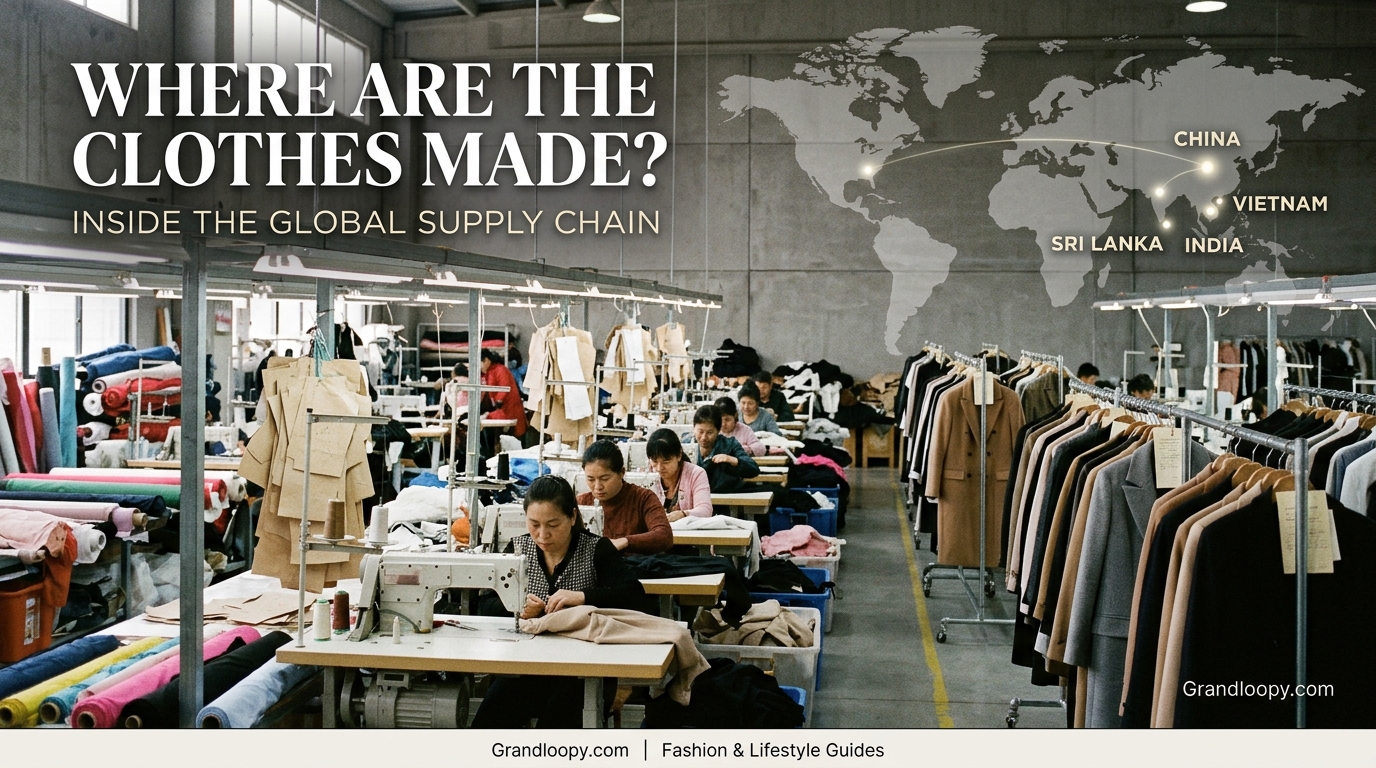
| Manufacturing in low-cost overseas countries | Yes | China 38 percent, Vietnam 17 percent, Sri Lanka 15 percent, India 6 percent |
| No public factory list | Yes | No individual factory names or addresses are disclosed |
| Heavy reliance on synthetic fabrics | Yes | Synthetic use rose from 36 percent to 44 percent in recent years |
| Two-week runway-to-rack cycle | No | Rolling seasonal calendar, slower than Zara and Shein |
| Very low prices | No | Prices run 50 to 400 dollars and more |
| Disposable quality | No | Structured pieces often last 3 to 5 years with normal care |
Aritzia scores five out of eight on the checklist. It checks nearly every box on the production side, and it dodges the boxes on the product side.
That split is the whole story: fast fashion mechanics, premium product.
Compare that with Zara, which scores eight out of eight, and with a genuinely slow brand, which would score one or two.
Aritzia sits between them, closer to fast fashion on how it makes clothes and closer to premium on what it sells.
The checklist also explains why the debate never settles. People who look at the product say no, it is not fast fashion. People who look at the production say yes, it is.
Both groups are looking at real evidence, and both are partly right.
Aritzia’s Business Model: Why It Is Confusing
Aritzia was founded in Vancouver in 1984 by Brian Hill, and it built its identity around the phrase Everyday Luxury. The company sells sharp tailoring, stylish ready-to-wear, activewear, and denim, in calm, aspirational stores.
The company owns a portfolio of in-house labels instead of stocking outside brands like a typical department store. Those labels include Wilfred, Babaton, TNA, Talula, Sunday Best, Super Puff, and Denim Forum.
That vertical control is part of why the clothes feel curated rather than thrown together.
Aritzia operates about 140 boutiques across North America, plus its online store. It sells only women’s clothing and accessories, and it designs its collections in Canada.
Almost none of the actual sewing happens there, though, and that gap between design and production is where the fast-fashion questions start.
Revenue is another source of confusion, because two figures circulate that do not match. One ratings tracker reports record revenue of 2.74 billion Canadian dollars.
A competitor article reports fiscal 2026 net revenue of roughly 4.4 to 4.6 billion dollars. Those two numbers cannot both be right.
Morningstar financial data, shown through PitchBook, puts the picture in order. It lists fiscal 2026 revenue at about 2.67 billion US dollars, fiscal 2025 at about 1.97 billion, and fiscal 2024 at about 1.73 billion.
The 2.74 billion Canadian dollar figure matches the fiscal 2025 revenue in Canadian dollars. The 4.4 to 4.6 billion figure does not match the financial data, so it should not be used.
Growth has been strong either way. Revenue roughly doubled between fiscal 2024 and fiscal 2026 in US dollar terms, driven by constant new arrivals, strong inventory turnover, and comparable sales growth.
A brand that grows that fast on newness is behaving like a fast-fashion business, whatever its price tags say.
The real innovation is not in how Aritzia manufactures clothes. It is in how it makes fast fashion feel like something else entirely.
Calm stores, soft lighting, heavy fabrics, and high prices create a premium feeling, even while the production engine underneath moves quickly and discloses little.
How Fast Does Aritzia Release New Styles?
Aritzia adds new styles multiple times a week, not just once or twice a season.
That is a classic fast-fashion habit, and it is the single strongest piece of evidence on the yes side of the verdict.
The brand works on a rolling seasonal calendar, with new styles introduced within those seasons on a near-constant basis. Stores always have something new waiting, and the website refreshes constantly.
Seasonal collections exist, but they are not the only drops. Core staples sit alongside a steady flow of new arrivals.
That pace is slower than Zara, which moves new designs into stores weekly, and far slower than Shein, which lists thousands of new styles a day.
But it is much faster than a slow-fashion brand, which might release two or four collections a year and keep the same staples for years.
The marketing matches the pace. Aritzia uses influencer hype and social media to create viral demand, then restocks and rotates styles to keep shoppers coming back.
Limited drops and scarcity messaging push shoppers to buy now, before a style disappears. That urgency is a fast-fashion marketing pattern, even when the product costs 150 dollars.
One thing Aritzia does not do is run a two-week runway-to-rack cycle. It does not copy a runway look and sell it in two weeks the way the most extreme fast-fashion brands do.
Its design cycle is slower, and its collections are more deliberate. That is a real difference, and it is why the verdict is a grey zone rather than a flat yes.
Where Are Aritzia Clothes Made?
Aritzia designs its collections in Canada, but almost none of the actual sewing happens there.
One source says the brand does not manufacture in Canada at all, while another reports small amounts of production in Canada and the United States.
The country split published by ratings trackers lists only overseas countries, so the overseas share is the settled part.
Here is the manufacturing split reported for fiscal 2025, by country.
| Country | Share of manufacturing |
|---|---|
| China | 38 percent |
| Vietnam | 17 percent |
| Sri Lanka | 15 percent |
| India | 6 percent |
| 10 or more other countries | Remaining share |
Other sources commonly report China, Vietnam, Cambodia, and Peru as the main manufacturing countries. The lists differ because they cover different years and different sources, and because Aritzia does not publish a full factory list.
The pattern is the same in every version: production is concentrated in low-cost overseas countries.
Aritzia has not published a full, independently verified factory list the way some competitors have. It does not disclose individual factory names or addresses.
That gap was flagged by Oxfam Canada and by Fashion Revolution, and it is one of the main reasons shoppers cannot verify working conditions for themselves.
The brand does publish a Supplier Code of Conduct, which covers minimum wage, no forced labor, and no unauthorized subcontracting.
It also reports that 99 percent of its Tier 1 suppliers were third-party assessed in fiscal 2025.
Those are real steps, but an assessment is not the same as a public factory list, and a code of conduct is not the same as verified conditions.
Zara and H and M publish partial supplier lists, which is more than Aritzia discloses. Shein discloses very little.
On transparency, Aritzia sits closer to Shein than to Zara, even though its prices sit closer to premium brands.
If you want to check the current picture yourself, the brand’s own disclosures are the place to start.
Aritzia publishes its impact and ESG reports through its investor relations site, and the most recent report is the fiscal 2025 Aritzia Impact Report, which supersedes the earlier ESG reports.
The figures below come from the fiscal 2024 ESG report and the ratings trackers, each labelled with its year.
What Is Aritzia Made Of?
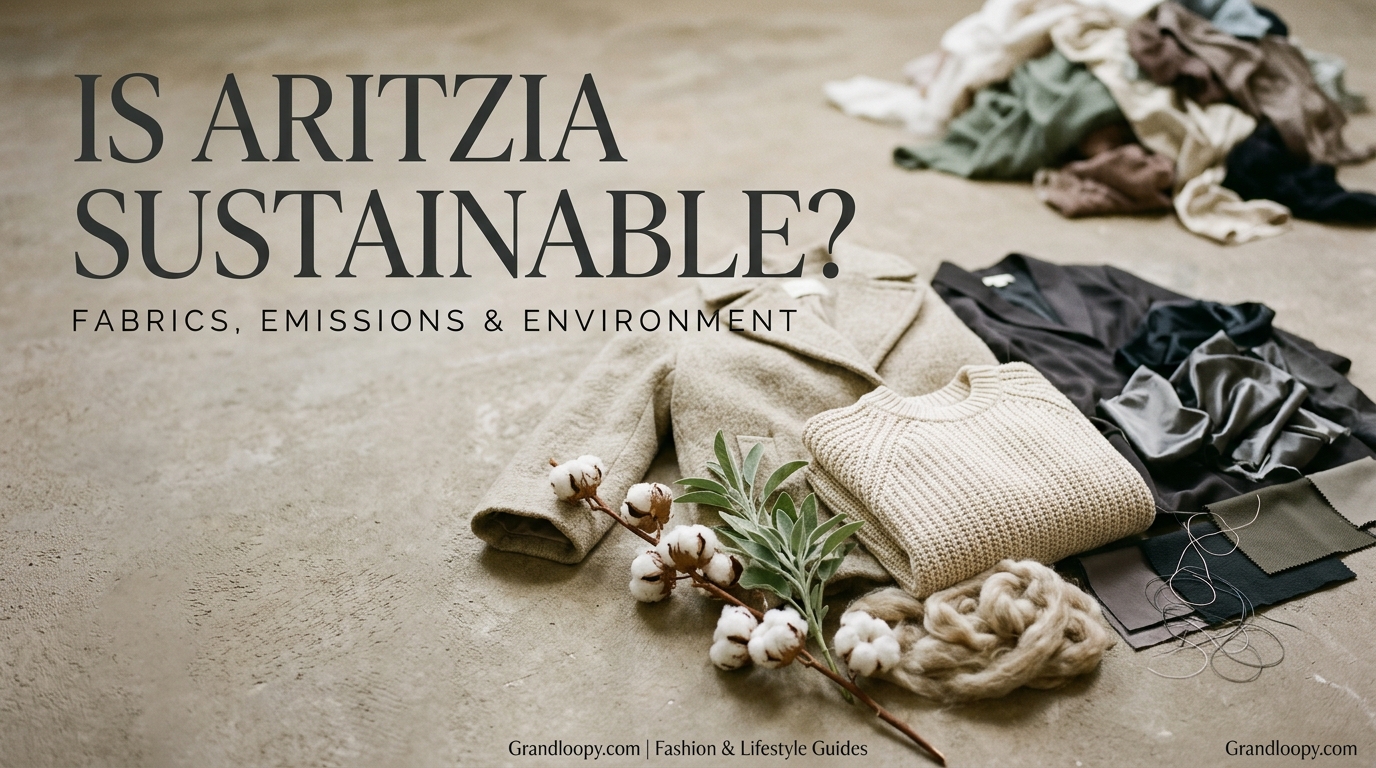
Aritzia mixes genuinely higher-quality materials with a substantial share of synthetics.
That mix is the second reason the verdict is a grey zone, because the good materials are real and the synthetic share is rising at the same time.
The premium side of the mix includes merino wool, cashmere, and some Japanese technical fabrics.
Those materials feel expensive in the hand, and they are the reason shoppers describe Aritzia clothes as noticeably softer and thicker than most fast-fashion alternatives.
Wool coats and tailored blazers are where the material quality shows most.
The synthetic side includes polyester, nylon, and polyamide. Those fibres appear in Crepette fabric and in Original Contour material, and they make up a large share of the collection.
Synthetics are cheap, durable, and easy to care for, but they shed microplastics and they do not biodegrade.
Here is how the material mix moved in recent years, according to the brand’s own ESG reporting.
| Material | Direction | Figures |
|---|---|---|
| Synthetic fibres | Rising | 36 percent to 44 percent |
| Cotton | Falling | 39 percent to 32 percent |
| Animal-derived materials | Falling | 16 percent to 12 percent |
The synthetic increase is reported with two different end years. One source citing the fiscal 2023 ESG report puts the rise at 2021 to 2022, while another puts it at 2021 to 2023.
The direction is the same in both versions, but the end year conflicts, so the page does not present one end year as settled.
Cotton tells a similar story.
The fiscal 2024 ESG report says that 42 percent of the cotton used by weight in the 2023 collections came from lower-impact sources, such as Better Cotton, organic cotton, and regenerative cotton programs.
An earlier report cited 63 percent for Spring and Summer 2022. Those are different reporting periods, so the two figures should never be merged into one trend.
Better Cotton needs a caveat of its own. It is sourced through a mass-balance model, which means it is not physically traceable to specific finished products.
A garment labelled as using Better Cotton may not contain Better Cotton fibres at all, because the cotton is mixed at the supply level. That is how the system works, but shoppers should know it.
The brand holds a portfolio of material certifications, including Responsible Down Standard, Responsible Wool Standard, Good Cashmere Standard, Global Organic Textile Standard for some products, Organic Content Standard, Better Cotton Initiative, and Global Recycled Standard.
It is also a member of the Sustainable Apparel Coalition, a Better Work partner, and a CDP submitter since 2021.
One competitor article claims the brand holds no Global Organic Textile Standard certification, while a ratings tracker lists it for some products.
The certification picture is disputed, so the brand’s own disclosures are the check.
Animal welfare gets a mixed picture too. Aritzia banned fur in 2010, and it eliminated angora and mohair in 2024. It reports that 52 percent of its Fall and Winter 2022 cashmere was certified responsible.
But responsible cashmere is only 4 percent of its animal-derived materials, and animal fibres are only 12 percent of the whole collection, so the initiative touches a small part of the inventory.
What Do the Watchdogs Say?
Independent watchdogs rate Aritzia poorly on sustainability, and they do so for the same reasons: limited disclosure, rising synthetic use, and no evidence of a living wage.
The ratings come from different organisations, but they point in the same direction.
Good On You is the most cited independent fashion rating directory, and its Aritzia rating was published in June 2026. Here is the pillar breakdown.
| Good On You pillar | Rating | What it means |
|---|---|---|
| Overall | Not Good Enough | The brand misses the mark on sustainability disclosures |
| Planet | It is a Start | Second-lowest tier, some lower-impact materials used |
| Labour | Not Good Enough | Too little disclosed about actions and supply chain |
| Animal welfare | Rated separately | See the animal welfare notes in the materials section |
The overall score and the Planet score are different pillars, so they should never be merged into one number.
The overall rating is Not Good Enough, while the Planet pillar alone is It is a Start. Some coverage of Aritzia gets this wrong, so the distinction matters.
Good On You found no evidence that Aritzia ensures payment of a living wage in its supply chain.
It also found no evidence that the brand is actively reducing its carbon and other greenhouse gas emissions in its supply chain.
The brand has set a science-based target to reduce emissions in its direct operations and its supply chain.
Good On You notes there is no evidence yet that it is on track to hit it.
Good On You’s Aritzia rating is the clearest single source for the ethics question, and it is worth reading in full before buying.
Fashion Revolution’s Fashion Transparency Index measures something narrower: public disclosure, not verified factory conditions.
Aritzia sits in the 21 to 30 percent band in the 2023 Index, according to Good On You’s summary of the Index. A separate source cites 20 percent on the 2022 Index.
Those are different years, so they should never be merged.
For context, the industry average in the 2023 Index was 26 percent, across 250 of the world’s largest fashion brands. Aritzia’s band sits around that average.
More than half of the 250 brands disclosed their first-tier supplier lists in 2023, and 99 percent did not disclose the number of workers in their supply chains being paid a living wage.
Aritzia is not an outlier on disclosure, but it is not a leader either.
Fashion Revolution’s Fashion Transparency Index 2023 explains how the scores are built and what they do and do not measure.
The Commons, an independent sustainability tracker, rates Aritzia’s overall material mix as still majority high-impact fibres, including virgin polyester, conventional cotton, and conventional cellulosics.
It gives the brand an Insufficient rating overall, because the brand is still reliant on high-emissions materials, does not have programs to keep its products out of landfill, and does not have emissions reduction targets.
The Commons’ Aritzia rating also reports the brand’s 2023 estimated total emissions at roughly 367,494 tonnes of CO2 equivalent, third-party verified, and notes that the brand has no resale or repair program.
Ecothes, another ratings tracker, gives Aritzia 2.5 out of 5, labelled Fair.
Its breakdown scores materials and sourcing at 2.5, labour and ethics at 2, environmental impact at 2, transparency at 2.5, and price-to-value at 3.5.
It notes the same strengths, validated science-based targets in fiscal 2025 and a new Chief Impact Officer, and the same weaknesses, rising synthetic use and no factory names.
Ecothes’ Aritzia sustainability rating is the most detailed single source for the numbers, including the manufacturing split and the emissions figure.
Environment: Targets Set, Emissions Still Rising
Aritzia’s environmental record is a mix of genuine governance steps and stubborn numbers. The governance steps are recent, and the numbers have not yet caught up.
The brand’s science-based targets were validated in fiscal 2025, and it appointed its first Chief Impact Officer, Renée E. Tirado, in the same year.
Those are meaningful moves, and they are the reason some trackers score the brand’s governance more kindly than its outcomes.
But the emissions numbers point the other way. Scope 3 emissions, which cover the supply chain, continue to rise, with 367,494 tonnes of CO2 equivalent estimated for 2023.
That figure is third-party verified, and it is the supply chain that dominates a fashion brand’s footprint, not its stores or offices.
Carbon neutrality claims for Scope 1 and 2 rely on offsets rather than actual reductions, according to the ratings trackers.
Offsets pay for emissions cuts elsewhere, which is not the same as cutting the brand’s own emissions.
The brand also has no circularity programs, no resale or repair service, and no strong action on biodiversity or non-textile waste.
There is also a timing tension in the record.
The Stand.earth fossil fuel scorecard noted that Aritzia had not yet finalized formal Scope 1 to 3 emissions reduction targets or a net-zero pathway.
That sits uneasily with Good On You’s note about a stated science-based target.
The SBTi validation in fiscal 2025 is newer than that scorecard note, so the validated targets are the current position, but the gap between a target and a result remains.
Better Cotton is the largest single lower-impact cotton program in the brand’s supply chain, and its mass-balance model is worth understanding before treating any cotton percentage as a traceable claim.
Labour: The Weakest Part of the Record
Labour is the weakest part of Aritzia’s record, and it is the section where the evidence is thinnest. The brand discloses little about its actions and its supply chain, and the gaps are specific.
There is no evidence that Aritzia ensures payment of a living wage in its supply chain.
That finding comes from Good On You, and it is echoed by the Fashion Transparency Index.
The Index found that 99 percent of major fashion brands do not disclose the number of workers in their supply chains being paid a living wage.
Aritzia is part of that majority, not an exception to it.
The brand does not disclose individual factory names or addresses, so shoppers cannot check working conditions for themselves.
It reports that 99 percent of its Tier 1 suppliers were third-party assessed in fiscal 2025, which is a real step.
But an assessment is a check on the brand’s own terms, not a public record.
In 2023, Business Insider published a report detailing allegations of racism, discrimination, and a culture of fear linked to founder Brian Hill.
The allegations concern the brand’s own workplace culture, not its overseas factories, and they are allegations, not findings.
But Good On You notes that it is concerning the brand has not since gone to greater efforts to disclose more about what its culture for employees and garment workers looks like today.
Trustpilot adds a consumer-side signal, though a weak one. A ratings tracker reports a Trustpilot score of 1.5 out of 5 from about 447 reviews.
That is a small, self-selected sample of unhappy customers, so it should never be presented as a verified brand score.
But it does suggest that the premium feeling in store does not always survive the post-purchase experience.
The return policy is another point where sources disagree. One comparison reports a 30-day return window with full refunds on unworn items. A ratings tracker reports a 14 to 15 day window.
The two cannot both be current, so the page does not present one as settled. Check the brand’s own site at the time of purchase.
Aritzia vs Zara vs H and M vs Shein
The comparison table is the fastest way to see where Aritzia sits.
Its price and material quality are closer to premium contemporary brands, but its transparency and production model track much closer to fast fashion than to genuinely slow fashion.
| Factor | Aritzia | Zara | H and M | Shein |
|---|---|---|---|---|
| New styles | Frequent, within seasonal cycles | Weekly | Weekly | Daily, thousands of SKUs |
| Typical price | 50 to 400 dollars and more | 20 to 100 dollars | 10 to 60 dollars | 5 to 30 dollars |
| Positioning | Everyday Luxury | Fast fashion | Fast fashion | Ultra-fast fashion |
| Manufacturing transparency | Limited, no factory list | Partial supplier list | Partial supplier list | Very limited |
| Material mix | Wool and cashmere blended with synthetics | Mostly synthetics | Mostly synthetics | Almost entirely synthetics |
| Quality | High for structured pieces | Moderate, hit or miss | Moderate | Low |
| Fast fashion? | Premium fast fashion, grey zone | Yes | Yes | Yes, ultra-fast |
Zara is the closest comparison, because both brands chase trends quickly and both sell at scale. The differences are price, quality, and design pace. Aritzia costs more, lasts longer, and moves a little slower.
Zara costs less, wears out faster, and moves new designs into stores weekly. Our full verdict on Zara is on the is Zara fast fashion page, which reaches a flat yes.
H and M sits between Zara and Shein on price, and it discloses more than Aritzia does. Its Fashion Transparency Index score in 2023 was 71 percent, far above Aritzia’s 21 to 30 percent band.
That gap is worth remembering: a cheaper brand can still be more transparent than a pricier one, which proves that price is not a proxy for ethics.
Shein is the extreme end of the spectrum. It lists thousands of new styles a day, sells for 5 to 30 dollars, and discloses very little.
Aritzia is not Shein, and anyone who says otherwise is ignoring the quality, the price, and the design pace.
But Aritzia shares Shein’s secrecy about factories, and that shared secrecy is the honest link between them.
Uniqlo is a useful extra comparison, because it also sells basics at scale with a reputation for quality. Our is Uniqlo fast fashion verdict covers its model in full.
Cider, Hollister, and Quince fill out the rest of the fast-fashion verdict cluster: is Cider fast fashion, is Hollister fast fashion, and is Quince fast fashion.
Is Aritzia Good Quality?
Quality is the area where Aritzia clearly separates itself from true fast fashion, and it is a big reason the verdict does not have an easy answer.
The quality is not uniform, though, so the answer depends on what you buy.
Structured pieces hold up well. Wool coats, tailored blazers, and trousers are frequently reported to last 3 to 5 years or longer with normal care.
Those pieces are the ones shoppers wear for years, and they are the ones that justify the price.
A wool coat that lasts five winters costs less per wear than a cheap coat replaced every year.
Knits and trend pieces are more hit-or-miss. Some shoppers report pilling and stretching in synthetic-heavy sweaters and basics after a season or two.
The problem is worst in the pieces that mix a little wool or cashmere with a lot of polyester, because the synthetic fibres pill and the natural fibres cannot hold the shape.
Here is the quality picture by category, drawn from shopper reports and comparisons.
| Category | Quality | Notes |
|---|---|---|
| Wool coats and blazers | High | Often last 3 to 5 years, the best value in the range |
| Trousers | High | Consistent sizing, clean construction, good for work |
| Knitwear | Mixed | Good if it is real wool, prone to pilling if synthetic-heavy |
| Basics and bodysuits | Mixed | Soft and well cut, but some stretch out with washing |
| Puffer jackets | High | Super Puff is the signature piece, warm and durable |
| Party tops and trend pieces | Low to mixed | Designed for one season, rarely worth the premium |
Fit is more consistent than at Zara, where sizing varies by batch and region. Aritzia maintains tighter quality control, so the same size tends to fit the same way across pieces.
That consistency matters for online shopping, where a bad fit means a return.
The hoodie comparison makes the gap concrete.
An Aritzia Cozy Sweatfleece Perfect Hoodie costs about 70 to 90 dollars, uses a proprietary polyester, nylon, and elastane blend, and is estimated to last 3 to 5 years with care.
A Zara standard hoodie costs about 30 to 50 dollars, uses a standard cotton and polyester blend, and lasts 1 to 2 seasons by one reported estimate.
The Aritzia hoodie costs twice as much and lasts roughly twice as long, so the cost per wear is similar, but the Aritzia piece is better made.
One more quality note: the fabric is heavier, brushed on the inside, and holds its shape after multiple wears. Several social media reviewers describe it as noticeably softer and thicker than most fast-fashion alternatives.
That tactile difference is real, and it is the main reason shoppers keep buying despite the ethics questions.
Is Aritzia Worth the Money?
Aritzia is worth the money for staples, and often not worth it for trend pieces.
That split is the practical version of the verdict, and it is the rule to use when deciding what to buy.
Here is the price gap by category, with the worth-paying-more verdict for each.
| Category | Zara price | Aritzia price | Worth paying more? |
|---|---|---|---|
| Basic tees and bodysuits | Low | Medium | Sometimes |
| Trousers | Low | Medium to high | Often yes |
| Knitwear | Low | Medium to high | Yes, if it is real wool |
| Blazers | Medium | High | Yes for work |
| Puffer jackets | Medium | High | Yes in a cold winter |
| Party tops and trend pieces | Low | Medium | Rarely |
Cost per wear is the right way to judge the price. A 150 dollar blazer worn 100 times costs 1.50 dollars per wear. A 40 dollar blazer worn 10 times costs 4 dollars per wear.
The expensive piece is cheaper in the end, but only if you actually wear it that often. A trend piece worn twice is expensive at any price.
Zara wins on price and speed, with runway-inspired trends in stores fast. Aritzia wins on quality, with better fabrics, more consistent sizing, and staples designed to last several seasons.
Buy your everyday staples at Aritzia, and use Zara only for trend pieces you are happy wearing for one season.
One caution on value: premium pricing is not proof of ethical production. A high price can mean better materials and better construction, or it can mean better marketing and a nicer store.
Aritzia’s price reflects both, so the price alone tells you nothing about how the workers who made the clothes were treated.
If you wear Aritzia to work, the styling matters as much as the quality. Dark, clean, well-fitting pieces with structured styling read as professional, while light washes and distressed finishes do not.
Our are jeans business casual guide covers the dress-code rules in full, including which washes and fits work in an office.
How to Shop Aritzia Ethically
You can shop Aritzia more ethically without pretending the brand is something it is not. The goal is to buy fewer, better pieces, and to keep them in use longer.
Here are the steps, in order.
- Buy staples, not trends. Choose the wool coat, the tailored blazer, and the trousers you will wear for years, and skip the party top you will wear twice.
- Check the fabric label before the price tag. Look for real wool, real cashmere, and organic cotton, and be wary of pieces that are mostly polyester with a little natural fibre mixed in.
- Work out the cost per wear. Divide the price by the number of times you will realistically wear the piece, and buy only when the number makes sense.
- Buy secondhand first. Aritzia pieces hold their value on resale, and buying secondhand avoids new production entirely. The brand has no resale program of its own, so use a resale marketplace instead.
- Care for what you own. Wash less often, wash cold, and air dry knits. Pilling and stretching are the main reasons Aritzia knits get discarded, and good care slows both.
- Repair instead of replacing. A loose button or a small tear is a ten-minute fix, not a reason to buy a new piece. The brand offers no repair service, so find a local tailor.
- Skip the drop hype. Limited drops and scarcity messaging are designed to make you buy now. If a piece is still right for you in a month, it is still right for you then.
None of these steps makes Aritzia an ethical brand. They make your own shopping more ethical, which is the part you control.
The brand’s factory list, living wage, and emissions record are its responsibility, and shoppers should keep asking for them.
If you want to understand the wider fashion landscape before you buy, our what is streetwear fashion guide covers the history and culture behind the styles Aritzia borrows from.
Our what is gothic fashion guide covers a subculture that values durability and secondhand shopping.
If you are still finding your own style, the which fashion style am I quiz can help you narrow it down before you spend.
Ethical Alternatives to Aritzia
If the verdict puts you off Aritzia, the alternatives depend on what you value most. No single brand replaces Aritzia on every dimension, so pick by category.
| What you want | Alternative direction | Trade-off |
|---|---|---|
| Tailored workwear | Everlane, Banana Republic | Less trend-led, similar prices |
| Ethical basics | Reformation, Fair Trade certified brands | Higher prices, narrower range |
| Durable knitwear | Slow-fashion wool brands | Fewer styles, longer waits |
| Secondhand Aritzia | Resale marketplaces | Limited sizes, no returns |
| Budget staples | Uniqlo | Still fast fashion, but cheaper and transparent |
Everlane and Reformation publish more about their factories and materials than Aritzia does, and they are the most common recommendations for shoppers who want a similar look with better disclosure.
Their prices are similar to Aritzia’s, and their ranges are narrower, so you will find fewer trend pieces.
Secondhand is the most ethical option of all, because it adds no new production.
Aritzia pieces are common on resale marketplaces, they hold their shape well, and they sell for a fraction of the retail price. The trade-off is limited sizes and no returns, so check measurements before buying.
Uniqlo is the budget alternative, and it is worth naming honestly. It is still fast fashion, but it is cheaper than Aritzia and it discloses more about its supply chain.
If budget is the constraint, Uniqlo is a reasonable compromise, not an ethical upgrade.
Avoid the trap of swapping one fast-fashion brand for another and calling it ethical.
The most sustainable garment is the one you already own, followed by the one you buy secondhand, followed by the durable new piece you wear for years. The brand matters less than the buying pattern.
Aritzia Pros and Cons
The pros and cons sum up the whole page in one place. Read them together, because either list alone gives a false picture.
| Pros | Cons |
|---|---|
| High quality for structured pieces, often lasting 3 to 5 years | Premium fast-fashion model, with new styles multiple times a week |
| Better fabrics than true fast fashion, including merino wool and cashmere | No public factory list, no individual factory names or addresses |
| Consistent sizing and tight quality control | No evidence of a living wage in the supply chain |
| Polished, timeless staples that suit work and everyday wear | Synthetic use rising, from 36 percent to 44 percent |
| Science-based targets validated in fiscal 2025 | Scope 3 emissions still rising, carbon neutrality via offsets |
| Strong brand, good resale value secondhand | Good On You rates it Not Good Enough overall, June 2026 |
The pros are about the product, and the cons are about the production. That is the pattern of the whole verdict.
Aritzia makes good clothes in a system that is not good enough, and shoppers have to decide which side matters more to them.
FAQs
Is Aritzia fast fashion?
Aritzia is not classic fast fashion, but it is premium fast fashion.
It adds new styles multiple times a week, manufactures overseas, and discloses little about its factories, while charging higher prices and making better-quality clothes than true fast-fashion brands.
Is Aritzia considered fast fashion?
Most analysts consider Aritzia fast-fashion-adjacent, not fully fast fashion and not slow fashion.
The common labels are premium fast fashion and contemporary mass-market retail, both of which describe a grey zone between disposable fashion and ethical fashion.
Is Aritzia premium fast fashion?
Yes, premium fast fashion is the fairest label. It captures the speed, marketing, and trend-sensitivity of fast fashion, applied to a higher-quality, higher-priced product. The model is fast, the product is premium.
Is Aritzia ethical?
Good On You rates Aritzia Not Good Enough overall, in a rating published in June 2026.
The labour pillar is also Not Good Enough, because the brand discloses too little about its actions and supply chain, and there is no evidence of a living wage.
Is Aritzia sustainable?
Aritzia’s sustainability record is weak. The Commons rates it Insufficient, its synthetic use is rising, its Scope 3 emissions are still rising, and it has no resale or repair program.
It has validated science-based targets, but no evidence yet of being on track to hit them.
Is Aritzia sustainable in 2026?
No, the 2026 picture is still weak.
The June 2026 Good On You rating is Not Good Enough overall, and the fiscal 2025 science-based targets were validated.
The most recent impact report is the fiscal 2025 Aritzia Impact Report, which supersedes the earlier ESG reports.
Is Aritzia good quality?
Yes for structured pieces, mixed for knits and trend pieces. Wool coats, tailored blazers, and trousers often last 3 to 5 years.
Knits and trend pieces are more hit-or-miss, with pilling and stretching reported in synthetic-heavy sweaters.
Is Aritzia a luxury brand?
No, Aritzia is not a luxury brand by any standard industry definition. It operates in the premium contemporary tier, above fast-fashion chains like Zara and below heritage luxury houses.
Everyday Luxury is its own positioning phrase, not an industry category.
Is Aritzia worth the money?
Aritzia is worth the money for staples, and often not for trend pieces. Buy the wool coat, the blazer, and the trousers you will wear for years.
Skip the party top you will wear twice, because the premium price does not make a one-season piece good value.
Is Aritzia worth it?
It depends on what you buy and how often you wear it. Work out the cost per wear by dividing the price by the number of times you will realistically wear the piece.
A 150 dollar blazer worn 100 times costs 1.50 dollars per wear, which is cheaper than a 40 dollar blazer worn 10 times.
Where are Aritzia clothes made?
Aritzia clothes are made mostly overseas. The fiscal 2025 split is China 38 percent, Vietnam 17 percent, Sri Lanka 15 percent, and India 6 percent, plus 10 or more other countries.
Other sources also report Cambodia and Peru. Almost none of the sewing happens in Canada.
Does Aritzia use sweatshops?
There is no public evidence that proves or disproves the sweatshop question, because Aritzia does not publish a factory list.
It has a Supplier Code of Conduct covering minimum wage and no forced labor, and 99 percent of its Tier 1 suppliers were third-party assessed in fiscal 2025, but shoppers cannot verify conditions themselves.
Does Aritzia pay a living wage?
There is no evidence that Aritzia ensures payment of a living wage in its supply chain.
Good On You found no such evidence, and the Fashion Transparency Index found that 99 percent of major fashion brands do not disclose the number of workers paid a living wage.
Who owns Aritzia?
Aritzia is a public company, founded in 1984 in Vancouver by Brian Hill.
It is listed on the Toronto Stock Exchange, and its investor relations site publishes its financial reports and its impact and ESG reports.
Is Aritzia Canadian?
Yes, Aritzia is a Canadian company. It was founded in Vancouver in 1984, it designs its collections in Canada, and it operates about 140 boutiques across North America. Most of its manufacturing, though, happens overseas.
When was Aritzia founded?
Aritzia was founded in 1984 in Vancouver, Canada, by Brian Hill. It spent two decades as a Canadian mall mainstay before expanding into the United States in the 2010s.
Is Aritzia better than Zara?
Aritzia is better than Zara on quality, and Zara is better on price and speed. Aritzia uses better fabrics, offers more consistent sizing, and makes staples designed to last several seasons.
Zara offers runway-inspired trends faster and cheaper, but its quality is more hit-or-miss.
Is Aritzia better than Lululemon?
Aritzia and Lululemon serve different purposes. Lululemon is an activewear brand, while Aritzia is a womenswear brand covering work, everyday, and going-out clothes.
On sustainability, both face scrutiny, and neither is rated as ethical by Good On You.
Is Aritzia better than H and M?
Aritzia is better than H and M on quality and price positioning, but H and M is more transparent.
H and M scored 71 percent on the Fashion Transparency Index in 2023, far above Aritzia’s 21 to 30 percent band, which proves that a cheaper brand can still disclose more.
What is Aritzia’s Good On You rating?
Good On You rates Aritzia Not Good Enough overall, in a rating published in June 2026.
The Planet pillar is It is a Start, the second-lowest tier, and the labour pillar is Not Good Enough.
The overall score and the Planet score are different pillars and should not be merged.
What is Aritzia’s Fashion Transparency Index score?
Aritzia sits in the 21 to 30 percent band in the 2023 Fashion Transparency Index, according to Good On You’s summary. A separate source cites 20 percent for 2022.
The Index measures public disclosure, not verified factory conditions, and the industry average in 2023 was 26 percent.
Does Aritzia have a factory list?
No, Aritzia does not publish a factory list. It does not disclose individual factory names or addresses, a gap flagged by Oxfam Canada and Fashion Revolution.
More than half of the 250 brands in the 2023 Fashion Transparency Index did disclose their first-tier supplier lists, so Aritzia is behind the majority.
Is Aritzia carbon neutral?
Aritzia’s carbon neutrality claims for Scope 1 and 2 rely on offsets rather than actual reductions, according to the ratings trackers.
Its Scope 3 emissions, which cover the supply chain, continue to rise, with 367,494 tonnes of CO2 equivalent estimated for 2023.
Is Aritzia’s cotton sustainable?
Part of Aritzia’s cotton comes from lower-impact sources.
The fiscal 2024 ESG report says 42 percent of the cotton by weight in the 2023 collections came from lower-impact sources, such as Better Cotton, organic cotton, and regenerative cotton programs.
Better Cotton is sourced through a mass-balance model, so it is not physically traceable to specific finished products.
Is Wilfred fast fashion?
Wilfred is an Aritzia in-house label, so the same verdict applies.
It is designed and sold by Aritzia, made in the same overseas factories, and covered by the same disclosures, so it sits in the same premium fast-fashion grey zone as the parent brand.
Conclusion
Is Aritzia fast fashion? The honest answer is that it is not classic fast fashion, but it is premium fast fashion, and the difference matters less than the evidence behind it.
Aritzia makes good clothes in a system that is not good enough. Its structured pieces last for years, its fabrics feel expensive, and its sizing is consistent.
Its production moves fast, its factories are undisclosed, its synthetic use is rising, and its labour record has no living-wage evidence.
Both sides are true at the same time, and any verdict that picks only one side is wrong.
The practical rule is simple. Buy the staples, check the fabric, work out the cost per wear, and buy secondhand when you can.
Skip the trend pieces, skip the drop hype, and keep asking the brand for a factory list, a living wage, and emissions cuts that are real rather than offset.
If you want to compare the verdicts across brands, start with the is Zara fast fashion page, which reaches a flat yes, and the is Uniqlo fast fashion page, which covers the budget alternative.
The full fast-fashion verdict cluster covers Cider, Hollister, and Quince too, so you can see the whole map before you buy.