How to Start a Small Business: The Ten Steps, Reordered by What Actually Decides Survival
Learning how to start a small business is mostly learning an order. The official steps are public and short; doing them in the wrong sequence is what costs people money.
The US Small Business Administration lists ten steps, from market research to a business bank account. This guide keeps that spine and resequences it by dependency.
Validation comes before formation, because the failure data demands it. Money math comes before commitments, and the legal stack runs in the order where each step unlocks the next.
The business start coverage lives inside GrandLoopy’s small business and technology library, alongside the tools and technology new firms actually adopt.
The Short Version: Ten Steps, One Honest Order
the SBA’s ten steps to start your business names the canonical ten: research, plan, fund, locate, structure, name, register, tax IDs, licenses, bank account. Nothing here replaces that list.
What changes is the emphasis. Steps one and three (research and funding) quietly decide survival, while the paperwork steps decide legality, not viability.
So this guide runs validation first as its own discipline, money second as arithmetic, and paperwork third as a dependency chain. Same ten steps, honest order.
Treat the official page as the reference and this page as the sequencing coach. Between them, a first time founder has both the map and the route.
Free help exists at every stage, and it is underused. SCORE mentors and Small Business Development Centers advise new founders without charge; use them before paying anyone.
Step Zero: Validate Before You Form Anything
A business application is not a business, and an LLC is not evidence of demand. Formation proves you can file forms; customers prove the idea.
The failure record explains the priority. In CB Insights’ March 2026 study of 431 venture backed shutdowns, 70 percent ran out of capital.
Its broader postmortem work keeps “no market need” at the top of the killer list. Founders build first and discover the missing market after the money is gone.
Validation is cheap by comparison: interview ten target customers, presell a small offer, run a landing page with a real price. Evidence beats enthusiasm with paperwork.
Only form the entity when the evidence says people will pay. That single reordering saves the filing fees, the registered agent year, and the quiet shame of an empty company.
The Money Math: Costs, Runway, and Break Even
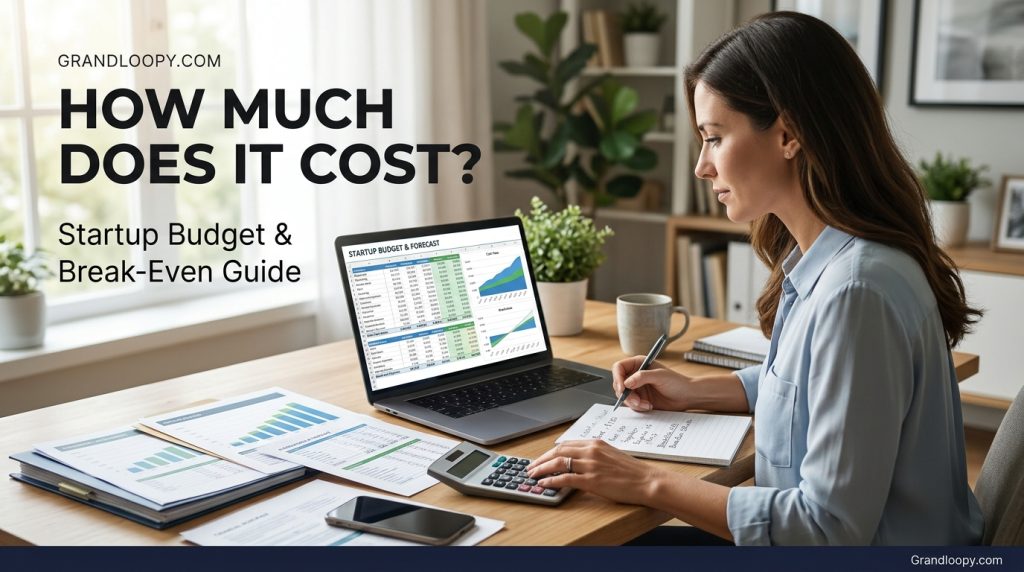
Start with the SBA’s own startup cost worksheet logic: one time costs (formation, deposits, equipment, initial inventory) and monthly costs until revenue covers them.
Most starts are smaller than folklore says. A reported Census strand puts 58 percent of small businesses starting with under 25,000 dollars, labeled as a strand, not a promise.
Your personal runway is a business input. Rent and food during the pre revenue months are part of the true startup cost, and pretending otherwise is how solvent ideas die.
Break even is the first real target: fixed monthly costs divided by the margin per sale. Know that number before you sign anything with a term attached.
Keep the business’s money separate from the first dollar. A dedicated account and simple bookkeeping from week one make taxes, loans, and sanity all easier later.
Choose the Structure: Liability and Tax, Side by Side
|
Structure |
Liability |
Tax default |
Best fit |
|---|---|---|---|
|
Sole proprietorship |
Unlimited, personal |
Personal return |
Testing a low risk offer |
|
Partnership |
Shared, personal |
Pass through |
Two owners, simple start |
|
LLC |
Shielded, with exceptions |
Pass through by default |
Most new small businesses |
|
LLC taxed as S corp |
Shielded |
Pass through with payroll |
Higher profit, owner works in it |
|
C corporation |
Shielded |
Corporate, then dividends |
Raising investor capital |
The sole proprietorship is the default you already own. It costs nothing and protects nothing; your house and savings stand behind every business debt.
The LLC buys the shield for a state filing fee that varies widely. It does not make you tax proof or lawsuit proof; it separates the business’s failures from your personal assets, with exceptions.
The S corp election is a tax tool, not a status symbol. At low profit it adds payroll cost for little gain; at higher profit it can reduce self employment tax meaningfully.
Choose with an accountant’s hour, not a forum thread. The right answer depends on your state’s fees, your profit level, and whether investors enter the picture.
The Legal Stack in Dependency Order: Name, Register, EIN, Licenses, Bank Account
Structure first, because registration forms ask for it. Name second, checked against your state’s registry and the trademark database, because rebranding after signage is the expensive way to learn.
Registration third: LLCs file articles of organization with the state; sole proprietors register a DBA when trading under a name that is not their own legal name.
Fourth, the tax ID. An EIN is free from the IRS, online, in minutes, and any service charging you hundreds for one is selling a form the government gives away.
Licenses fifth, stacked by level: federal for regulated industries, state for occupations and sales tax, local for the general business license, zoning, and home occupation rules. No single national license exists.
Bank account last, because it needs the EIN and formation documents. Open it before the first invoice; commingled money is the fastest way to pierce your own liability shield.
Funding Routes, Honestly Ranked
Bootstrapping is the default and the discipline teacher. It keeps ownership whole and forces the pricing honesty that borrowed money postpones.
Savings and revenue from a job you keep are the most common real world funders. Starting while employed is not a lack of faith; it is risk engineering.
SBA loans are cheaper money with slower doors: lenders want plans, projections, and often collateral or a track record. New businesses qualify, but the paperwork is the price of the rate.
Microloans and community lenders fill the small gap. Amounts are modest, coaching is often included, and first time founders are the intended audience, not an exception.
Credit cards and online lenders are the expensive last resort. They fund speed at rates that turn a survivable slow quarter into a fatal one.
The Survival Curve, and How to Plan Like It Is Real
|
Years after opening |
Still open |
Closed |
|---|---|---|
|
1 |
77.9% |
22.1% |
|
2 |
65.9% |
34.1% |
|
5 |
51.4% |
48.6% |
|
10 |
34.7% |
65.3% |
The table is the Bureau of Labor Statistics’ establishment record, cohorts measured through March 2025. The analysis in the sourced small business failure analysis prints it with the cohort notes attached.
Read it as a planning instrument, not a threat. Roughly four in five new businesses clear year one; the curve bends hardest in years two to five.
So plan commitments in curve sized pieces. Short leases, staged inventory, and monthly tools keep your fixed costs survivable through the bend in the curve.
Formation context belongs beside the curve. Census counted about 5.6 to 5.7 million applications in 2025, a record, yet only about 1 in 19 becomes an employer business within a year.
Starting puts you in the serious minority already. The SBA counts 36.2 million existing small businesses, about 82 percent with no employees at all. Solo is the normal shape of this world.
Your First Ninety Days After Opening
Days one to thirty are for proof of transaction: first sales, first invoices paid, first bookkeeping rhythm set. Nothing else on the list outranks money actually arriving.
Days thirty to sixty are for the support stack: a simple website, a claimed Google Business Profile, and the tools that remove manual work. The technology layer is where the AI technology coverage earns its place in a founder’s reading.
Online sellers meet that layer early, and the guide to AI customer support for small online stores shows how small stores now handle support volume that once required a hire, which matters when the whole team is you.
Days sixty to ninety are for review: which offer sold, what the margins really were, and which cost surprised you. Adjust prices and plans from data, not hope.
Set the compliance calendar before day ninety ends: quarterly estimated taxes, sales tax filings, the annual report. Missed small deadlines are how healthy businesses acquire penalties.
Mistakes That End Businesses in Year One

Mistake one is forming before validating. The entity is real, the demand is hypothetical, and the calendar starts billing registered agent renewals on an empty shell.
Mistake two is the invented statistic believed. This genre circulates a claim that 82 percent of businesses fail from cash flow problems; traced, it has no original source. Plan from the BLS curve instead.
Mistake three is commingling money. One account for rent and revenue quietly dissolves the liability separation the founder paid the state to create.
Mistake four is pricing from competitors instead of costs. Matching a price whose economics you cannot see imports someone else’s break even into your business.
Mistake five is quitting the job at the idea stage. Income is the cheapest funding round you will ever raise; spend it on evidence, not on hope’s runway.
A Dependency Map You Can Pin Up
Read the ten steps as unlock conditions. Validation unlocks confidence to spend; the worksheet unlocks a funding decision; structure unlocks registration paperwork.
Registration unlocks the EIN record, the EIN unlocks the bank account, and licenses unlock the legal right to sell in your town.
Any step attempted before its unlock costs double: the form rejected, the fee repeated, or the account opened in the wrong name.
Pin the map where you work. When a task feels stuck, the answer is almost always the step before it.
Start While Employed: The Underrated Funding Round
A salary is a funding round with no dilution and no pitch deck. Founders who build on evenings arrive at launch with evidence and savings, the two scarcest startup resources.
Respect the boundaries: your employment contract, the company’s IP claims, and simple honesty about conflicts. Within them, a job is scaffolding, not a cage.
The quit decision becomes arithmetic instead of drama. When validated revenue covers a defined share of your essentials for a defined stretch, the leap is a calculation.
The Worksheet Habit
Return to the startup cost worksheet monthly for the first year. Estimates made before launch are hypotheses; the worksheet becomes truth by revision.
Each revision teaches pricing. When a real cost lands above its estimate, the break even line moves, and the offer’s price must answer honestly.
Founders who keep this habit rarely meet the sudden cash cliff. Their surprises arrive in installments small enough to fix.
Solo Is the Normal Shape
New founders often apologize for being a company of one. The federal count disagrees: about 82 percent of America’s 36.2 million small businesses have no employees.
Build systems sized for that reality. Tools that replace a hire, offers that scale without headcount, and prices that pay one person properly come first.
Hiring, when it comes, is a milestone the numbers authorize. Until then, solo is not a limitation; it is the statistical norm of business ownership.
Numbers With Provenance, Always
Every figure in this guide carries its measurer and year because startup advice rots quietly. A fee, a rate, or a survival number without a date is a rumor with confidence.
Adopt the habit for your own business records. When a supplier quotes, a landlord promises, or a platform advertises, ask the same question you asked here: measured by whom, when?
That skepticism, applied weekly, is worth more than most courses. It is how owners stop funding decisions with other people’s marketing.
Mentors Compound
A SCORE mentor who has survived the curve’s bend will spot your pricing error in one meeting. That conversation is free, local, and scheduled by you this week if you ask.
Prepare for mentors like investors: bring the worksheet, the break even, and one specific question. Specific questions get career grade answers; vague ones get encouragement.
The Record Year, Read Correctly
Millions filed applications in 2025, and headlines called it a boom. Read it instead as competition for attention, not as a verdict on your specific idea.
Your market is the few hundred people who need your offer this year. National formation records say nothing about them; your interviews do.
Let the big numbers set expectations and the small numbers make decisions. That division of labor is the whole method of this guide in one line.
Paperwork Is a Weekend, Not a Season
Founders overestimate the legal stack’s duration because it feels official. In most states, the filings themselves take days; the waiting is state processing queues.
Batch the errands: registry check, trademark search, and domain purchase in one sitting; filing and EIN in another; licenses researched while the state processes.
What actually consumes seasons is indecision about structure and price. Decide those on evidence and the calendar shrinks to its real size.
Cash Cadence From Week One
Survival rarely fails in one dramatic month; it erodes in unattended weeks. A thirty minute weekly review of cash in, cash out, and cash expected is the cheapest insurance in this guide.
Watch the gap between work done and money received. Long gaps are where profitable on paper businesses quietly suffocate.
Shorten the gap with deposits, milestones, and prompt invoicing. These are policies you set on day one, not favors you beg for later.
Price From Your Own Arithmetic
A competitor’s price encodes their costs, their volume, and their mistakes. Importing it imports all three into a business whose costs are different.
Price from your worksheet and your break even instead. The resulting number may be higher or lower; either way it is defensible to your bank account.
Test the price in validation, not after launch. A price nobody flinches at during interviews is a hypothesis the market has already graded.
The State Is a Real Character
National guides flatten state differences because states are inconvenient to summarize. Your fees, licenses, sales tax rules, and annual reports are state facts, and your state’s answers govern.
Bookmark your secretary of state’s business portal and your city clerk’s page. Those two sources, plus the IRS for the EIN, cover most official truth a new founder needs.
Any advice that quotes a filing fee without naming a state is selling certainty it does not own. Treat it as advertising, not guidance.
Evidence Is the Whole Game
Validation interviews, presales, worksheet revisions, weekly cash reviews: notice the pattern. Every practice in this guide replaces an opinion with a measurement.
Founders who measure early fail cheaply or not at all. Founders who guess expensively discover the same facts at invoice prices.
Choose the cheap classroom. The market charges tuition either way; the only decision is the currency it collects in.
Keep the Map Beside the Money
Print the dependency map and the break even number together. One shows the order of the work; the other shows when the work pays.
Reviewed monthly, the pair becomes a dashboard a solo founder can actually maintain. Complexity is a luxury of businesses that already survived.
Begin With the Cheapest Step
Step zero costs conversations, not capital. Ten honest interviews will tell you more about your business’s future than any filing, logo, or lease.
Do them this week, while the idea is still cheap to change. That is the entire advantage of starting in the right order.
A Business Is a Promise Kept Weekly
Customers do not experience your business plan; they experience whether the thing arrived, worked, and was priced as promised. Operations are marketing that compounds.
Build the keeping of promises into the first ninety days: response times, delivery standards, and a support path that works when you are the whole staff.
The Order Is the Strategy
Competitors will keep listing the ten steps alphabetically by habit. Your edge is duller and better: a sequence that respects what each step needs from the one before.
Print it, pin it, and work it in order. Most of starting well is refusing to do step seven’s paperwork for an idea that has not passed step zero.
Start Where You Stand
No founder starts with every asset: capital, network, experience, time. The sequence in this guide is designed for partial hands; each step manufactures the asset the next one needs.
Validation manufactures confidence, revenue manufactures creditworthiness, and documentation manufactures options. Begin with whichever you hold, in the order given.
This Week Counts Double
Momentum in a new business is mostly calendar psychology: a task done this week creates the option to do next week’s. Delay compounds exactly like interest, against you.
Pick the single next step your dependency map names, and finish it before Friday. A year of such weeks is, statistically, a business.
Keep This Guide Open Beside the Filings
Bookmark the short version and the two tables. You will consult them at the structure decision, the funding choice, and the first quarterly review, which is where sequences usually break.
When the business reaches year two, revisit the survival chapter. The plan that got you open deserves a revision written by experience.
The Curve Rewards the Sequenced
Nothing in the federal record says starting is easy. It says something more useful: outcomes cluster around preparation quality far more than around luck or timing.
Sequence is preparation made visible. Work this page’s order and you have done the single most replicable thing surviving founders have in common.
One Page, Ten Steps, Your Name

By the end of the legal stack, the abstract becomes personal: a registered name, a tax ID, an account, a license on the wall. That transformation is the point of the paperwork.
Do not rush past it, and do not mistake it for the destination. Opening day is the start of the survival curve, not the end of the work.
Ready When the Evidence Says So
You do not need permission, a perfect quarter, or a complete brand identity to begin. You need one validated offer, survivable math, and the forms in order.
When those three exist, you are not being brave; you are being ready. Start, and let the first ninety days teach the rest.
Take the First Interview Today
Everything recommended here begins with one conversation with a prospective customer. It costs nothing, risks nothing, and returns the only data that actually predicts the rest.
Schedule it before you close this page. The businesses that survive the curve are disproportionately the ones whose founders started with that call.
Small Steps, Compounding
A business is not launched in a day; it is accumulated in correct order, one unlocked step at a time. The founders inside the survival statistics are mostly accumulators with a sequence.
The Checklist Is Yours Now
Copy the dependency order into your own notes, with your state’s names and fees in the margins. A personalized checklist beats a generic one because it answers to your facts.
Begin the Accumulation
One interview, one worksheet, one form, one account: the sequence is unglamorous and it is also, on the federal record, what separates the still open column from the closed one.
Start Today, in Order
The next step on your map is knowable in one glance, and it is small by design. Do it today, and the map will name another one tomorrow.
One More Honest Note on Timing
There is no deadline by which a life must contain a business, and the record year for applications proves only that many people feel the pull at once. Your timing should answer to your evidence and your runway, not to a headline’s enthusiasm.
If the evidence is not there yet, the correct move is more step zero, not a braver leap. Waiting with data gathering underway is not delay; it is the work itself, performed in the order this guide exists to teach.
Begin there, and the rest of the sequence will follow in its proper order from today onward.
Frequently Asked Questions
1. What are the steps to start a small business?
Ten steps, honestly ordered. Validate the idea, run the money math, choose a structure, then name, register, get an EIN, license, and open the business bank account.
The SBA’s official list is the same ten; the order is what changes.
2. How much money do I need to start a small business?
Most starts are small. A reported Census strand says 58 percent of small businesses began with under 25,000 dollars.
Your real figure comes from a startup cost worksheet plus personal runway, not from an average.
3. How long does it take to start a small business?
Weeks of paperwork, months of validation. Formation itself can take days to a few weeks depending on the state.
Customer validation and funding decisions are the long poles; plan the launch in months, not weekends.
4. Do I need an LLC to start a small business?
No, not legally. A sole proprietor can start with no formation at all.
An LLC adds a liability shield and credibility for a state fee, which many founders buy once revenue or risk becomes real.
5. Should I validate my idea before forming an LLC?
Yes, almost always. Formation proves you can file; validation proves people will pay.
Failure studies put no market need and running out of capital at the top, so evidence should exist before the entity does.
6. How do I register a small business?
With your state, in most cases. LLCs file articles of organization with the state; corporations file articles of incorporation; sole proprietors register a DBA for a trade name.
Requirements and fees are set by your state.
7. What is an EIN and how do I get one?
Your business’s federal tax ID. The employer identification number identifies the business to the IRS for taxes, banking, and hiring.
Apply on the IRS site; it is issued online in minutes.
8. Does an EIN cost money?
**No.
The EIN is free from the IRS.** Any website charging a large fee to get one is selling a free government form.
Apply directly and never pay a middleman for this step.
9. What licenses do I need to start a small business?
It depends on industry and place. Most businesses need a local general license; many need state occupational or sales tax permits; a few regulated industries need federal permits.
Check all three levels for your trade and town.
10. Do I need a business bank account?
Yes, from the first dollar. A dedicated account separates business and personal money, protects your liability shield, simplifies taxes, and is required in practice by lenders and payment processors.
Banks ask for formation papers and the EIN.
11. What business structure is best for a small business?
The one matching your risk and profit. Sole proprietorship for a low risk test, LLC for most operating businesses, S corp election when profit makes payroll worthwhile, C corp when investors require it.
An accountant’s hour settles it.
12. LLC or sole proprietorship: which should I choose?
LLC, once the business is real. Sole proprietorship costs nothing and protects nothing.
The LLC’s state fee buys separation between business debts and personal assets, which matters as soon as contracts, employees, or premises appear.
13. What is a DBA and do I need one?
A trade name registration. DBA, doing business as, lets you operate under a name different from your legal or entity name.
It creates no liability shield; it is a naming registration, filed with state or county.
14. Can I start a small business while working a full time job?
Usually yes, carefully. Keep employer’s IP rules and your contract in view, avoid competing conflicts, and use the salary as funding.
Many durable businesses began as evenings and weekends projects.
15. Can I start a business with no money?
Start with a service and a presale. Zero budget models sell skill and time first: freelancing, services, and presold offers.
What you cannot skip is validation and the small legal costs your state and trade require.
16. How do I write a business plan?
Around the SBA’s structure. Executive summary, market, offer, operations, financials.
Lenders read the projections hardest.
Keep it honest and updated; a lean one page format works when no lender is involved.
17. Do I need a business plan to get a loan?
In practice, yes. SBA lenders expect a business plan with projections as part of the application.
Even bootstrappers benefit: the plan is where the money math gets written down before commitments are signed.
18. What funding options exist for a new small business?
Bootstrapping first for most. Then savings, revenue, microloans and community lenders, SBA loans, and only lastly expensive credit.
Each rung trades cost for speed and paperwork; match the rung to the amount actually needed.
19. How do I get an SBA loan as a new business?
Through an SBA lender, with documents. Prepare the plan, projections, personal financial statement, and any collateral.
Brand new businesses do qualify, but approval is slower and terms stricter than for established firms.
20. What percentage of small businesses fail?
About half are gone by year five. The Bureau of Labor Statistics record: 77.9 percent survive year one, 51.4 percent reach year five, 34.7 percent reach year ten.
The curve has been stable for decades.
21. Why do most small businesses fail?
Demand and cash, in that order. Postmortem studies lead with no market need, and a March 2026 study of 431 venture backed shutdowns found 70 percent ran out of capital.
Validation and runway address the top two directly.
22. What is the survival rate of a new business after five years?
51.4 percent, per the federal record. That is the Bureau of Labor Statistics figure for establishments reaching year five, cohorts measured through March 2025.
Plan commitments in pieces small enough to survive the curve’s bend.
23. How many new businesses start each year in the US?
About 5.6 to 5.7 million applications in 2025. Census counted a record year, with two reported totals circulating.
Applications measure intent; only a small share become operating employer businesses.
24. Is a business application the same as a business?
No, and the gap is the story. An application is an EIN filing.
Census projects roughly 1 in 19 becomes an employer business within four quarters, which is why formation counts overstate real launches.
25. Do I need a registered agent?
Entities do; sole proprietors do not. LLCs and corporations must name a registered agent for legal documents.
You can often serve as your own, but a service adds privacy and reliability for a yearly fee.
26. What taxes does a new small business pay?
It follows your structure. Sole proprietors and LLCs default to personal returns with self employment tax; S corps add payroll; C corps pay corporate tax.
Add sales tax where applicable and quarterly estimated payments.
27. When do I need a sales tax permit?
When you sell taxable goods or services. Most states require a seller’s permit before the first taxable sale, and filing cadence follows your volume.
Digital and service rules vary by state; check yours before launch.
28. Can I start a small business from home legally?
Yes, with local permission. Zoning and home occupation rules govern signage, visitors, and inventory at home.
Many online and service businesses qualify easily; check your city and any HOA rules before assuming.
29. What insurance does a new small business need?
Start with liability, then your trade’s specifics. General liability is the common first policy; add professional liability for advice, product liability for goods, and workers compensation with your first employee where required.
30. How do I choose a business name?
For the registry, the customer, and the domain. Check your state registry, the federal trademark database, and domain availability.
A name that fails any of the three creates costs later, so test all three before printing anything.
31. What if my business name is already taken?
Rename early or license the conflict away. If the name is taken in your state or trade, choose another before investing in branding.
Trademark conflicts can force a rename even when a state filing was accepted.
32. Should I trademark my business name?
When the name becomes an asset. Registration is not required to operate, but federal trademark protection helps once you sell across state lines or build brand value worth defending.
Many founders file after traction.
33. How do I open a business bank account?
Bring the formation set. Banks typically want formation documents, the EIN letter, your ID, and an operating agreement for LLCs.
Many accounts open online in under an hour once the paperwork is complete.
34. What should I do in the first 90 days after opening?
Sell, systematize, review. First month: real transactions and bookkeeping rhythm.
Second: basic web presence and support tools.
Third: review margins, adjust prices, and set the tax and filing calendar.
35. When can a small business start paying its owner?
When the math allows, deliberately. Owners pay themselves from profit after costs and tax reserves, by draw or payroll depending on structure.
Paying yourself a planned amount beats draining or starving the account randomly.
36. Do I need an accountant to start a small business?
Not required, but one hour is cheap insurance. Structure choice, tax setup, and state specifics are the three places beginners guess wrong.
An accountant’s setup session costs less than any of those mistakes.
37. What is SCORE and how does it help?
Free mentoring for founders. SCORE is a nonprofit SBA partner network of volunteer business mentors, with local chapters, workshops, and templates.
It is the most underused free resource in the entire starting process.
38. How do I find my first customers?
From the validation list. Your interviewees, presale buyers, and local network are the warmest first market.
A claimed Google Business Profile and one clear offer page convert that interest into paying customers.
39. What is a break even point and how do I calculate it?
Fixed costs divided by margin per sale. If monthly fixed costs are 3,000 dollars and each sale contributes 30 dollars after variable costs, break even is 100 sales a month.
Every pricing decision should know its number.
40. How much personal savings should I keep before quitting my job?
Enough to validate without panic. There is no universal figure; the discipline is a written runway covering your essentials until the business can pay you, commonly several months, kept separate from business funds.
41. What is the biggest mistake new business owners make?
Believing paperwork equals progress. Formation feels like starting; only customers make it true.
Close behind: commingled money, competitor based pricing, and quitting a job before evidence exists to fund the leap.
42. Is now a good time to start a small business?
The data says people are voting yes. Record applications in 2025 and a stable survival curve describe a normal, competitive environment.
Timing matters less than validation: a tested idea in a crowded year beats an untested one in a quiet year.
Conclusion
Knowing how to start a small business is knowing an order: evidence before entities, arithmetic before commitments, and paperwork as a chain where each link unlocks the next. The official ten steps were never the hard part.
The survival curve is not a warning against starting. It is a sizing tool: keep commitments small enough to cross the bend in years two to five, and let revenue, not hope, authorize bigger ones.
Founders building online will find the surrounding playbooks inside the AI technology coverage, where the tools small firms now start with are covered in practical depth.
Take the next honest step today: interview one customer, run one worksheet line, or file the one form your evidence has already earned. Businesses begin when evidence turns into action.
Open the checklist, pick your step zero, and start this week. The founders who make it are rarely the boldest; they are the ones who sequenced correctly.